Reviewed · TOURS IN HANOI
17-Day Vietnam Tour | Explore the Best Highlights of Vietnam
Vietnam is a long, narrow country, and this 17-day route from Hanoi to Ho Chi Minh City gives you a useful first look at nearly every major region. You will move from old temples and rice terraces to limestone caves, island waters, colonial buildings, war sites, and floating markets. It is a big trip, but the planning is handled for you.
I especially like the mix of guided sightseeing and free time, plus the practical north-to-south structure. I also like the small maximum group size of 12, private rooms, domestic flights, and local support from staff such as Tran, Hang, and Han. The main consideration is pace: you change places often, take several flights, and have some early starts.
Key points at a glance

- Hanoi begins with Vietnam’s cultural landmarks, including Tran Quoc Pagoda, the Ho Chi Minh complex, the Museum of Ethnology, and the Temple of Literature.
- Pu Luong adds a rural pause with rice terraces, village trails, and a homestay before the route returns to the popular sights of Ninh Binh.
- Lan Ha Bay and Ha Long Bay come by overnight cruise, with sunrise Tai Chi, meals on board, and a full day among limestone islands.
- Hoi An gives you time on foot, while Ba Na Hills, Cham Island, and the Coconut Forest add very different day trips.
- The southern section covers both history and daily life, from the War Remnants Museum and Cu Chi Tunnels to Ben Tre’s canals and Cai Rang Floating Market.
- The $1,689 price includes major trip costs, but tips, drinks, and personal spending remain yours to pay.
Why this 17-day Vietnam route works
This is not a single coach tour in which the same group follows one guide for 17 days. Instead, Authentic Adventures Vietnam arranges a connected trip with local guides, drivers, flights, transfers, accommodation, and separate excursions along the way. That distinction matters.
You get the convenience of a packaged holiday without being tied to one constant group. The tour is capped at 12 people, but some days are free, some activities are handled by local guides, and other transfers simply move you to the next base.
The route also makes geographic sense. Hanoi leads to the northern countryside, Ninh Binh, and the bay area. From there, you fly to central Vietnam, spend time around Da Nang and Hoi An, continue to Nha Trang, and finish in Ho Chi Minh City and the Mekong Delta.
The cost is $1,689 per person. That is strong value for a 17-day trip if you would otherwise have to arrange domestic flights, several hotels, airport transfers, guides, entry tickets, and meals separately. It is not a no-cost holiday: tips, alcoholic drinks, soft drinks, and personal expenses are excluded, and not every meal is covered. Still, the main transport and sightseeing bills are gathered into one price.
More days out you can book in Hanoi:
- Hanoi Jeep Tour: Food, Culture and Fun by Vietnam Army Jeep
★ 5.0 · 15,222 reviews - Full-Day Ninh Binh Highlights Tour from Hanoi
★ 5.0 · 7,761 reviews - Hanoi: Ha Long Bay Day Cruise – Swimming, Meal, Kayaking
★ 4.7 · 7,415 reviews
Hanoi opens the trip with pagodas, museums, and old streets
Your first day is deliberately gentle. You are collected at Noi Bai International Airport and transferred to your accommodation in Hanoi, with the rest of the day available to settle in.
Day two gives you a broad introduction to the capital. Tran Quoc Pagoda, Hanoi’s oldest pagoda, dates to the sixth century and sits beside West Lake. It is a calm first stop, especially after the airport and traffic of arrival.
The Ho Chi Minh complex follows. You visit the mausoleum area, gardens, the houses where Ho Chi Minh lived and worked, and the One Pillar Pagoda. This part of the morning is structured and ceremonial, so follow the guide’s instructions about movement and dress.
The Vietnam Museum of Ethnology is one of the most useful stops in Hanoi because it looks beyond national symbols and explains the many ethnic groups of Vietnam. Its indoor and outdoor sections make it easier to connect museum displays with buildings and everyday objects.
After lunch, you visit the Temple of Literature, Vietnam’s first university, established in the 11th century. It is one of Hanoi’s most attractive historic compounds, with courtyards, gates, and stone steles honoring scholars.
The day finishes around Hoan Kiem Lake and Ngoc Son Temple. This is a good place to get your bearings, watch local life, and walk at an easier pace. The schedule is full, but the stops are close enough to make this a sensible first sightseeing day.
Pu Luong trades city streets for rice terraces

On day three, you leave Hanoi’s Old Quarter at 7:00 a.m. for Pu Luong Nature Reserve. The drive includes a short break outside Hanoi before reaching the reserve around late morning.
Pu Luong changes the mood of the trip. You check into accommodation and have time for a meal before a walk through the countryside. The setting is based around rice terraces, fields, jungle paths, and village roads, rather than grand monuments.
The next morning begins with breakfast at the homestay, followed by a trek toward Hieu Village. You walk along smaller trails and through the rice-growing area. This is one of the most appealing parts of the itinerary if you want contact with rural Vietnam rather than a schedule made entirely of famous photo stops.
You should note the physical difference between this section and the city sightseeing. The itinerary calls for trekking on village roads and trails, so comfortable footwear is sensible. Exact trail conditions can vary, and the tour data does not promise a particular walking distance.
In the afternoon, you travel from Pu Luong to Ninh Binh. That makes day four a transfer day as well as a sightseeing day. You get a rural experience, but you do not linger for several nights.
Ninh Binh combines temples, caves, and a steep viewpoint
Day five covers three well-known Ninh Binh sights. Bai Dinh Pagoda is a large religious complex and a substantial stop, not a quick roadside visit. The grounds give you a sense of the scale of Vietnamese Buddhist architecture.
Trang An follows after lunch. This UNESCO World Heritage site is known for its waterways and tunnel caves. The scenery is best appreciated from the boat, where the route passes between limestone formations and through the cave system. The trip also connects with the area’s film fame, since the newer Kong movie used Trang An.
Mua Cave is the day’s most physical stop. The climb is close to 500 steps, leading to the top of Lying Dragon Mountain and a wide view toward Tam Coc. You do not need to treat it as a race. If your knees are unhappy with steep stairs, this is the place to pace yourself or decide how far you want to go.
The combination works well: Bai Dinh supplies architecture, Trang An supplies a quiet boat ride, and Mua Cave supplies exercise and a high view. The drawback is timing. You are fitting three major stops into one day, so none receives unlimited time.
Same base, a completely different day:
- Hanoi: Water Puppet Show Tickets
★ 4.6 · 7,029 reviews - Hanoi Motorbike Tour: Food, Culture and Fun by Vintage Motorbike
★ 5.0 · 6,699 reviews - Hanoi: Guided Food Tour with Train Street Visit
★ 4.9 · 6,239 reviews - Hanoi Cooking Class: Culture, Local Market & Meaning CSR Impact
★ 5.0 · 5,147 reviews
Lan Ha Bay brings an overnight cruise and an early sunrise

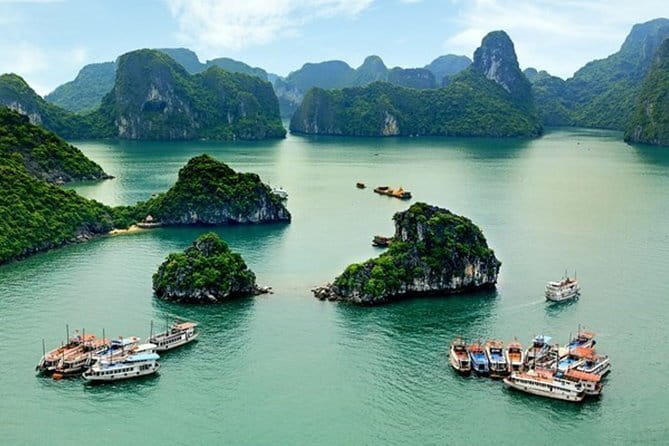
From Ninh Binh, you travel toward Tuan Chau port and board a transfer boat for your cruise. After a welcome drink and check-in, lunch is served on board before the boat moves through the islands and channels around Lan Ha Bay and Ha Long Bay.
The route includes the Gia Luan area, Thoi Quyt Island, Ke Ga, and Finger Island. The main pleasure here is the changing view from the deck, with limestone islands appearing from different angles as the boat moves through the bay.
The next morning starts at 6:15 with Tai Chi on the sundeck, followed by breakfast. That early start is part of the cruise experience, but it is worth knowing about before you book. You will need to be comfortable with a dawn schedule if you want to make the most of it.
After the morning cruise, you return to Hanoi and fly to Da Nang. This is one of the more demanding travel days, with a boat disembarkation, road transfer, airport time, and an evening hotel arrival. The domestic flight saves a great deal of road time, but the day is still long.
Da Nang and Ba Na Hills offer spectacle at altitude
Day eight is devoted to Ba Na Hills, a mountain resort known for the Golden Bridge and French Village. The Golden Bridge is the famous yellow walkway supported by two enormous stone-colored hands. You get about 50 minutes at the bridge, enough for photographs and a short look around.
The French Village is designed as a European-style mountain setting, with cobbled streets and buildings that resemble a medieval French town. Lunch is a buffet, and the afternoon gives you several hours to explore the resort.
This is a very different experience from Pu Luong or Hoi An. Ba Na Hills is polished, constructed, and designed for visual impact. Some people will enjoy the cable-car resort atmosphere and grand views; others may find it more commercial than the rest of the trip. I would treat it as a playful change of pace rather than a close look at traditional central Vietnam.
Hoi An brings the best walking time of the middle section

The route reaches Hoi An through the Bay Mau Coconut Forest in Cam Thanh. You take a short boat-style excursion through the coconut area before entering Hoi An’s ancient town.
Hoi An was a major trading center in Southeast Asia during the 16th century, and its appeal is best felt on foot. The schedule gives you time to walk its old streets, explore shops, and see the town after the more structured stops in Hanoi and Ninh Binh.
A flexible stop at Non Nuoc Stone Carving Village may be included on the way, depending on the day’s timing. Since this stop is not fixed in the same way as the main attractions, do not build your plans around it.
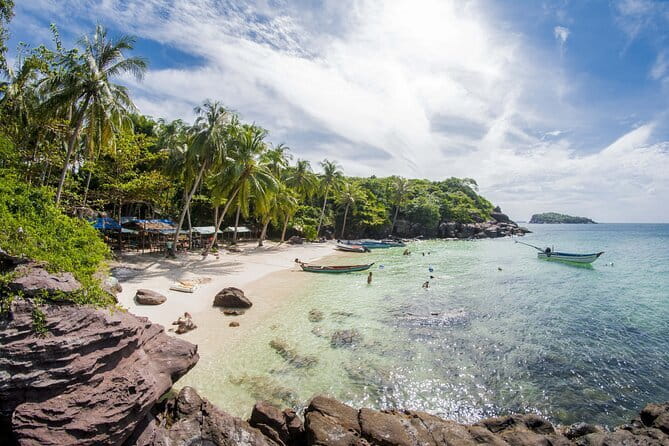
The following day goes to Cham Island. You leave from Cua Dai port, spend time on the island, and return to the mainland in the afternoon. The itinerary allows for snorkeling or time near the water, but the exact activities and conditions depend on the island excursion.
You then have a free morning in Hoi An before flying from Da Nang to Nha Trang. This is a smart break in the schedule. Use it for a final walk, a meal, or simple rest rather than trying to squeeze in another major attraction.
Nha Trang gives you two useful days at a slower speed

Nha Trang is the clearest rest period in the trip. After arrival and hotel check-in, day 11 leaves the afternoon open. Day 12 is free for relaxing, snorkeling, nature trails, spa treatments, or time by a private plunge pool.
The tour does not specify one included Nha Trang excursion, which is useful if you want a pause. It also means you need to make your own plans if you want a full day of activities. This is one of the few places where the itinerary gives you breathing room after several busy travel days.
On day 13, you remain free until the airport transfer and flight to Ho Chi Minh City. After checking in, you have more personal time in the city.
Ho Chi Minh City puts war history beside everyday city life
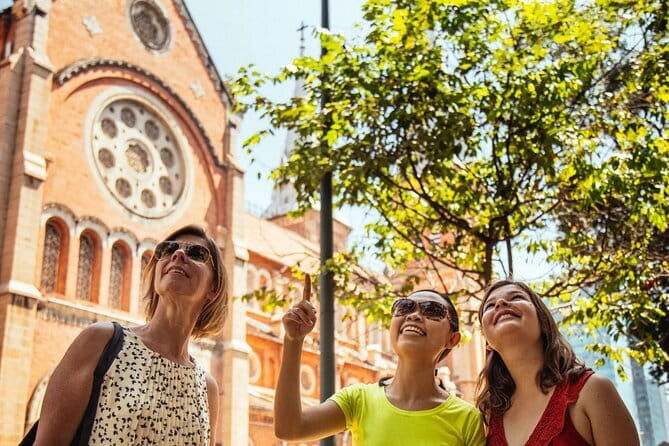
Day 14 begins with some of the city’s major landmarks. Saigon Notre Dame Cathedral is a major architectural symbol, though the itinerary does not specify the condition of access at the time of your visit. The Central Post Office is next, known for its neo-classical European design and Asian decorative details.
The War Remnants Museum is the most serious stop of the morning. It presents the Vietnam War from a Vietnamese viewpoint and can be emotionally difficult. Give yourself time to process it. It is not simply another sightseeing hall.
After lunch, you travel to the Cu Chi Tunnels. The underground network shows how people lived, moved, and organized during the war. Your guide adds meaning to what could otherwise be a collection of narrow passages and military displays.
The day has a clear historical focus. If you prefer lighter sightseeing, it may feel intense. If you want to understand the country’s modern past, it is essential.
The Mekong Delta ends the journey on the water
Day 15 takes you to My Tho and Ben Tre. In My Tho, you travel by boat along the Mekong River. In Ben Tre, the focus shifts to coconut groves, narrow canals, and local workshops showing traditional production.
You then continue to Can Tho, the Delta’s main base for the night. This overnight stay matters because it makes the early visit to Cai Rang Floating Market possible.
At 8:30 the next morning, you head to the market by water. Cai Rang is one of the Delta’s best-known floating markets, where boats gather and goods are displayed directly on the river. It is an active working market, not just a staged attraction, so the early departure is part of seeing it at its most useful.
After lunch, you return to Ho Chi Minh City. Day 17 is free, giving you time for shopping, more city walks, or a quiet final day before departure.
What the $1,689 price really covers
The package includes accommodation in private rooms, domestic flight tickets, air-conditioned vehicles, guides, and entrance fees for the included sights. It also includes 16 breakfasts, 11 lunches, and three dinners.
That coverage removes the hardest parts of planning a long Vietnam route. You do not need to arrange the Hanoi to Da Nang flight, the Da Nang to Nha Trang flight, or the Nha Trang to Ho Chi Minh City flight on your own. Airport transfers and regional transport are also arranged.
You still need money for tips, alcoholic drinks, soft drinks, and personal purchases. The free days in Nha Trang, Hoi An, and Ho Chi Minh City may also bring extra costs if you choose optional activities.
A notable strength is the support system. Tran, Mr. Tran Son, Hang, and Han are named in the trip arrangements and personal assistance described by the operator. The service includes help with changes and flight delays, and one family had support even after a late-night arrival. That kind of contact can matter more than a polished itinerary when a multi-flight trip hits a problem.
The tour has a 5 out of 5 rating from 19 reviews, with 100 percent recommending it. The repeated praise focuses on organization, communication, drivers, guides, food, accommodation, and the relief of having each transfer handled. That is the real product here: not just sightseeing, but a trip structure that reduces daily decision-making.
Who should book this Vietnam tour
I would choose this trip if you want to see Vietnam’s major regions in one visit and prefer help with flights, hotels, transport, and tickets. It suits couples, families, and first-time visitors who want a clear route without arranging every local connection.
It also suits people who want a private room and a smaller group rather than a large coach. Dietary needs such as vegetarian, vegan, and gluten-free meals can be accommodated if you provide the details when booking.
I would think twice if you want a slow holiday based in only two or three places. The route includes early starts, long transfers, an overnight bay cruise, three domestic flights, trekking, and the 500-step climb at Mua Cave. You should be comfortable with a busy schedule and changing hotels.
Free cancellation is available up to 24 hours before the start time for a full refund. Weather or minimum group requirements can also affect departure, with a different date or a full refund offered in those cases.
Should you book it?
Book this tour if your priority is maximum coverage with minimum planning. For $1,689, the package brings together a remarkably broad view of Vietnam, from Hanoi’s temples to the Mekong’s floating market, while including the flights and major sightseeing costs that quickly add up.
Skip it if you want long, unplanned stays or dislike frequent transfers. For everyone else, the route offers a practical first journey through Vietnam, with enough free time to keep the trip from becoming one long procession of scheduled stops.
FAQ
What is included in the 17-day Vietnam tour?
The tour includes domestic flight tickets, accommodation in private rooms, air-conditioned vehicles, tour guides, entrance fees for included sights, 16 breakfasts, 11 lunches, and three dinners.
What is not included in the price?
Tips, alcoholic drinks, soft drinks, and personal expenses are not included.
How many people can join the tour?
The experience has a maximum of 12 participants.
Does the tour include free time?
Yes. You have free time in Nha Trang, a free morning in Hoi An, leisure time in Ho Chi Minh City, and a free final day in Ho Chi Minh City.
Can dietary requirements be accommodated?
Yes. Vegetarian, vegan, gluten-free, and other dietary requirements can be accommodated if you provide the details in the special requirements section when booking.
What is the cancellation policy?
You can cancel up to 24 hours before the experience start time for a full refund. Changes made less than 24 hours before the start time are not accepted, and poor weather or insufficient numbers may lead to a different date or a full refund.
Newly reviewed in Hanoi
- Private Full-Day Tour to Halong Bay from Hanoi★ 5.0 · 44 reviews
- Private Evening Walking Tour – Cyclo & Water Puppet Show in Hanoi Old Quarter★ 5.0 · 19 reviews
- Ba Vi National Park Private Tour: Sightseeings & Jungle Hikking★ 4.5 · 26 reviews
- Full-Day Hanoi City Tour with Hidden Local Life Experience★ 5.0 · 27 reviews
- Hanoi Epic tour 6D5N Hanoi – Halong Bay – Ninh Binh – Sapa★ 5.0 · 51 reviews
- Private transfers Hanoi <=> Puluong 1 Way (Free Hotel Pickup)★ 5.0 · 20 reviews
- Hanoi Airport Pick-up (Private Ride From Hanoi Airport to Hotels)★ 4.5 · 253 reviews
- Noi Bai Airport transfer to Hotel or Vice versa★ 5.0 · 144 reviews
Tours in Hanoi, compared.
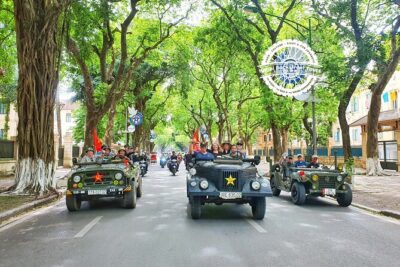
Hanoi Jeep Tour: Food, Culture and Fun by Vietnam Army Jeep
Read our review →
Full-Day Ninh Binh Highlights Tour from Hanoi
Read our review →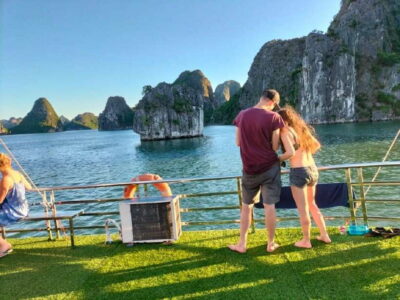
Ha Long Bay Day Cruise – Swimming, Meal, Kayaking
Read our review →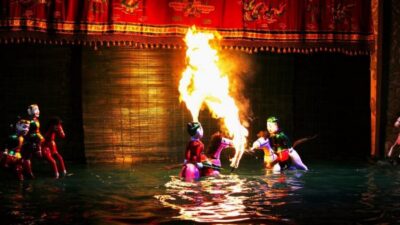
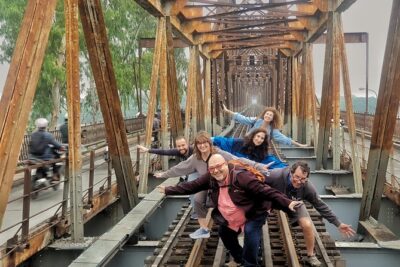
Hanoi Motorbike Tour: Food, Culture and Fun by Vintage Motorbike
Read our review →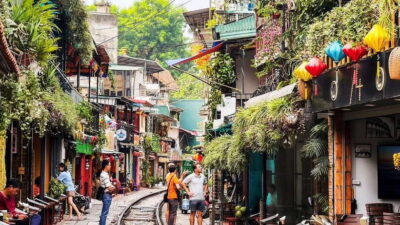
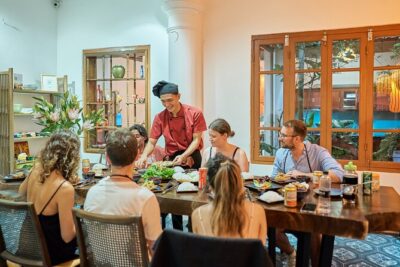
Hanoi Cooking Class: Culture, Local Market & Meaning CSR Impact
Read our review →