
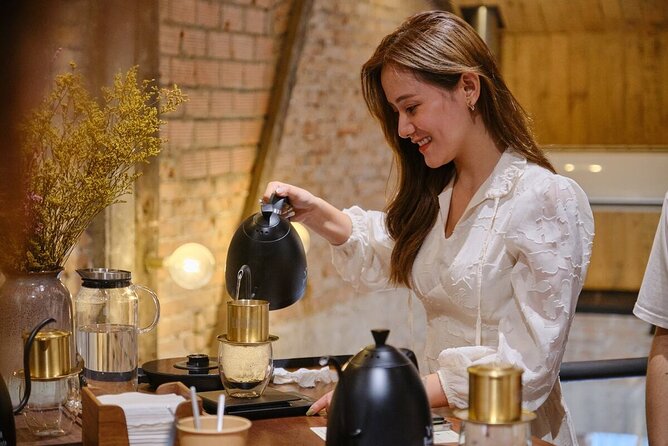
Reviewed · TOURS IN HO CHI MINH CITY
Fun & Easy Vietnamese Coffee Workshop in Hồ Chí Minh City
Vietnamese coffee is not just strong coffee with condensed milk. In this hands-on class, you learn the small details behind three very different drinks: creamy Bạc Xỉu, savory-sweet Cà Phê Muối, and the creative Phin Con Panna, made with yogurt and coffee blossom honey. You brew, mix, taste, and adjust the drinks yourself.
I like the clear teaching and the practical format. Guides such as Quan, Noah, Julie, and Kieu explain the coffee culture before putting the phin filter in your hands, and the 90-minute session gives you enough time to understand the method without taking half a day. The main drawback is that the space can be a little hard to find, and the recipes rely on dairy, so this is not a good match for vegans or anyone with lactose intolerance.
Key points at a glance
- Three drinks in 90 minutes: Make Bạc Xỉu, Cà Phê Muối, and the yogurt-based Phin Con Panna.
- You do the brewing: The class is hands-on, with clear instructions instead of a simple demonstration.
- Coffee culture included: Learn how Vietnamese coffee developed and why the phin filter matters.
- Morning or afternoon choice: Pick the session that fits your Ho Chi Minh City plans.
- Small maximum group: The class accepts no more than 18 people, allowing room for instruction and questions.
- Useful take-home ideas: Recipes are provided, and coffee, phin filters, and other equipment are available to buy.
Starting at Lacàph on Nguyễn Công Trứ
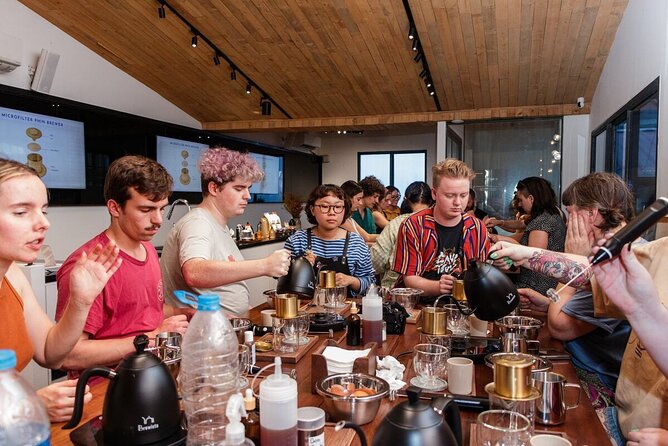
The workshop begins at Lacàph Coffee Experiences Space, upstairs at 220 Nguyễn Công Trứ in District 1. The activity returns to this same location, so you do not need to arrange a second pickup point or find your way across the city afterward.
Give yourself extra time to locate the entrance. The building can be easy to miss, and the workshop area is above the street-level action. Signs and the exact floor arrangement may not be immediately obvious, so checking the address before you leave your hotel is sensible. The location is near public transportation, but the final approach still calls for a little attention.
The space has a modern café feel rather than a rustic farm setting. That matters because this is a coffee-making lesson, not a plantation visit. You will not be touring fields or watching beans being roasted on site. Instead, the focus is on the way Vietnamese coffee is prepared, served, and enjoyed in everyday life.
The class size can reach 18 people. That is not an intimate one-on-one lesson, but it is still small enough for a structured group activity. If you want individual advice, speak up when the guide asks you to taste or compare your drink. The instructors, including Quan, Noah, Julie, Giao, Kieu, Joey, Tram Anh, Vi, Siu, and Sierra on different sessions, are described as patient, friendly, and clear in their teaching.
A few more ways to spend a day in Ho Chi Minh City
- Decadent Vietnamese “Egg Coffee” Workshop in Hồ Chí Minh City
★ 5.0 · 150 reviews - Hoi An: Vietnamese Coffee Culture and Coffee Making Class
★ 4.9 · 4,006 reviews - Hanoi Coffee Experience: 6 Brews, 9 Recipes & 3 Liquor Tastings
★ 5.0 · 2,945 reviews
The phin filter makes the lesson practical
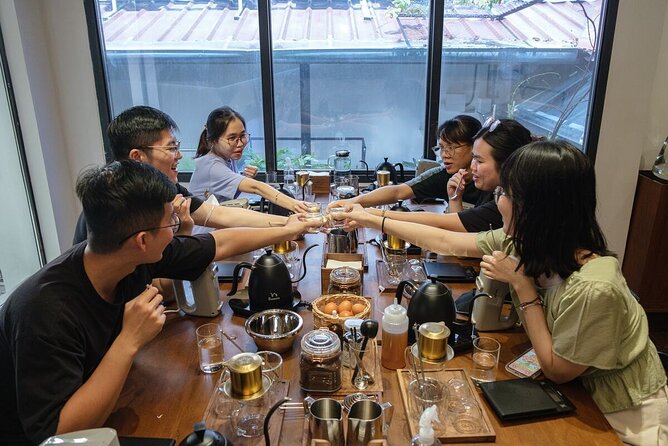
The essential tool is the phin, Vietnam’s compact metal filter. It sits directly on top of your glass or cup, allowing hot water to pass slowly through ground coffee. This method gives Vietnamese coffee its measured pace and concentrated flavor.
You are not simply watching a guide prepare drinks behind a counter. You get to handle the equipment and follow the process yourself. That is the best reason to book this activity instead of ordering three coffees at a café. By the end, you have a better sense of how much coffee to use, how the filter works, and how the base brew changes when you add other ingredients.
The instruction is designed for beginners. You do not need previous coffee experience, and the class is not presented as a technical barista qualification. Still, it offers more than a quick recipe card. The guide explains the coffee’s origins, the brewing process, and the role of each ingredient before you make the drinks.
One useful point is that the class has a forgiving social rhythm. You can ask questions, compare your results, and taste as you go. Reports from the sessions describe the guides as encouraging people to have fun while still giving precise directions. That balance should suit you if you want useful information without a formal classroom atmosphere.
First cup: creamy Bạc Xỉu
Bạc Xỉu is the gentler introduction to Vietnamese coffee. It traditionally combines a smaller amount of coffee with a larger share of milk, creating a sweet, creamy drink that is less forceful than a standard condensed-milk coffee.
This is a good first recipe because it shows how Vietnamese coffee can be adjusted for different tastes. If you expect every cup to be dark and intensely bitter, Bạc Xỉu gives you a softer starting point. You will still taste the coffee, but the milk changes its weight and sweetness.
The guide walks you through the proportions and the order of preparation. Because you make the drink yourself, you can pay attention to how the coffee sits alongside the dairy rather than blending into it. For someone who normally drinks tea, this may be the easiest of the three cups to enjoy.
Keep in mind that this is not a dairy-free workshop. Bạc Xỉu is built around milk, and the other recipes also include dairy ingredients. The experience is specifically not recommended for people with lactose intolerance or for vegans.
Second cup: savory-sweet Cà Phê Muối
Cà Phê Muối, or salt coffee, is the class’s most useful surprise for anyone who thinks coffee flavor is only about bitterness and sweetness. A small amount of salt changes the drink’s balance, softening harsh notes and giving the coffee a fuller taste.
You will prepare the coffee with the phin before combining it with the other ingredients. The point is not to make a salty beverage. The salt works as a seasoning, much as it does in cooking, and the guide explains how to keep the balance under control.
This is where the workshop offers real value. You can order salt coffee in Ho Chi Minh City, but ordering it does not show you how the drink comes together. Here, you see the base brew, add the components, and taste the result while the steps are still fresh in your mind.
The three drinks also create a useful comparison. Bạc Xỉu is milk-forward, Cà Phê Muối is more balanced and savory, and the final recipe moves into modern experimentation. You finish with a clearer idea of how one brewing method can produce very different cups.
More things you make yourself in Ho Chi Minh City:
- Cai Be Mekong Delta Tour: Cooking Class, Cycling & Craft Villages
★ 5.0 · 1,881 reviews - Chef Vu Cooking Class Plus Market Trip in Saigon Center (Pick up by Cyclo)
★ 5.0 · 477 reviews - Immersive Cooking Class & Wet Market Tour by Local Chef +Cookbook
★ 5.0 · 367 reviews - Hanoi Cooking Class: Culture, Local Market & Meaning CSR Impact
★ 5.0 · 5,147 reviews
Final cup: Phin Con Panna with yogurt and honey
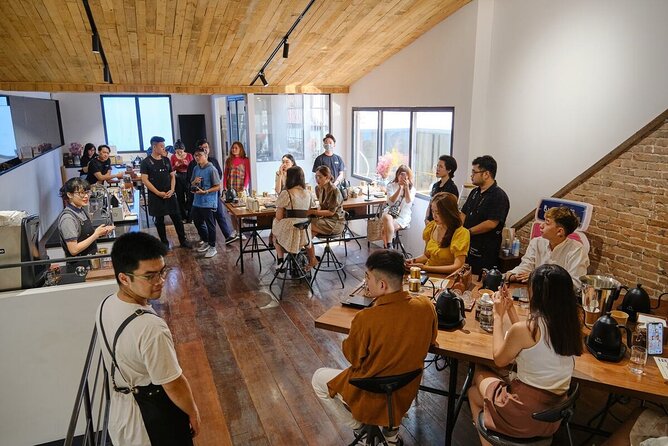
The workshop ends with Phin Con Panna, a Lacàph creation that combines Vietnamese coffee with yogurt and Lacàph Raw Coffee Blossom Honey. It is the most unusual drink in the lineup and the clearest sign that Vietnamese coffee culture is still changing.
This recipe is not a strict old-style preparation. It takes the phin method and pairs it with a cool, creamy ingredient, producing something closer to a dessert coffee. The coffee blossom honey adds another layer of sweetness and links the drink back to the wider world of coffee production.
You should approach this cup as an experiment rather than a traditional standard. That is part of its appeal, but it also explains why some people may prefer the first two drinks. The workshop gives you a modern recipe alongside familiar preparations, so you can decide which style you would actually make at home.
The ingredients are included in the price, as are coffee, tea, and snacks. That makes the session feel like a tasting as well as a lesson. You are not left with one small sample after spending an hour and a half at the venue.
A lesson in Vietnamese coffee culture
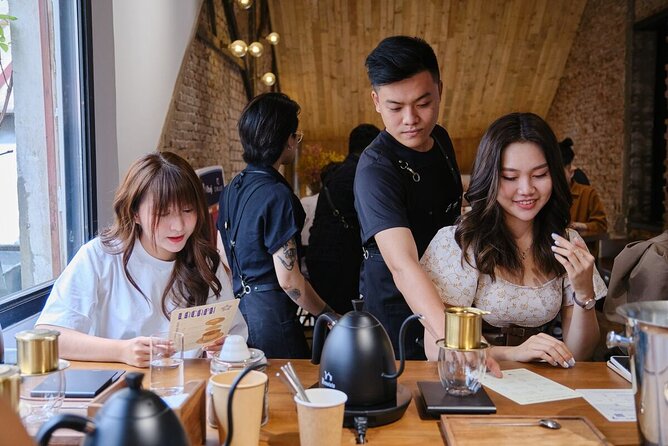
The workshop gives context before or during the brewing. You learn about the origins of Vietnamese coffee, the ingredients used in different drinks, and why the phin remains central to the country’s coffee habits.
This background is important because the class is not only about copying three recipes. Vietnamese coffee culture is tied to slow preparation, strong brewed coffee, sweet additions, and social time. Understanding that makes the phin feel less like a novelty gadget and more like a normal part of daily life.
The presentation style varies by guide. Giao, for example, is described as using a clear presentation about coffee and its history, while Sierra brings a playful, lively approach to the 90-minute session. Noah and Quan are praised for being patient and helpful, and Kieu for offering careful guidance. Since guides can change, you should treat these names as examples of the teaching team rather than a guarantee of who will lead your class.
The best sessions will give you room to ask about beans, brewing, sweetness, and equipment. If coffee is a major interest for you, take notes or pay close attention to the recipe sequence. The supplied recipes make it easier to recreate the drinks later.
What the $23.35 price really covers
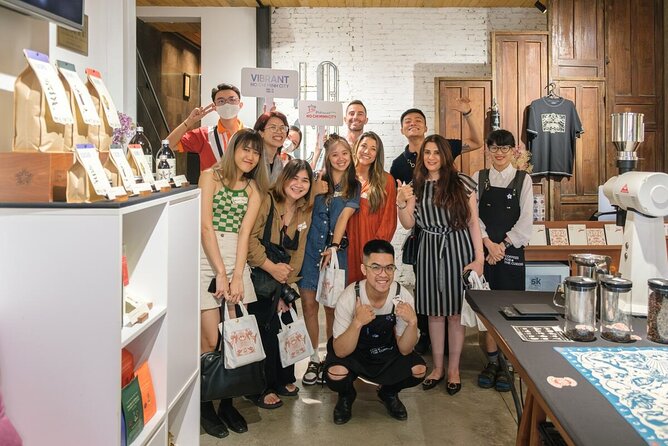
At $23.35 per person, this is not the cheapest way to drink coffee in Ho Chi Minh City. Street cafés can serve a cup for very little money. The price here pays for instruction, ingredients, equipment use, three prepared drinks, tea, snacks, and a guided cultural lesson.
I think the value is good if you want an activity rather than a beverage stop. You spend about 90 minutes learning a skill, tasting three styles, and getting recipes you can use later. The price also includes the chance to handle a phin and ask questions, which you cannot get from a standard café order.
The value is weaker if you only want to sample Vietnamese coffee. In that case, ordering Bạc Xỉu and salt coffee at different cafés will cost less and leave more time for sightseeing. This workshop makes sense when you want to understand how the drinks are built.
There is also a practical sales angle, though it is not an obligation. Coffee beans and phin filters are available to buy, and the equipment is described as reasonably priced. You can wait until the end to decide if you want to recreate the recipes at home. That makes the class more useful than an experience that ends when you leave the room.
Timing, group size, and who should book
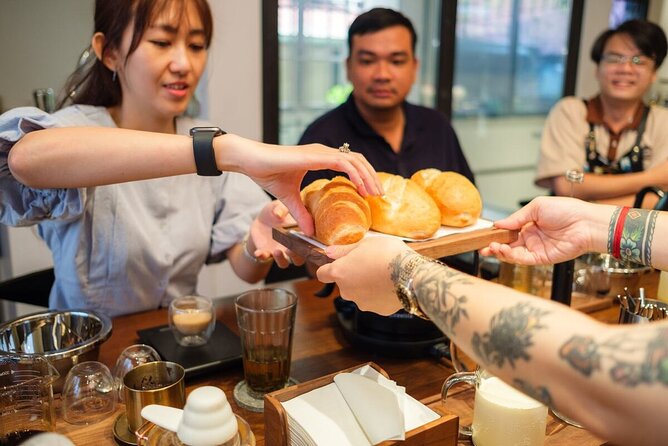
You can choose a morning or afternoon session. That flexibility helps you fit the class around a market visit, museum time, or a meal in District 1. The activity lasts about one hour and 30 minutes, so it is easy to place into a half-day plan.
The maximum group size is 18. For a workshop, that is manageable, but the experience will feel more like a shared class than a private lesson. Solo visitors should not feel out of place. The format works well for one person, couples, and small groups, and the guided structure gives solo participants something easy to do without arranging a full day tour.
This is particularly suitable for:
- Coffee drinkers who want to learn the Vietnamese method at home
- Couples looking for a short indoor activity
- Solo visitors who enjoy food and drink classes
- People visiting Ho Chi Minh City for a second time and wanting something beyond major sights
- Anyone looking for a rainy-day plan in District 1
- Tea drinkers who are curious about coffee but do not want a serious barista course
It is less suitable for people who avoid dairy, dislike sweet drinks, or want a farm-to-cup production tour. The class focuses on brewing and coffee culture, not on visiting growing areas or following beans through every stage of production.
Practical details before you go
The mobile ticket makes entry simple, and confirmation is sent when you book. Service animals are allowed, and the location is near public transportation. The meeting point and ending point are both the Lacàph space at 220 Nguyễn Công Trứ.
Wear something comfortable enough for a seated, hands-on activity. You will be working with coffee and ingredients, so a little care is sensible, especially if you are carrying a light-colored outfit. The supplied information does not describe a dress code or storage facilities, so avoid bringing more than you need.
If you need to cancel, you can receive a full refund when you cancel at least 24 hours before the local start time. Cancellations or changes made within 24 hours are not refunded or accepted. That policy is fairly standard, but it matters if your Ho Chi Minh City schedule is still uncertain.
Should you book the Lacàph coffee workshop?
Book it if you want to do more than drink Vietnamese coffee. The strongest part of this experience is the hands-on format: you learn the phin, make three distinct drinks, hear the cultural background, and leave with recipes that you can try at home.
I would especially recommend it to coffee fans, solo visitors, couples, and anyone planning a rainy afternoon in District 1. The guides receive strong praise for clear instruction and a friendly manner, while the modest group limit keeps the class workable.
Skip it if you are vegan, lactose intolerant, or mainly interested in coffee farms and roasting. Also allow extra time to find the upstairs venue. For everyone else, $23.35 is a fair price for a compact, useful introduction to the way Vietnam brews, sweetens, seasons, and rethinks its coffee.
FAQ
Where does the Vietnamese coffee workshop take place?
It starts and ends at Lacàph Coffee Experiences Space, upstairs at 220 Nguyễn Công Trứ, Phường Nguyễn Thái Bình, District 1, Ho Chi Minh City, Vietnam.
How long does the activity last?
The workshop lasts approximately one hour and 30 minutes.
What coffee drinks will I make?
You will make three drinks: Bạc Xỉu, Cà Phê Muối, and Phin Con Panna, which combines Vietnamese coffee with yogurt and Lacàph Raw Coffee Blossom Honey.
Are morning and afternoon sessions available?
Yes. You can choose between morning and afternoon tour times.
Is food or drink included?
Yes. Coffee, tea, and snacks are included in the workshop.
Is the activity suitable for vegans or people with lactose intolerance?
No. The activity is not recommended for vegan visitors or people with lactose intolerance because the recipes use dairy ingredients.
What is the cancellation policy?
You can cancel at least 24 hours before the start time for a full refund. Cancellations or changes made less than 24 hours before the start time are not refunded or accepted.
Newly reviewed in Ho Chi Minh City
- Saigon Evening: Water Puppet Show & Dinner Cruise Experience★ 5.0 · 38 reviews
- Dinner Cruise on Saigon River with Private Table★ 4.5 · 31 reviews
- Ho Chi Minh: Private City Tour and Dinner Cruise with Buffet★ 4.6 · 97 reviews
- Saigon Jeep Tour with Food, Culture and Fun By Vietnam Army Jeep★ 5.0 · 150 reviews
- Cu Chi Tunnels Ben Duoc VIP Tour by Limousine with Lunch★ 5.0 · 170 reviews
- Mekong Delta VIP Tour – Transportation by Limousine★ 5.0 · 110 reviews
- Decadent Vietnamese “Egg Coffee” Workshop in Hồ Chí Minh City★ 5.0 · 150 reviews
- Saigon After Dark Vespa Street Food Tour + Live Music 4 hours★ 5.0 · 147 reviews
Tours in Ho Chi Minh City, compared.

Cu Chi Tunnels Tour from HCM City – Morning or Afternoon
Read our review →
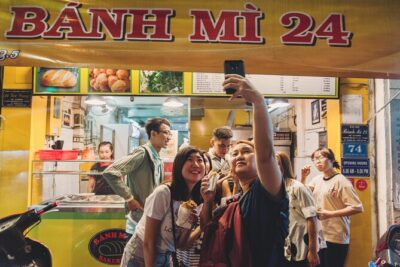
Ho Chi Minh City Street Food Tour & Sightseeing By Motorbike
Read our review →
Cu Chi Tunnels-Tapioca Small Group Tour Morning or Afternoon
Read our review →
Cu Chi Tunnels and Mekong Delta Signature Tour
Read our review →
Mekong Delta Guided Tour from Ho Chi Minh City
Read our review →
Cu Chi Tunnels and Mekong Delta Full Day Tour – Max 12
Read our review →
Saigon By Night and Street Food By Motorbike | Opt: Ao Dai Riders
Read our review →Browse the lists this tour appears in