
Reviewed · TRAIN STREET & OLD QUARTER TOURS
Hanoi: All-in-One Walking Tour Through a Train Street
Hanoi’s past and present come together on this walking route: a temple on the lake, a century-old bridge, a local market, a communal house, and the famous Train Street. You get more than a checklist of sights. Your guide explains how old customs fit beside modern Hanoi, then helps you navigate the traffic and narrow lanes.
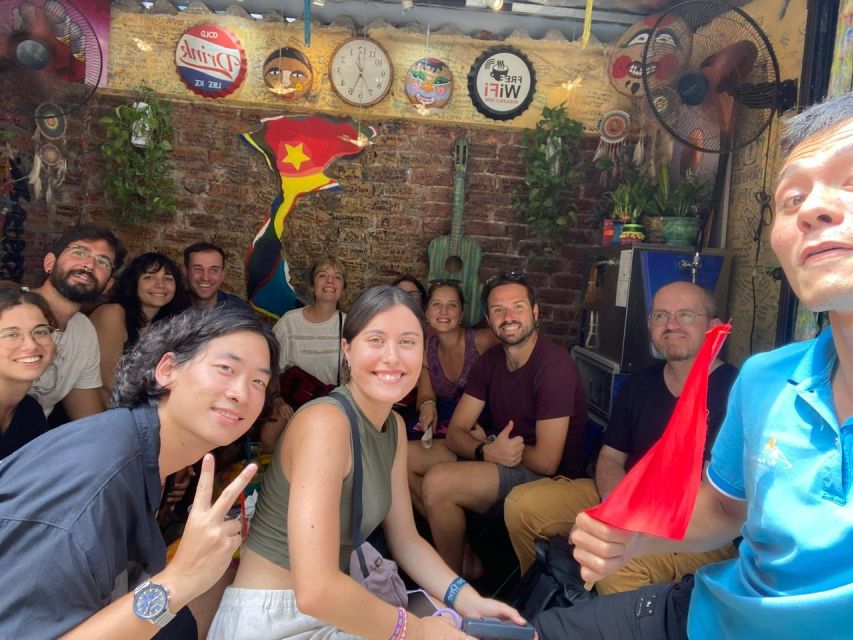
I like the way the tour connects major landmarks with small local stops, including a communal house and coffee break. I also like the private format, which lets guides such as Minh, Nathan, Tee, and Khoi adjust the pace, answer questions, and change the route when needed. The drawback is the amount of walking in three and a half hours, with uneven streets, traffic, and little shelter from heat or rain.
Key points at a glance
- A compact history lesson: Follow Hanoi from Thang Long and imperial traditions to French-era engineering and modern street life.
- Coffee is part of the culture: Stop for egg coffee, salt coffee, or coconut coffee, with food and drinks paid separately.
- Good first-day choice: The route teaches street-crossing basics, explains local customs, and gives you practical ideas for later meals.
- Private and adjustable: The guide can adapt the pace and route, and taxis may be used when time or weather calls for it.
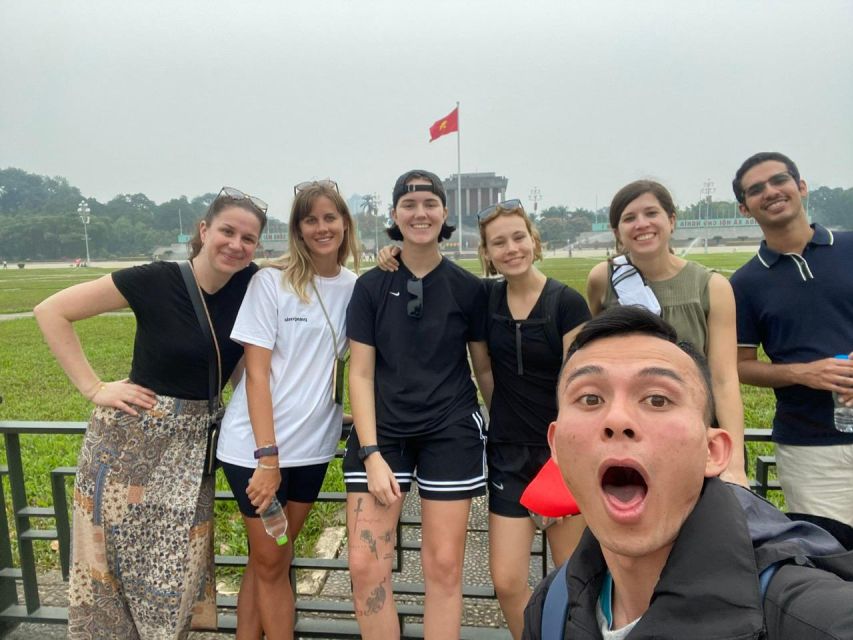
- A full city sampler: See Ngoc Son Temple, a communal house, Thanh Ha Street, Long Bien Bridge, Dong Xuan Market, and Train Street.
- Bring sensible shoes: This is a serious walking tour, not a bus ride with brief photo stops.
Hanoi in one walk, from temple island to Train Street
At $34 per person for 210 minutes, this tour is priced as an introduction to Hanoi rather than a specialist history walk. The entrance ticket and hotel pickup and drop-off are included, while food, drinks, and a guide tip are extra.
That price makes sense if you are new to Hanoi and want someone to connect the pieces. On your own, it is easy to see Ngoc Son Temple, Dong Xuan Market, or Long Bien Bridge as separate attractions. A guide gives them a shared story: old beliefs, colonial infrastructure, commerce, family life, and the city’s newer fascination with Train Street.
The private format adds value. You can ask why people burn incense, how to cross a Hanoi street, what to order at a coffee shop, or where to eat later. The route is not locked in stone. Guides have changed plans for city events, rain, timing, and individual needs.
This flexibility has limits. Three and a half hours is enough for an excellent first look, but not enough for long museum visits, leisurely meals, and every stop in equal depth. Expect a brisk introduction with short visits and plenty of time on foot.
Other old-quarter wanders in Hanoi:
- Hanoi: Guided Food Tour with Train Street Visit
★ 4.9 · 6,239 reviews - Hanoi: Street Food Tour with Train Street & Hidden Alleyways
★ 5.0 · 2,831 reviews - Hanoi: Guided Street Food Tour with Train Street Experience
★ 4.9 · 2,479 reviews
Starting with Ly Thai To and Hoan Kiem Lake
The route begins at the Ly Thai To Monument, near Hoan Kiem Lake, unless your selected option uses another starting point. The statue recalls Emperor Ly Thai To, who moved the capital to Thang Long in the eleventh century. That decision shaped Hanoi’s role as Vietnam’s political center.
This is a useful opening because it gives you a simple timeline before the streets become busy. Your guide can place the Old Quarter, lake, temples, and later French buildings in the same story. Guides have also used this early part of the walk to explain local customs and the basics of crossing Hanoi’s traffic.
You will spend about 15 minutes here, so do not expect a long historical lecture. Think of it as orientation. The best benefit is learning where you are and how the city grew around this central lake.
Ngoc Son Temple and the lake’s old legends
Next comes Ngoc Son Temple, with about 30 minutes for a guided visit and photographs. Reached by a red bridge on Hoan Kiem Lake, the temple is one of Hanoi’s most recognizable cultural sites.
Your guide can explain the religious and legendary associations tied to the lake, as well as the role of temples in Vietnamese life. This is where the tour moves beyond architecture. You begin to see why a place of worship remains part of an active city center, not just a monument for photographs.
Photography inside is not allowed, so be ready to put your phone away in the interior. That rule matters if you are used to photographing every detail. Instead, listen to the guide and take your pictures outside.
The 30-minute stop is enough for a first visit. If you want a quiet, detailed study of every carving and altar, you may want to return on your own. For an opening walking tour, the timing is sensible.
A communal house on Đình Kim Ngân
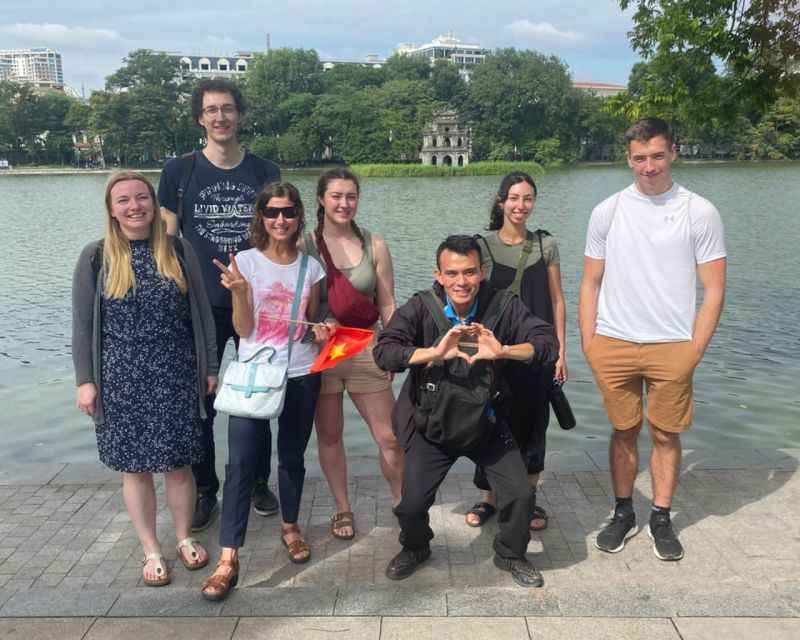
Đình Kim Ngân offers a different look at Hanoi. This communal house is tied to traditional community life, and it helps explain how neighborhoods gathered around shared worship and local identity.
I like this stop because it is less obvious than the city’s famous temple. You get a better sense of Hanoi’s older social structure, where a communal building served more than one purpose. Your guide can point out details that you might pass without understanding.
The visit lasts about 30 minutes. That gives the guide time to explain the setting without turning the stop into a long formal lecture. As with other interior sites, follow the photography rules and dress and behave respectfully.
This part of the walk is also a reminder that Hanoi is not only about grand landmarks. Some of its most useful lessons come from modest buildings tucked into ordinary streets.
Other walks around Hanoi:
- [HOT] Hanoi Old Quarter Walking Street Food – Small Group Tour
★ 5.0 · 2,163 reviews - Private Walking Tour of Hanoi City
★ 5.0 · 1,251 reviews - Hanoi: Small-Group Street Food Walking Tour
★ 4.8 · 1,165 reviews - Private Hanoi Street Food Walking Tour With Real Foodie
★ 5.0 · 1,042 reviews
Thanh Ha Street and the city’s narrow lanes
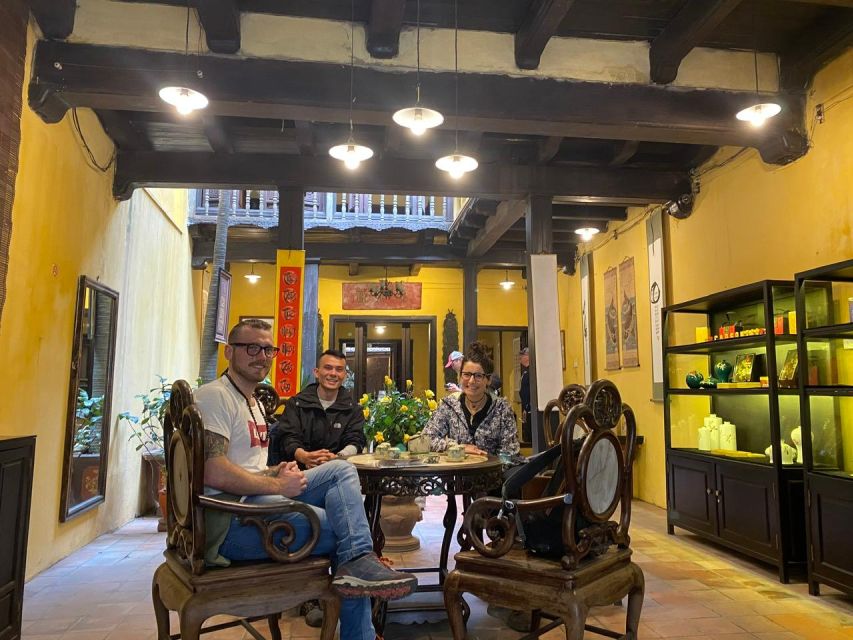
The stop at Thanh Ha Street takes about 15 minutes and works as a short transition between formal sights and daily commerce. You may pause for photographs, hear about the area, and see how older streets function as working parts of the city.
The route also refers to ancient houses, including Ma May Ancient House, as part of the wider introduction to Hanoi. Exact stops can vary, so you should treat the plan as a guide rather than a guarantee that every listed site receives the same amount of time.
That flexibility is one of the tour’s practical strengths. Guides have adjusted routes for events and weather, still fitting in heritage houses, markets, coffee, and Train Street. If one place is closed or crowded, your guide may shift the order or substitute another stop.
Long Bien Bridge and French-era Hanoi
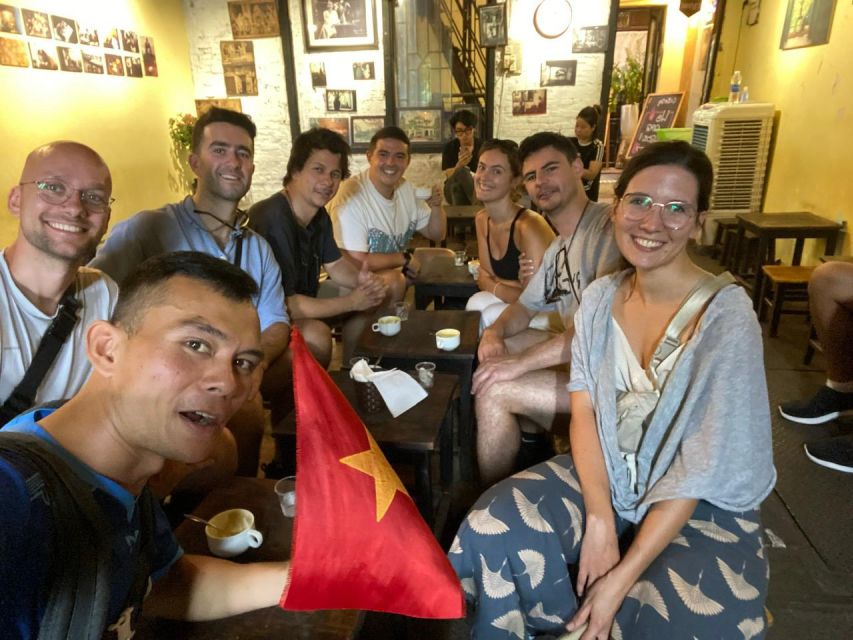
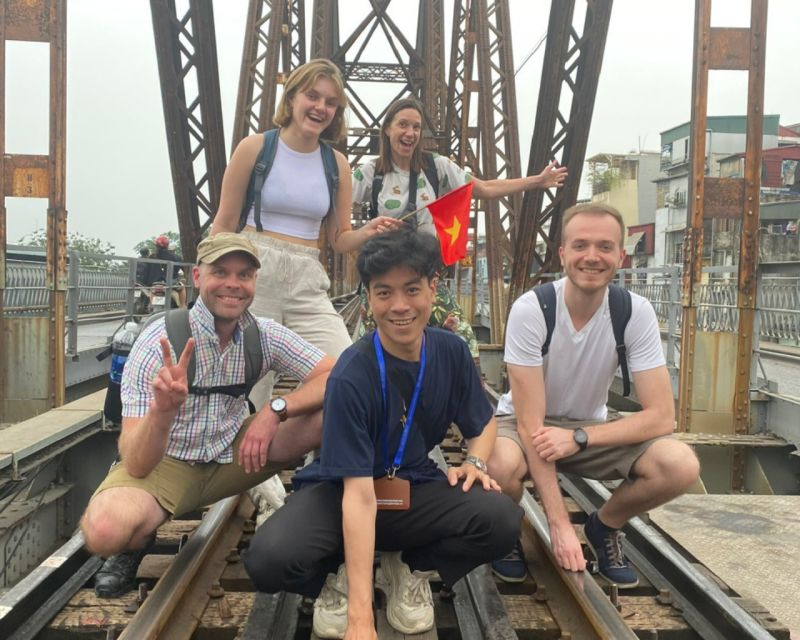
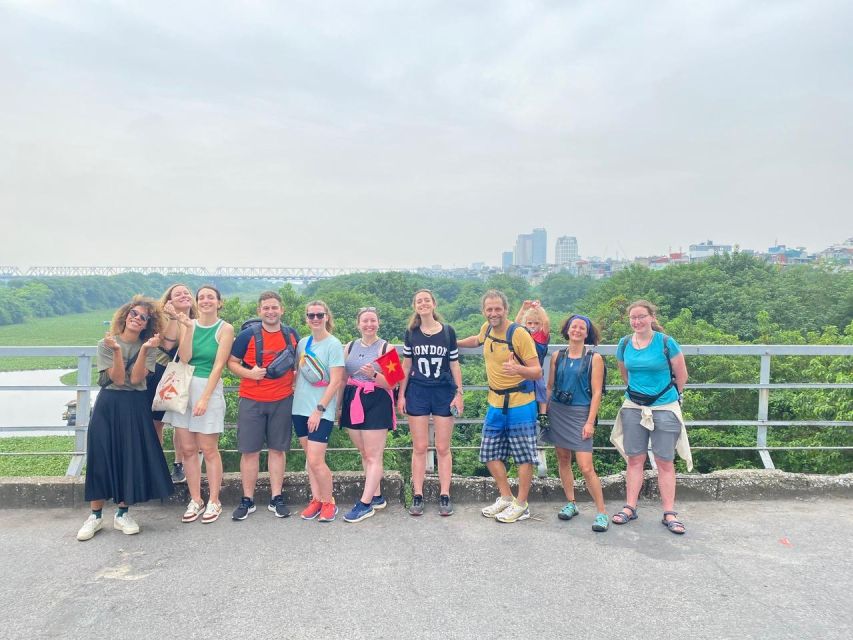
Long Bien Bridge is one of the most memorable stops, with about 30 minutes for a visit and photographs. Built during the French colonial period, the bridge represents a very different chapter from Ngoc Son Temple and the communal house.
The bridge helps you understand Hanoi as a city shaped by outside power, war, transport, and trade. It is also an active piece of infrastructure, not a preserved object behind glass. Your guide can explain its place in the city’s past while you look at the structure and the movement around it.
Do not expect a long crossing on foot as part of the published route. The stop is listed as a visit and photo opportunity, with the guide providing context. The bridge can be exposed to sun, wind, and traffic, so comfortable shoes and attention to your surroundings matter.
This is one of the places where the tour’s timeline works well. The temple represents older traditions, while Long Bien Bridge shows how Hanoi changed under French rule and continued to change afterward.
Dong Xuan Market and practical Hanoi
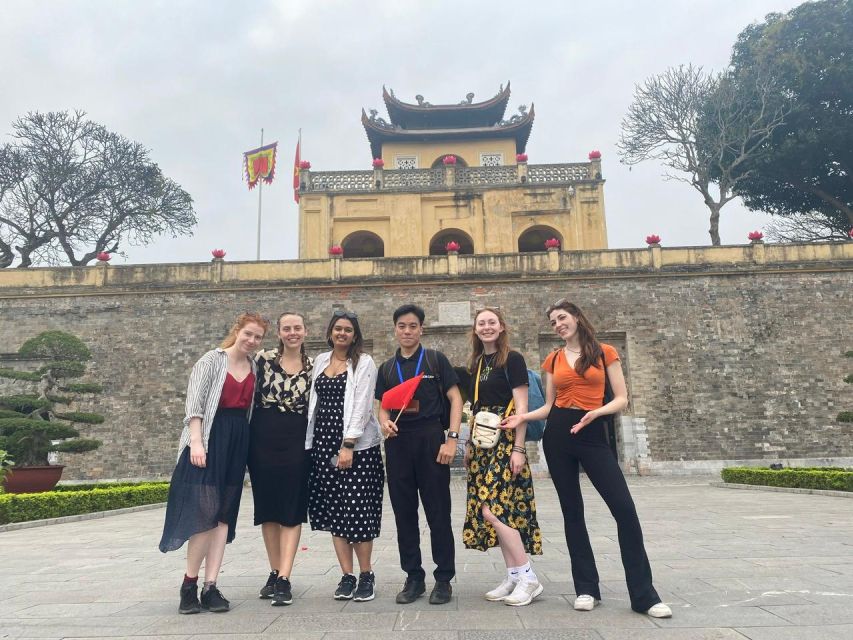
Dong Xuan Market gives you a closer look at trade and everyday shopping. The planned visit lasts about 30 minutes, enough to walk through the market area, take photographs, and ask questions about the goods and the way business works.
A guide is especially useful here because markets can feel confusing at first. You can ask what foods are common, which snacks to try, and where to look for meals later. The tour does not include food or drinks, but the guide’s recommendations can save you from choosing a meal at random.
Keep your expectations realistic. This is not a dedicated food tour, so you will not spend the whole afternoon eating. It is a city walk with food advice built in. That balance suits you if you want orientation before exploring Hanoi’s dishes on your own.
The market also breaks up the monuments. After temples and colonial architecture, you see Hanoi as a place where people buy, sell, carry, cook, and work.
Egg, salt, or coconut coffee
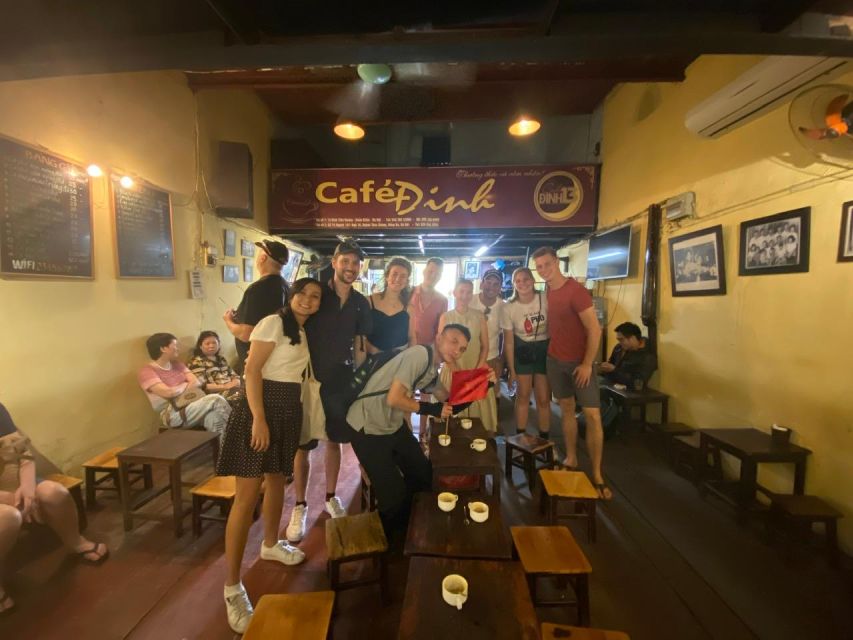
The coffee stop is one of the most useful and enjoyable parts of the route. Depending on the guide and schedule, you may try egg coffee, salt coffee, or coconut coffee.
Egg coffee is the signature choice associated with this tour, and one guide has taken visitors to a café connected with the origins of the tradition. The drink is sweet, creamy, and unlike ordinary drip coffee. Salt coffee offers a different balance, while coconut coffee is cooler and often more dessert-like.
Food and drinks are not included, so budget separately for this stop. That is a small extra cost, but it gives you a chance to sit down, ask questions, and watch Hanoi for a few minutes rather than walking nonstop.
This is also a good time to ask for restaurant suggestions. Guides have recommended local snacks, Vietnamese doughnuts, and places to eat beyond the main tourist streets. You are not simply being handed a coffee. You are learning what to order after the tour ends.
Train Street, with realistic expectations
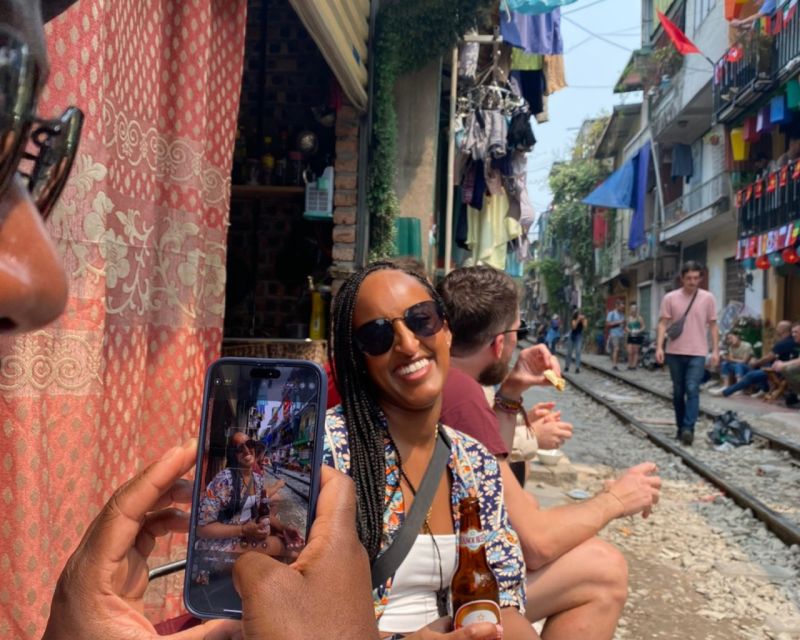
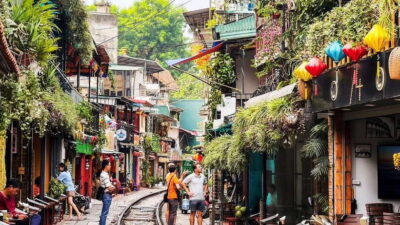
The final major stop is Hanoi Train Street, usually planned for about 30 minutes. The narrow railway corridor became famous because trains pass close to homes, cafés, and walls. It is one of Hanoi’s most unusual modern sights, but it is also a place where safety and access can change.
Your guide helps you reach the area and explains how to behave around the tracks. Follow instructions closely. Do not step onto the rails for a photograph or treat an approaching train as a photo prop.
The timing can be important. One guide used taxis when needed so the group could arrive in time for coffee and a train passing. That example shows why the private format matters: the route can be adjusted instead of following a rigid group schedule.
You should also understand that Train Street may not feel like a secret local corner. It is a well-known attraction, and conditions can change. The value is not just the photograph. Your guide can explain how this railway space sits beside ordinary homes and businesses, and how modern Hanoi turns unusual corners into social and commercial spaces.
What the guides add
The guides named in the available feedback include Minh, Nathan, Tee, Khoi, Sarah, Mark, James, Son, Nam, and others. The person assigned to you may differ, but the strongest pattern is clear: the tour depends heavily on the individual guide.
You can expect English commentary, personal stories, local customs, historical explanations, and help with practical problems. One guide helped a visitor learn how to cross Hanoi’s streets with more confidence. Another offered to arrange a taxi when a guest became unwell. Those details matter because they show the guide’s role is not limited to reciting dates.
The best approach is to ask questions. Ask about restaurant choices, coffee, etiquette, family life, traffic, and places to visit afterward. Guides have shown flexibility when rain, city events, or group needs changed the planned route.
The pace has worked well for older participants, but one person found a guide moved a little fast. Tell your guide early if you need slower walking or longer pauses.
Pace, comfort, and who should book
You need comfortable shoes. The walk covers several parts of central Hanoi and includes streets, market passages, bridge areas, and busy public spaces.
This tour is not suitable for pregnant women, people with mobility impairments, or children under 120 centimeters. The supplied information also identifies a private group, so you should have more control over the pace than on a large shared outing, but the route remains physically active.
I would book it for:
- First-time visitors who want a city overview before exploring alone
- Couples, families with older children, and small private groups
- People who enjoy history but also want coffee, markets, and street life
- Anyone nervous about traffic, directions, or choosing food
- Visitors who want Train Street included without building the route themselves
I would choose a different experience if you want a slow food crawl, a long museum visit, or a quiet photography session. This tour covers many locations, so the reward is variety rather than deep time at one place.
Is $34 a fair price?
At $34 per person, the value depends on how much help you want. You pay for a 210-minute private walking experience, an English-speaking guide, hotel pickup and drop-off, and an entrance ticket.
You are not paying for a full meal, transport between every stop, or extensive entry to multiple museums. Food and drinks are extra, and taxis may be used when needed, as shown by the flexible routes guides have provided.
For a first day in Hanoi, I think the price is fair. The street-crossing help, food advice, local context, and adjustable route can save you time and uncertainty. If you already know the Old Quarter well, you may find the package less necessary.
Free cancellation up to 24 hours before the start and reserve-now, pay-later booking also make it easier to fit into a changing Vietnam itinerary.
Should you book this Hanoi walking tour?
Book it if you want a lively first look at Hanoi that mixes major sights with ordinary streets. The strongest parts are the guide’s local explanations, the private pacing, the coffee advice, and the movement from temple and communal house to bridge, market, and Train Street.
Go in prepared for walking, traffic, weather, and short stops. Bring comfortable shoes, keep some money for coffee and snacks, and tell your guide what interests you most. At 4.9 from 65 ratings, the experience has a strong record, but the real value will depend on your assigned guide and your willingness to ask questions.
For most first-time visitors, especially those arriving in Hanoi without a clear plan, this is a useful and entertaining introduction to the city.
FAQ
How long does the Hanoi walking tour last?
The tour lasts 210 minutes, or three and a half hours.
What sights are included?
The route includes the Ly Thai To Monument, Ngoc Son Temple, Đình Kim Ngân communal house, Thanh Ha Street, Long Bien Bridge, Dong Xuan Market, and Hanoi Train Street. Ancient houses and other local stops may also be included.
Is hotel pickup and drop-off included?
Yes. Hotel pickup and drop-off are included, and you should wait in your hotel lobby.
Is the tour private?
Yes. The activity is offered as a private group experience.
What language does the guide speak?
The live tour guide speaks English.
Is food included in the price?
No. Food and drinks are not included. The guide can recommend what and where to eat, and the route may include egg, salt, or coconut coffee.
Can I take photographs inside the sites?
No. Photography inside is not allowed. You can take photographs at designated outdoor stops and photo points.
What should I bring?
Bring comfortable shoes because the tour involves substantial walking.
Can I cancel the booking?
Yes. You can cancel up to 24 hours in advance for a full refund. You can also reserve now and pay later.
Newly reviewed in Hanoi
- Private Full-Day Tour to Halong Bay from Hanoi★ 5.0 · 44 reviews
- Private Evening Walking Tour – Cyclo & Water Puppet Show in Hanoi Old Quarter★ 5.0 · 19 reviews
- Ba Vi National Park Private Tour: Sightseeings & Jungle Hikking★ 4.5 · 26 reviews
- Full-Day Hanoi City Tour with Hidden Local Life Experience★ 5.0 · 27 reviews
- Hanoi Epic tour 6D5N Hanoi – Halong Bay – Ninh Binh – Sapa★ 5.0 · 51 reviews
- Private transfers Hanoi <=> Puluong 1 Way (Free Hotel Pickup)★ 5.0 · 20 reviews
- Hanoi Airport Pick-up (Private Ride From Hanoi Airport to Hotels)★ 4.5 · 253 reviews
- Noi Bai Airport transfer to Hotel or Vice versa★ 5.0 · 144 reviews
Train Street & Old Quarter Tours, compared.
Street Food Tour with Train Street & Hidden Alleyways
Read our review →
Guided Street Food Tour with Train Street Experience
Read our review →
[HOT] Hanoi Old Quarter Walking Street Food – Small Group Tour
Read our review →
Hanoi City Tour Highlight, Train Street Combine visit Countryside
Read our review →
Private transfer between Hanoi Airport (HAN) and Hanoi Old Quarter
Read our review →
Hanoi Jeep City Highlight, Backstreet, Train Street, Countryside
Read our review →
Hanoi Food Tours in Hanoi Old Quarter (Small Group/Private)
Read our review →Browse the lists this tour appears in