
Reviewed · CYCLING TOURS
Hoi An: Morning Countryside Tour by Bike
The best part of this Hoi An bike tour is what happens after you leave the town behind. Rice fields open beside narrow roads, coconut palms lean over canals, and family workshops show you how rice paper, sleeping mats, boats, and rice wine are made. Tam, Mike, Huan, and other local guides have earned strong praise for their English, humor, and useful explanations.
I like the small group, which keeps the ride calm and makes it easy to ask questions. I also like the way the stops support working families rather than sending you through a row of salesrooms. The main drawback is the ride through Hoi An’s busier streets at the beginning, plus a few reports of firm, uncomfortable bike seats.
Key points at a glance
- Around 20 kilometers on mostly flat roads: This is an easy-to-moderate ride, with only a few brief inclines.
- A real countryside route: You pedal past rice paddies, canals, vegetable gardens, coconut palms, and small villages.
- Small groups of up to eight: Two guides may lead larger small groups, with one at the front and one at the back.
- Hands-on local traditions: You may see or try rice paper, noodles, sleeping mats, boat building, and rice wine production.
- A family chapel visit: A local home offers a look at Hoi An’s distinctive tradition of family worship chapels.
- Good value at $29: Bikes, helmets, snacks, entrance fees, activities, insurance, and an English-speaking guide are included.
Leaving Hoi An by Bicycle
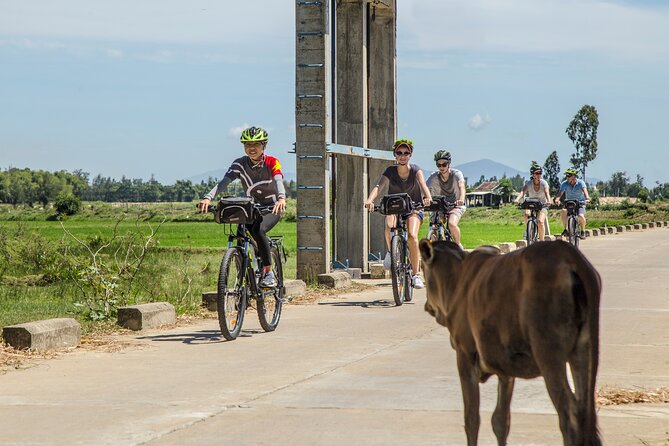
This four-hour morning tour begins at the Discova Day Tour Shop at 25 Dinh Tien Hoang. Look for the white house at the intersection. You start with a bike fitting and safety briefing, then roll out through Hoi An’s backstreets before crossing toward the southern villages of Quang Nam Province.
The first section is the least peaceful. Hoi An roads can be busy, and you need to pay attention while riding through town. The guide explains the road rules, checks your equipment, and keeps the group together. One useful feature is the occasional use of two guides, one at the front and one behind, so nobody is left behind.
Once you reach the quieter roads, the tour changes character. Traffic thins, buildings spread out, and the ride becomes less about getting somewhere and more about noticing daily life. You may see people heading to their fields by bicycle, gardens beside the road, and boats moving along waterways.
The route is close to 20 kilometers, though some groups report nearer 18 kilometers and a total time closer to five hours. That difference depends on stops, weather, and the pace of the group. You should allow a relaxed half-day rather than planning something immediately after the stated four-hour finish.
More riding near Hoi An:
- Hoi An Countryside Bike Cycling Tour with Basket Boat and lunch
★ 5.0 · 325 reviews - Ninh Binh Full-Day Tour from Hanoi to Hoa Lu, Tam Coc & Mua Cave Via Boat & Bike
★ 5.0 · 4,384 reviews - Ninh Binh Day Trip: Hoa Lu-Trang An/Tam Coc-Mua Cave-Cycling-Boat
★ 5.0 · 1,886 reviews
Cẩm Kim and the First Taste of Country Life
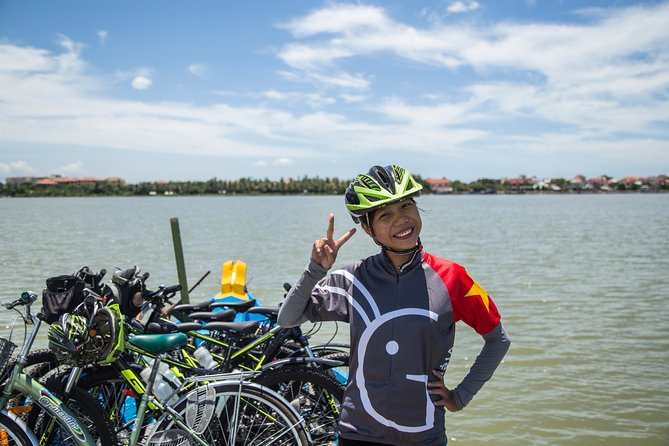
Cẩm Kim is the main countryside section of the tour. The roads here are quiet and mostly flat, making this a good choice if you want to ride without signing up for a demanding cycling trip.
The scenery is simple but rewarding. Rice fields, coconut palms, canals, and vegetable plots replace the lantern shops and cafés of central Hoi An. The guide gives meaning to what you are seeing, explaining village routines and how local families balance older customs with the pressure of tourism.
One early stop is a family kitchen preparing bánh bèo, small steamed rice cakes often eaten as a snack or breakfast food. The value of this stop is its ordinariness. You are not being shown a grand attraction. You are seeing a familiar local food made in a home setting, then getting a chance to taste it.
Some outings also include rice paper, noodles, or coffee, depending on the day and the families available. You might be invited to try part of the process. These additions are not fixed in the same way as the main route, so expect the exact craft demonstrations to vary.
That flexibility is useful. It keeps the morning connected to real working households rather than a rigid performance. It also means you should not book this ride expecting every stop to happen in exactly the same order.
A Family Home and Hoi An’s Heritage Chapels
The visit to a local home is one of the more thoughtful stops. Here, you learn about family chapels, a distinctive part of Hoi An’s cultural life. These small places of worship and remembrance reflect the importance of family ancestors and shared household traditions.
The stop gives you context that a ride through the countryside alone would miss. Vietnamese village homes are not just places to sleep. They can also hold family memories, religious practice, and symbols passed through generations.
Your guide matters a lot here. Tam, Mike, Huan, Thom, and other guides have been praised for explaining local customs clearly and answering questions without rushing the group. The strongest guides do not simply name an object and move on. They explain why it matters.
You should also approach this visit with respect. This is a family home, not a museum. Listen carefully, ask before taking photographs, and remember that the most valuable part is the conversation.
Duy Vinh’s Canals, Boats, and Working Villages
The route continues toward Duy Vinh, following smaller waterways and village roads. This section gives you some of the best riding of the morning. The ground is largely flat, and the pace leaves time for photographs and short stops.
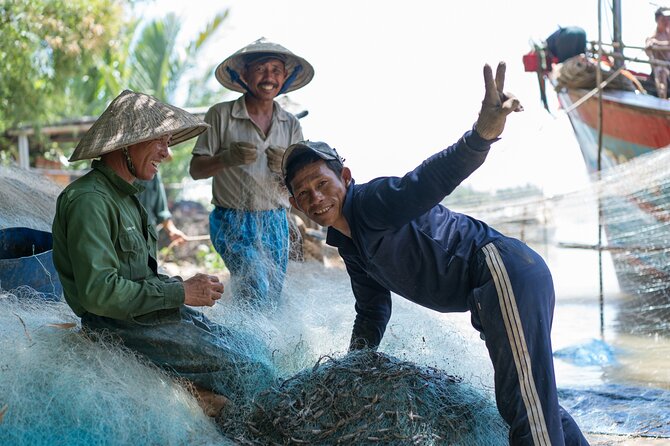
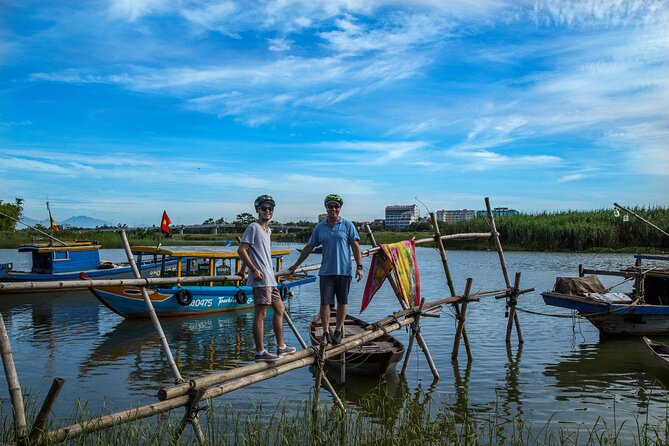
A wooden boat-building site offers a look at a trade tied to fishing and river life. You may see craftsmen shaping hulls by hand, a slow process that makes the finished boats feel less like equipment and more like pieces of local knowledge. If the timing works, families may also be cleaning fishing nets near the shore.
This stop is especially good for anyone interested in work rather than monuments. You see how a coastal community earns a living, and you get a better sense of why waterways remain important around Hoi An.
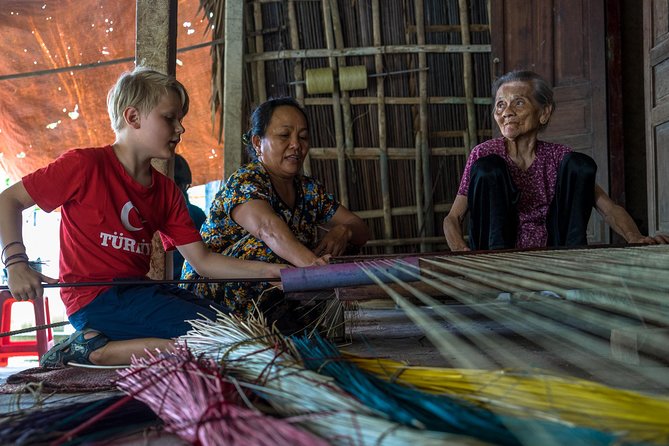
The route also includes traditional craft families. Depending on the morning, you might see sleeping mats being woven, rice paper being made, baskets being prepared, or other handmade goods. The mat-weaving stop is particularly memorable because it is close and practical. You can watch the material being handled and sometimes try the technique yourself.
The tour makes an effort to avoid pushy shopping. You may see finished products, but the purpose is to meet the people making them and understand the work. If you want to buy something, ask your guide about it. You should not feel pressured to make a purchase.
Same base, a completely different day:
- Hoi An: Basket Boat Ride in the Coconut Forest
★ 4.9 · 4,956 reviews - Hoi An: Vietnamese Coffee Culture and Coffee Making Class
★ 4.9 · 4,006 reviews - Hoi An: Vietnamese Foldable Lantern Making Class
★ 4.9 · 3,742 reviews - Cooking Class Hoi An:Local Market, Basket Boat, Fishing & Cooking
★ 5.0 · 3,660 reviews
Rice Wine, Local Snacks, and the Last Stop
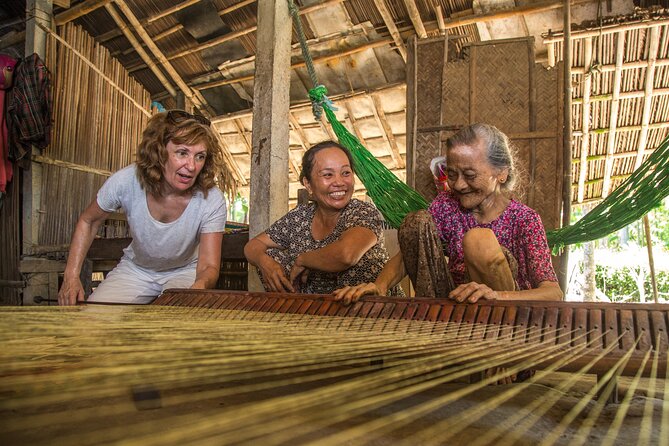
The final major stop is a family-run rice wine distillery. Rice wine is made in the traditional way, and the guide explains the basic process before you taste it.
You can sample the regular version, while adventurous adults may try a stronger variety infused with herbs. Some outings have included unusual tasting jars, including scorpion whiskey. The selection can vary, so treat the tasting as a local introduction rather than a fixed drinks menu.
This stop is fun, but it is also a useful lesson in food culture. Fermented rice products have a place in everyday Vietnamese life, and tasting the drink after seeing how it is made gives the stop more meaning.
Drink carefully. The stronger local versions can catch you by surprise, especially in the morning and in warm weather. You can simply decline or keep your taste small. The tour is about the craft and the conversation, not about drinking a large amount.
After the distillery, you cycle back to Hoi An. The return journey gives you time to settle into the rhythm of the ride, though you will again encounter some town traffic near the finish.
What the Cycling Is Really Like
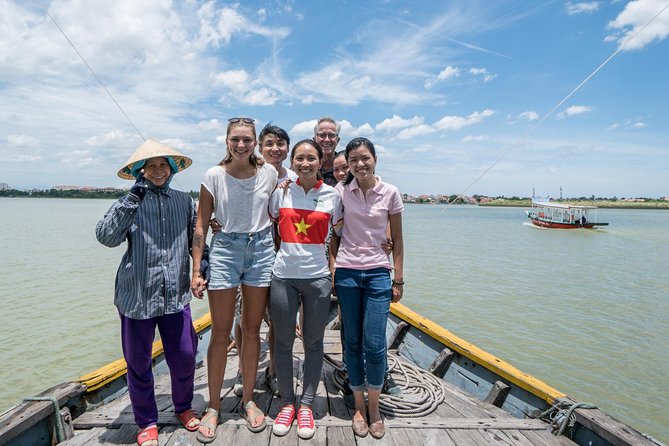
You do not need advanced cycling skills for this trip. The route is described as suitable for moderate fitness, and the roads are almost entirely flat. A few short inclines last only seconds, according to the most detailed accounts of the ride.
The bicycles are high-quality mountain bikes, and the operator provides helmets. Bike fitting is taken seriously, so give your height when booking. That helps the team arrange the right size. Several people specifically noted that the bikes were in good condition and easy to ride.
The seat is the weak spot. One person found it quite uncomfortable, so padded cycling shorts or a small seat cover could make the morning better. Comfortable shoes are required, and breathable clothing is sensible in Hoi An’s heat.
The pace is relaxed, with stops for food, photographs, explanations, and conversation. You are not racing between attractions. Still, cycling in Vietnam requires alertness. Watch the road, follow the guide, and be prepared for a busier start and finish before the route opens into the countryside.
Children can join with kids’ bikes, and discounts are available for children aged 12 and under. A child seat can be requested, but it accommodates a child weighing up to 14 kilograms. Give the operator each rider’s height and any dietary requirements when booking.
Guide Quality and Group Size
The maximum group size is eight, a useful limit for this kind of outing. Smaller groups make road instructions easier to hear and give you more time at family homes and workshops.
The guides are a major part of the value. Tam is frequently praised for his warmth and explanations, while Mike is noted for a clear safety briefing and strong English. Huan has been especially appreciated by families for his humor and understanding of Vietnamese history and customs. Other guides named by participants include Ky, Quang, Thom, Huang, Tan, and Hoan.
That list matters because the exact personality of your morning depends on who leads it. The common thread is a local English-speaking guide who can explain what you are seeing and help with bike issues if needed.
A guide also helps you behave well around local families. You learn when to take a photograph, how to approach a workshop, and what a craft means beyond its finished product. You could cycle these roads alone, but you would miss much of that context.
Is $29 Good Value?
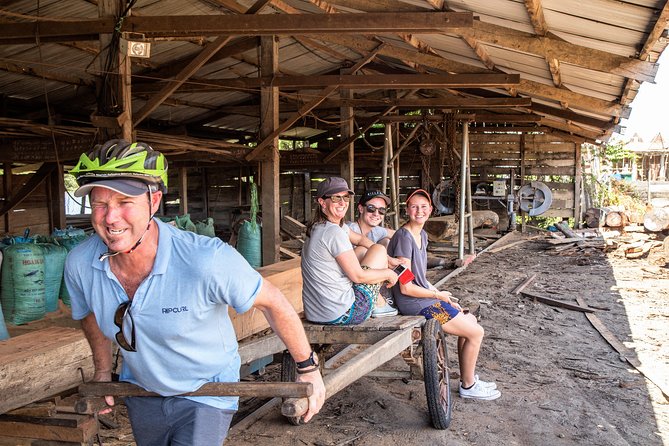
At $29 per person, this is a strong value if you want both exercise and cultural stops. The cost includes the bicycle, helmet, licensed English-speaking guide, snacks, entrance fees, activities, and accidental insurance. It also buys a small-group format rather than a large bus outing.
The price is higher than simply renting a bicycle and following a map. That comparison is fair. But a rental does not provide access to family homes, a guided chapel visit, craft demonstrations, a boat-building site, or a rice wine tasting.
The value is strongest for first-time visitors who want help making sense of rural Hoi An. It is also good for people who like meeting craftspeople and tasting local food but do not want a shopping-focused tour.
The tour is less compelling if you are an experienced cyclist seeking long distances or empty roads. Twenty kilometers is enough for a morning outing, but not a serious training ride. You are paying for the local connections and interpretation as much as for the cycling.
Who Should Book This Morning Ride?
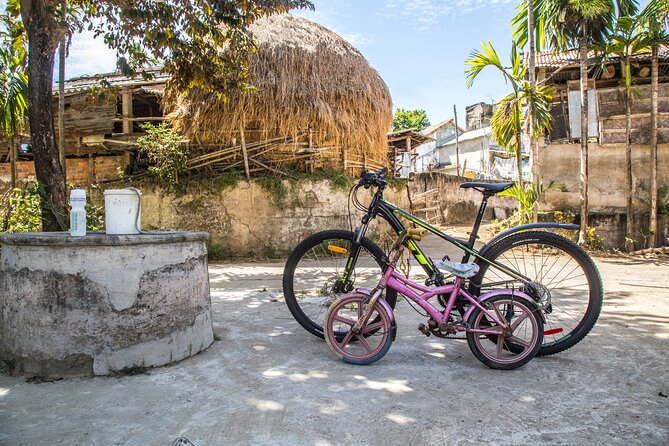
I would choose this tour if you want to see Hoi An beyond the Old Town and prefer active sightseeing. It suits couples, families with older children, and solo visitors who like a small group.
It works well early in a Hoi An stay because it gives you a basic feel for the area, its food, waterways, and village crafts. It also leaves much of the day free, since the ride returns around late morning or midday.
Families should note the heat, the traffic near town, and the saddle comfort issue. Children need to be confident on a bicycle and able to follow road instructions. The kids’ bike discount and child seat option help, but the child seat limit is 14 kilograms.
People who dislike alcohol can still enjoy the distillery. Tasting is optional. People with dietary requirements should give notice when booking so the food stops can be handled properly.
The tour is not suitable for pets, and comfortable shoes are the only listed item you need to bring. Water is provided on some outings, but carrying personal sun protection is sensible even though it is not listed as a required item.
Should You Book It?
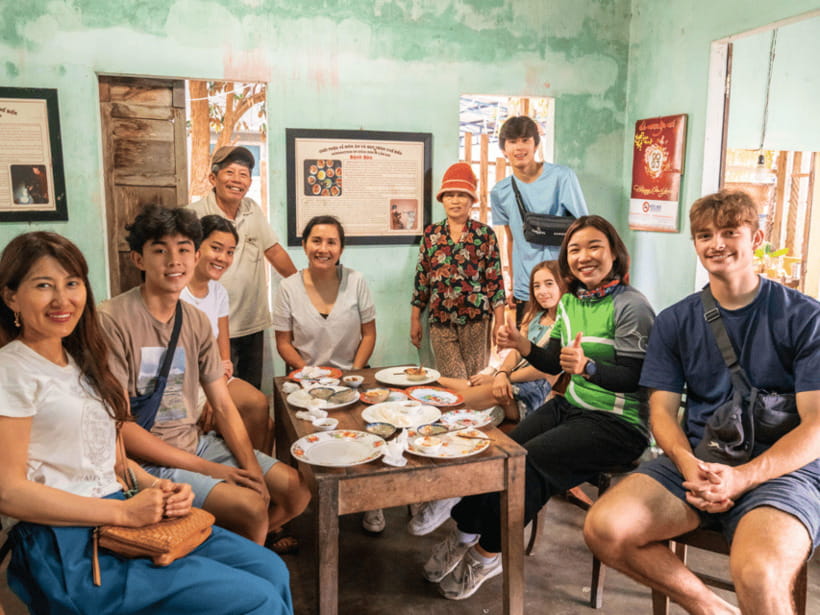
Book it if you want a relaxed ride through real working villages, not a strenuous cycling challenge. The strongest reasons are the small group, well-maintained bikes, local guides, and the range of stops: bánh bèo, family chapels, boat building, mat weaving, and rice wine.
Skip it if you want to avoid all town traffic, dislike warm-weather exercise, or prefer a fixed sightseeing schedule with no variation. The ride can run longer than four hours, and the exact craft stops may change.
For most visitors spending a few days in Hoi An, I would book this one. At $29, it gives you a useful morning outside the tourist center and introduces you to people who still make, cook, weave, and build by hand.
FAQ
How long is the Hoi An countryside bike tour?
The stated duration is four hours. Some outings have taken closer to five hours because of the stops and pace, so keep your late morning flexible.
How far do you cycle?
The route covers around 20 kilometers. Some outings have been closer to 18 kilometers.
Is the cycling difficult?
The route is mostly flat and suitable for anyone with moderate fitness. There are only a few very short inclines, but you should be comfortable cycling through some busier roads near Hoi An.
How large is the group?
The small-group tour has a maximum of eight people. Private groups are also available.
Where does the tour start?
Meet at the Discova Day Tour Shop Hoi An, at 25 Dinh Tien Hoang. Look for the white house at the intersection.
What is included in the price?
The price includes a bicycle, helmet, licensed English-speaking guide, snacks, entrance fees, activities, accidental insurance, and the small-group experience.
Which language is the tour conducted in?
The live tour guide speaks English.
Can children join the tour?
Yes. Discounts are available for children aged 12 and under using kids’ bikes. A child seat can be requested for a child weighing up to 14 kilograms.
What should I provide when booking?
Provide the height of each rider so the operator can arrange suitable bikes. You should also mention any dietary requirements.
Can I cancel the booking?
You can cancel up to 24 hours in advance for a full refund. A reserve-now, pay-later option is also available.
Newly reviewed in Hoi An
- Hoi An to Hue Tour by Private Car service★ 5.0 · 165 reviews
- Top Gear Hai Van Pass between Hoi An or Da Nang to Hue★ 5.0 · 201 reviews
- Hoi An Vespa Food Tour: Authentic & Exotic Food Culture★ 5.0 · 151 reviews
- Hoi An To Hue Private Car With English Speaking Driver★ 5.0 · 179 reviews
- Hoi An To Phong Nha By Private Car★ 5.0 · 62 reviews
- Hoi An – Danang – Hue: Private Car via Hai Van Pass and More★ 5.0 · 89 reviews
- From Hoi An: My Son Sanctuary & Marble Mountains Guided Tour★ 4.7 · 290 reviews
- Secret Cocktail Experience in Hoi An★ 5.0 · 327 reviews
Cycling Tours, compared.
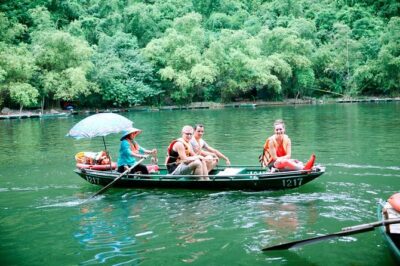
Ninh Binh Full-Day Tour from Hanoi to Hoa Lu, Tam Coc & Mua Cave Via Boat & Bike
Read our review →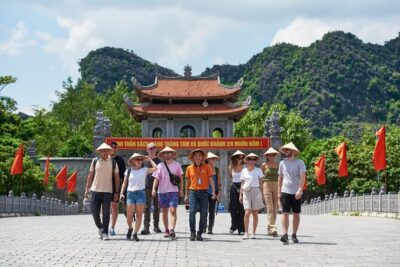
Ninh Binh Day Trip: Hoa Lu-Trang An/Tam Coc-Mua Cave-Cycling-Boat
Read our review →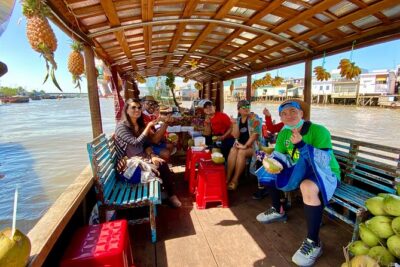
Cai Be Mekong Delta Tour: Cooking Class, Cycling & Craft Villages
Read our review →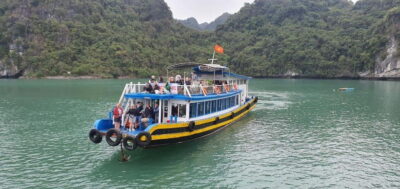
Lan Ha, HaLong bay full day- biking, kayaking, lunch
Read our review →

Mekong Delta 2-Day Tour: Floating Markets, Biking, Amazing Tour
Read our review →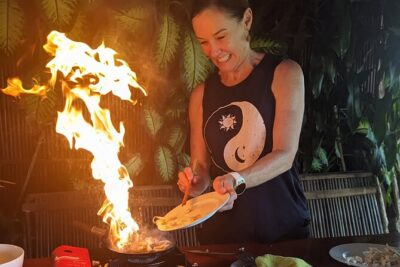
Hoi An Countryside Bike Cycling Tour with Basket Boat and lunch
Read our review →Browse the lists this tour appears in