
Reviewed · WALKING TOURS
Hue Imperial Ancient City Walking Tour
Hue’s Imperial City makes more sense when someone explains what each gate, courtyard, and palace was meant to do. This walking tour gives you that missing context, with guides such as Linh Nguyen turning a large royal complex into a readable story about emperors, family life, French rule, and war.
I especially like the small group limit of 10 and the room for questions. I also like the use of old photographs and personal observations, which help you picture buildings that were damaged or changed over time. The main consideration is that the $2 price is tip-based in practice, and entrance costs are not listed among the included items, so bring cash and confirm the ticket details before you arrive.
Key points to know before you go
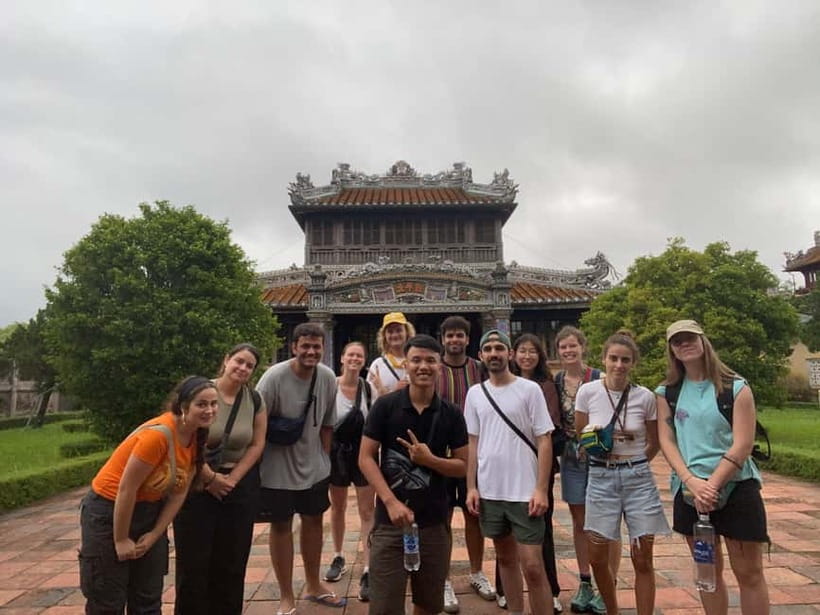
- Linh is the guide most often named: He is praised for clear English, humor, visual aids, and his ability to connect palace history with modern Vietnam.
- The route covers Hue’s central royal sights: Expect Meridian Gate, Thai Hoa Palace, Dien Tho Palace, the Forbidden City, gardens, courtyards, and other citadel buildings.
- The advertised length is 150 minutes: Some outings can feel closer to three hours, with time for photos, questions, short rests, and independent exploration.
- It is a very low-cost, tip-based experience: The booking price is $2 per person, but carry cash for a tip and check whether your Imperial City admission is separate.
- The group stays small: No more than 10 people are accepted on the tour, while bookings for groups larger than six, including children, are not accepted.
- Morning and afternoon departures are offered: Meet at the Imperial City ticket booth at 9:00 AM or 3:00 PM after confirming the time by WhatsApp or Vietnamese phone number.
Why a guide helps inside Hue’s Imperial City
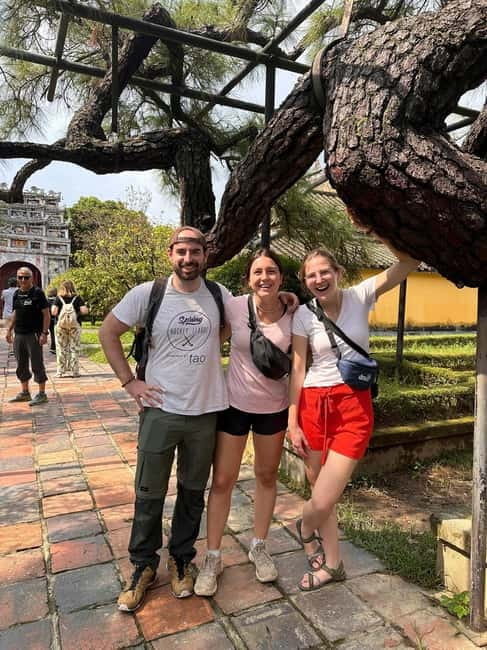
Hue’s Imperial City is not simply a collection of pretty old buildings. It was the political and ceremonial center of the Nguyen Dynasty, and its gates and halls were arranged according to royal rank, ritual, privacy, and access.
Without a guide, you can walk through the same courtyards and admire the bright roofs, carved details, gardens, and long walls. But the meaning can remain blurry. Who was allowed inside? Which building was used for public ceremonies? Where did the royal household live? Why are some structures restored while others appear incomplete?
This tour is designed to answer those questions as you walk. I like that approach because the citadel is large enough to become tiring and confusing if you simply wander from one sign to the next. A good guide gives you a route and a story, then leaves you time to look around on your own.
The guides speak English, and Linh Nguyen is the name most often associated with this experience. He is described as funny, open, and easy to understand, with a habit of using photographs to show how parts of the complex looked in earlier periods. Guides named Thanh, Thang, and Kun have also led some departures, so the exact personality and presentation may vary.
Other walks around Hue:
- Hue: Imperial City Walk, Motorbike Tour & Private Car Options
★ 5.0 · 732 reviews - Half-Day Guided Street Food Walking Tour at Hue
★ 5.0 · 116 reviews - Private Street Food Evening Walking Tour in Ho Chi Minh City
★ 5.0 · 3,175 reviews
Starting at Meridian Gate
The meeting point is in front of the Imperial City ticket booth. This is a practical place to meet, but do not arrive at the last second. You need to find the correct booth area, handle any admission requirement, and be ready for a walking tour in the heat.
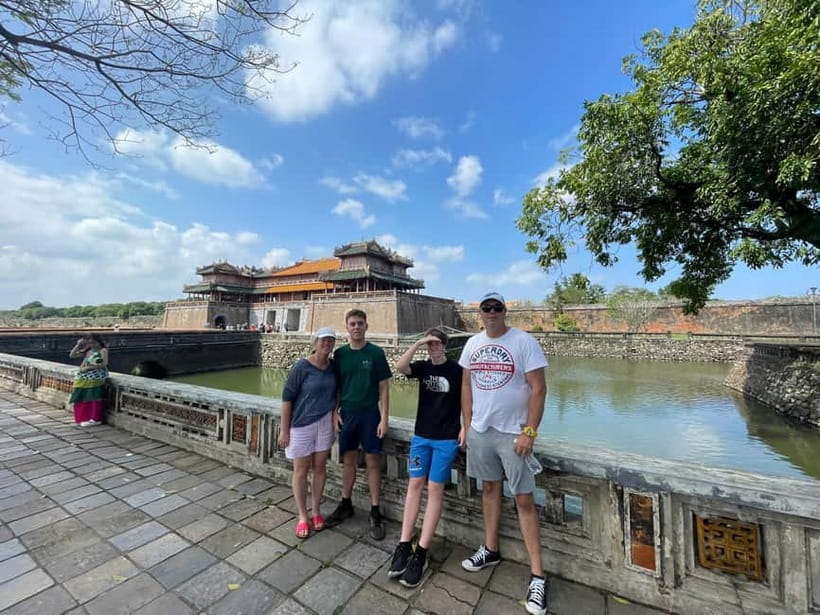
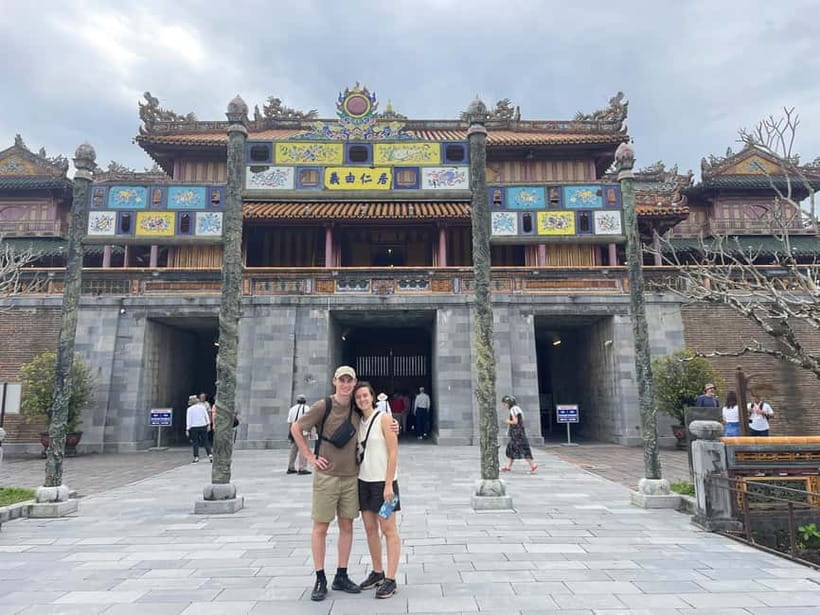
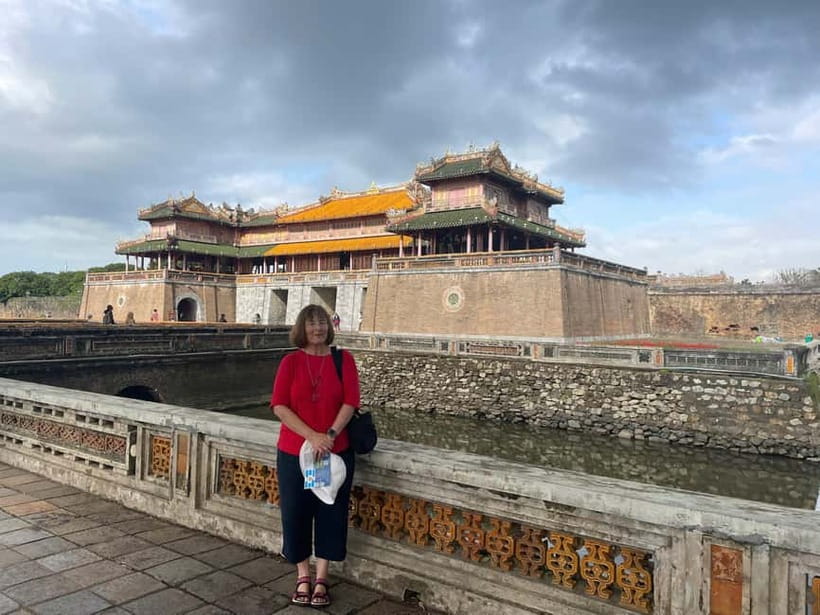
Meridian Gate, known in Vietnamese as Ngo Mon, is the grand southern entrance to the Imperial City. It is one of the first places where the scale and formal design of the complex become clear.
A guide can help you read the gate as more than a dramatic photo stop. It marked the main approach to the royal center and reflected the strict order of the court. The architecture, raised platforms, courtyards, and controlled entrances all tell you that this was a working seat of power, not just a residence.
This is also where the group begins to get acquainted. The small format matters here. With up to 10 people, you can usually hear the guide without standing shoulder to shoulder with a large crowd, and you have a reasonable chance to ask questions.
Wear shoes suited to steady walking. The tour is described as wheelchair accessible, but the complex is large and includes open courtyards, palace grounds, and changing surfaces. If you have specific mobility needs, contact the provider before booking so the route can be confirmed.
Thai Hoa Palace and the public face of royalty
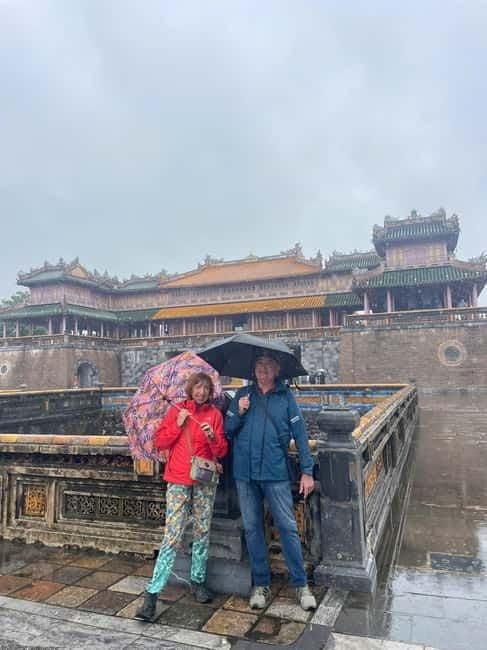
Thai Hoa Palace is the ceremonial main hall and one of the most important stops on the route. This is where the public image of the Nguyen emperors comes into focus.
The palace helps explain how royal power was displayed through position, ceremony, architecture, and decoration. A guide can point out why the building was arranged as it was and how it fitted into the larger imperial plan.
I would pay close attention here rather than rush through for photographs. The value is not only in the rooflines or painted details. It is in understanding how the palace worked as a formal stage for the emperor and court.
The tour also connects the buildings to the people who used them. You hear about customs, traditions, court life, and the daily experience of the royal household. That wider context keeps the visit from becoming a list of names and dates.
Linh is particularly praised for covering more than the emperors themselves. His explanations may move from the Nguyen Dynasty, founded in 1802, to French colonial rule and the later struggle for Vietnamese independence. That broader frame is useful because Hue’s buildings cannot be separated from the political changes that affected them.
Dien Tho Palace and the women of the royal household
Dien Tho Palace was the residence of the queen mother. It offers a different view of the imperial complex from the formal world of Thai Hoa Palace.
Here, the story shifts toward family structure, rank, and the private side of court life. The queen mother held an important place within the royal household, and the palace helps you think about who lived behind the ceremonial facades and how the wider family system functioned.
One of the more distinctive elements of this tour is its attention to customs and family expectations. Guides do not only recite architectural facts. They also use the palace to discuss Vietnamese traditions, family pressures, and the roles people held within society.
That can make the history feel more personal. You begin to picture the Imperial City as a place of routines, relationships, rules, and tensions, not just a monument preserved for modern sightseeing.
The pace is another strength. You are given time to take photographs and look around, rather than being marched from one building to the next. Still, this is not a private custom itinerary. If one explanation runs long or the group asks many questions, the available independent time may be shorter than you expect.
Same base, a completely different day:
- Hue to Hoi An ( Hoi An to Hue) Top Gear with Lefamily Riders Tours ( 1 way)
★ 5.0 · 3,156 reviews - Easy Rider private tour via Hai Van pass from Hue – Da Nang – Hoi An (1Way|Loop)
★ 5.0 · 1,542 reviews - Hue Customizable Tour with Imperial Citadel & Forbidden City
★ 4.9 · 937 reviews - Easy Rider From Hue Da Nang Hoi An Via Hai Van Pass With Mister T
★ 5.0 · 769 reviews
The Forbidden City and the emperor’s private world
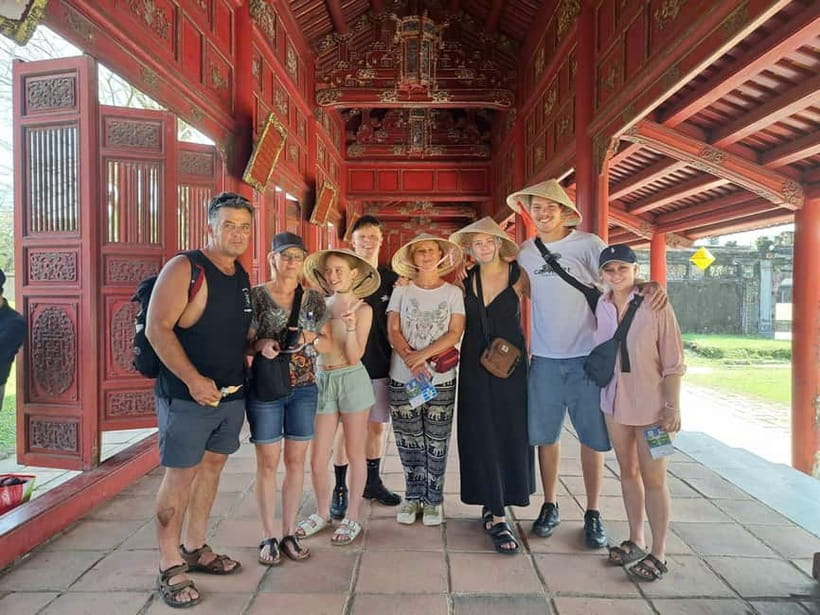
The Forbidden City was the emperor’s private area, located within the larger Imperial City. This is the part many people most want to understand, but it is also where the difference between surviving architecture and historical importance becomes clear.
A guide can explain how the complex was divided between public ceremony and private royal life. The contrast helps you understand why the walls, gates, and courtyards were arranged in layers.
The area has suffered damage and loss over time. Several people who have taken the tour stayed longer after the guided walk to explore until sunset, which tells you something practical: two and a half hours can give you a strong introduction, but it may not satisfy every photographer or history enthusiast.
I would treat the guided portion as your orientation. Listen carefully to the explanation of the Forbidden City, then use any remaining time to revisit the buildings that interest you most. This is especially useful if you want to study details or take photographs without holding up the group.
The tour does not pretend that every corner is equally preserved. Instead, photographs and historical explanation help fill in what is no longer visible. That is one of the most useful reasons to have a guide here.
A history lesson that reaches beyond the palace walls
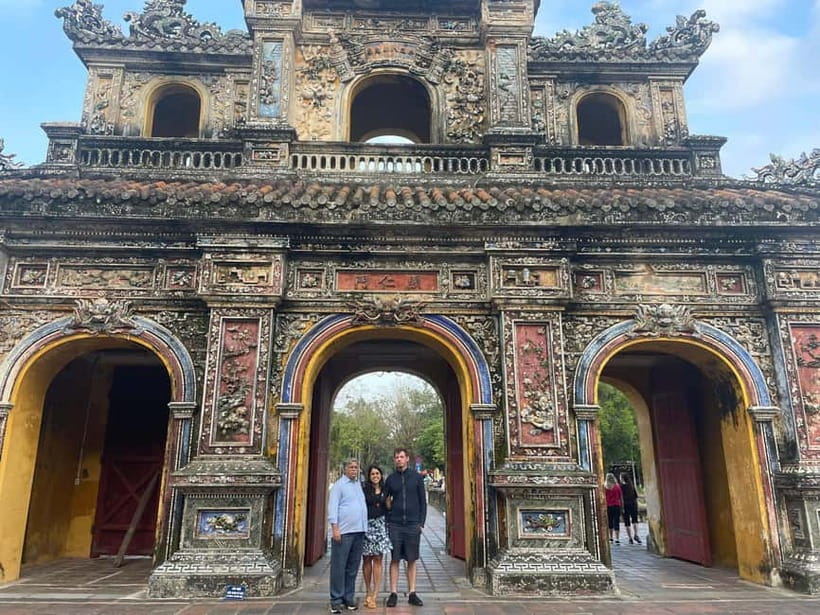
The tour’s best feature is the way it places the Nguyen Dynasty within Vietnam’s wider past. You can expect discussion of the emperors, French Indochina, the country’s fight for independence, and the effects of the American War on Hue.
That does not turn the outing into a formal lecture. The presentation is described as conversational, with room for questions and humor. Linh is also known for sharing observations about how Vietnam has changed during his own lifetime, which gives the old buildings a connection to the present.
I appreciate this approach because palace history can easily become too polished. The Imperial City was a place of ceremony and authority, but it was also shaped by colonial control, conflict, restoration, and changing national identity.
The guides also answer questions about present-day Hue. Food suggestions come up often, including advice about local specialties such as bun bo Hue. You may also receive recommendations for imperial tombs and places to eat after the tour. These extras are useful because they help you plan the rest of your time in the city.
How the 150-minute schedule feels
The published duration is 150 minutes, or two and a half hours. That is a sensible length for a first look at the Imperial City, but the exact experience can stretch toward three hours depending on the group, questions, and time spent at each stop.
The route begins at the ticket booth and continues through the Historic Citadel. The focus is walking, explanation, and short periods to look around independently. There is also time for a comfort break and places to rest, according to the tour arrangements.
At 9:00 AM, you may get a more comfortable start before the day becomes hotter. The 3:00 PM option works well if you have spent the morning elsewhere, and it may leave you near the complex later in the day. The tour does not promise a sunset finish, so plan around the published start time rather than assuming you will remain until evening.
Bring water and sunscreen. Hue’s weather can make open courtyards feel demanding, and shade is not guaranteed at every stop. Comfortable walking shoes matter more than stylish footwear here.
What the $2 price really means
At $2 per person, this is an extraordinary amount of historical guidance for very little upfront cost. You receive a walking tour and an English-speaking local guide, while the group remains limited to 10 people.
The important detail is that this is a tip-based experience in practice. The booking price is not the whole financial picture, since a tip is expected by many participants and the guides explain this before or during the arrangement. Bring cash so you can decide what the experience was worth to you.
Admission to the Imperial City is not listed among the included items. Some people specifically advise carrying cash for an entrance ticket, so confirm the current ticket arrangement before you arrive. Do not assume the $2 covers every cost at the site.
Even after allowing for a tip and possible admission, the value is strong if you want historical context. The tour can save you from wandering through a large complex without understanding what you are seeing.
Group size, communication, and small practical details
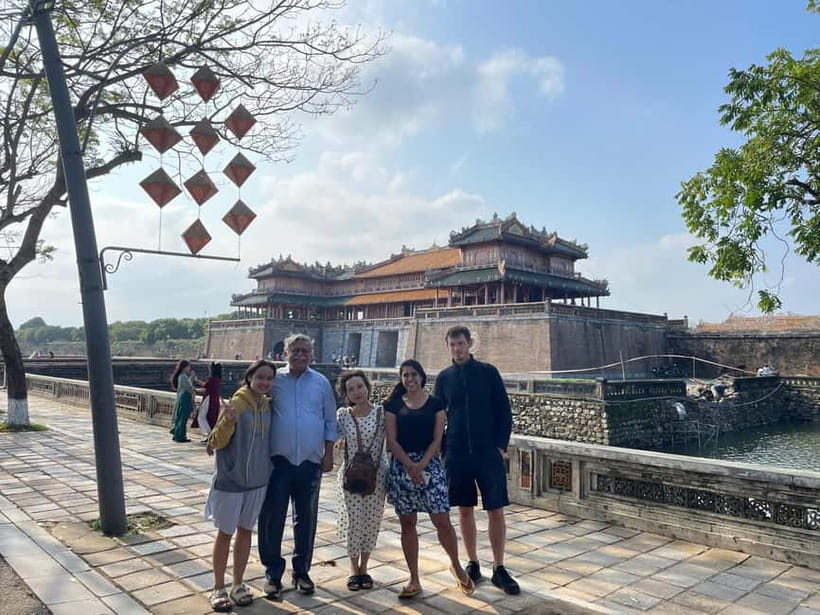
The tour accepts no more than 10 participants. It is intended for solo visitors, couples, families, and small groups, but bookings for groups larger than six people, including children, are not accepted even if made under separate reservations.
That rule keeps the outing from becoming a private large-group tour assembled through several bookings. If you are part of a bigger party, contact the provider directly about a custom arrangement rather than splitting the reservation.
You should provide a valid WhatsApp number or Vietnamese phone number. The provider uses it to confirm the meeting time and share practical details. Clear pre-tour communication is one of the stronger parts of the arrangement, so check your messages before setting out.
The experience is offered in English and is listed as wheelchair accessible. No alcohol or drugs are allowed. Tips are entirely your choice, though you should budget for one if you value the guide’s time and explanation.
Free cancellation is available up to 24 hours before the tour for a full refund, and you can reserve now and pay later. Those terms are useful if your Vietnam route is still shifting.
Who should book this Hue walking tour?
I would choose this tour if you are visiting Hue for the first time, want the main Imperial City sights explained, or prefer history told by a local person rather than read from signs.
It suits solo visitors especially well because the small group gives you company without the cost of a private guide. Couples and families can also use it as a structured introduction before exploring independently.
History fans should allow extra time after the tour. The 150-minute route gives you the main framework, but the Imperial City has enough detail to reward a slower second look.
You may want a different option if you dislike tip-based tours, need a highly private schedule, or want to spend the entire visit photographing without stopping for explanation. The route is also not designed for groups larger than six people booking together.
Should you book it?
Yes, if you want an affordable and lively introduction to Hue’s royal complex. The strongest reasons are the small group, clear English, broad historical context, and guides such as Linh who connect architecture with Vietnamese society, colonial rule, war, and modern life.
Just arrive prepared. Wear walking shoes, carry water, sunscreen, and cash for a tip and any separate admission. Give yourself extra time after the official walk if you want to explore the Forbidden City or revisit Thai Hoa Palace at your own pace.
FAQ
How long does the Hue Imperial Ancient City Walking Tour last?
The advertised duration is 150 minutes, or two and a half hours. Some departures may take closer to three hours depending on questions, breaks, and the pace of the group.
Where does the tour meet?
The meeting point is in front of the Hue Imperial City ticket booth. The provider contacts you before the tour to confirm the designated time.
What time does the tour start?
The listed start times are 9:00 AM and 3:00 PM. Check availability when booking and wait for confirmation by WhatsApp or Vietnamese phone number.
Which language is the tour offered in?
The live tour guide speaks English.
What places does the tour visit?
The route covers Hue Historic Citadel and highlights sites including Meridian Gate, Thai Hoa Palace, Dien Tho Palace, the Forbidden City, gardens, gates, and other parts of the Imperial City.
Is the entrance ticket included?
The included items list only the walking tour and local guide. Entrance admission is not listed as included, so confirm the ticket arrangement and bring cash.
How many people can join the tour?
The tour accepts up to 10 participants. Bookings for groups larger than six people, including children, are not accepted, even when separate reservations are made.
Is the tour wheelchair accessible?
The activity is listed as wheelchair accessible. Contact the provider in advance if you need details about the exact route or access conditions.
What should I bring?
Bring sunscreen, water, comfortable walking shoes, and cash for a tip and any separate site admission.
Can I cancel or pay later?
You can cancel up to 24 hours in advance for a full refund. The reserve-now, pay-later option lets you hold a place without paying immediately.
Newly reviewed in Hue
- Hue Street Food Tour At Night By Scooter★ 5.0 · 140 reviews
- Hue: Guided Local Food Tour with Stories★ 4.9 · 199 reviews
- Half-Day Guided Street Food Walking Tour at Hue★ 5.0 · 116 reviews
- Hue Flavor Street Food Tour★ 5.0 · 250 reviews
- Private Car Sightseeing from Hue to Hoi An★ 5.0 · 189 reviews
- Hue: Custom Tour with Dragon Boat, Private Car & Motorbike★ 5.0 · 199 reviews
- Hue to Dn/ Hoi An with Scenic Stops on the Way (or Vice Versa)★ 5.0 · 295 reviews
- From Da Nang/Hoian/Hue: Hue Imperial City Full-Day Tour★ 4.8 · 295 reviews
Walking Tours, compared.

Private Street Food Evening Walking Tour in Ho Chi Minh City
Read our review →![[HOT] Hanoi Old Quarter Walking Street Food – Small Group Tour](https://7.vietnameseguides.com/wp-content/uploads/hot-hanoi-old-quarter-walking-street-food-small-group-tour-400x267.jpg)
[HOT] Hanoi Old Quarter Walking Street Food – Small Group Tour
Read our review →
Super Niche Walking Street Food Tour in Ho Chi Minh City
Read our review →
Private Hanoi Street Food Walking Tour With Real Foodie
Read our review →

Hanoi Walking Street Food Tour with Train-Street Visit
Read our review →Browse the lists this tour appears in