
Reviewed · CRAFT & INCENSE VILLAGE TOURS
Discover Traditional Silk Process in Hoi An Silk Village
Hoi An Silk Village makes silk feel less like a luxury product and more like a long chain of patient, hand-powered work. In less than an hour, you follow the thread from mulberry leaf to finished cloth, including the uncomfortable but important fact that the silkworm dies when the silk is extracted from its cocoon.
I like the close look at traditional methods, especially the cocoon-unwinding demonstration and the chance to see women weaving fabric by hand. I also like the price: $11 includes entry, water, and an English-speaking guide, making this a sensible short stop in Hoi An.
The main drawback is the tight 50-minute schedule. You get a useful introduction, not a long workshop, and the exhibition shop may not suit every taste. Some of the printed fabrics use busy color combinations, so take your time before buying.
Key points to know before you go
- The process is shown in sequence: You see mulberry cultivation, silkworm care, cocoon collection, thread extraction, spinning, weaving, and finished products.
- The visit connects Hoi An with Quang Nam: A traditional house explains the local story of mulberry growing and sericulture.
- Champa craft is part of the experience: The weaving house introduces traditional textiles associated with the Champa people.
- The guide makes a real difference: English-speaking guides including Thu and Tsu have been praised for clear explanations and patience with questions.
- The shopping is useful but personal: You can compare pure silk with imitation fabric, though the available prints may feel limited or visually busy.
- It works well as a one-hour addition: At 50 minutes, it fits neatly between other Hoi An plans.
Starting with Quang Nam’s old silk tradition
The visit begins with a welcome drink and a stop at a traditional house connected with Quang Nam’s sericulture story. Here, you learn why mulberry growing and silk production have mattered in this part of Central Vietnam.
This opening gives the rest of the visit a useful frame. Instead of seeing a loom or a tray of cocoons as isolated curiosities, you learn that silk starts with farming. Mulberry trees feed the silkworms, and the quality of the leaves affects the insects that produce the cocoons.
The village also preserves handmade weaving methods linked to the Champa and Dai Viet periods. That connection adds cultural weight to what might otherwise be a simple factory visit. You are not only watching a product being made. You are seeing a working craft tradition tied to the people and agriculture of Central Vietnam.
The explanation is brief, so do not expect a full museum lecture. Still, it gives you enough context to notice the details in the later rooms. I find this kind of introduction useful because it keeps the focus on people and technique rather than only on shopping.
Other craft villages near Hoi An:
- Incense Village, Hat Making & Lacquer Artisan Small Group Hanoi
★ 5.0 · 1,266 reviews - Incense Village, Conical Hat, Lacquer Art, SMALL GROUP From Hanoi
★ 5.0 · 1,170 reviews - Hanoi: Incense Village, Hat, and Lacquer Artisanal Tour
★ 4.6 · 1,005 reviews
Mulberry gardens and the silkworm-breeding house
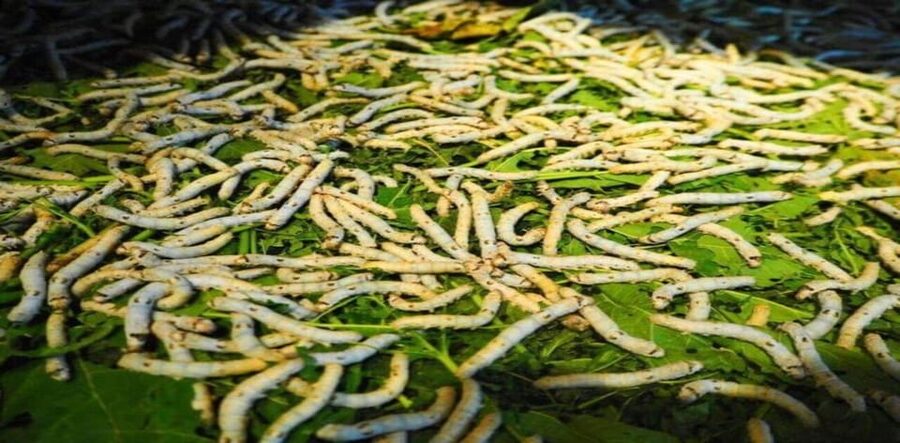
Next, you visit the ancient mulberry gardens and the silkworm-breeding house. This is the point where silk production becomes very practical. You see the plant that supports the entire process and learn how the silkworms are fed.
The experience is valuable for anyone who has only encountered silk as a smooth shirt, scarf, or dress. The finished cloth hides a great deal of work. Here, you begin to see the repeated tasks behind it: growing mulberry trees, tending the insects, protecting the cocoons, and timing each stage properly.
The breeding house is also a good place to ask questions. Guides such as Thu have been praised for being patient, while Tsu has led a particularly personal visit for an English-speaking participant. Your guide will explain the process in English, though the exact guide and group size can vary.
You should wear comfortable shoes and clothing. The activity includes movement between several areas, and large bags or luggage are not allowed. The site is not suitable for wheelchair users or people with mobility impairments, so this short visit still requires you to walk through the different spaces.
The cocoon becomes a silk thread
The most memorable stop for many people is the Unraveling House. This is where you learn how silk thread is removed from the cocoon before it is woven into fabric.
The process is striking because it is both delicate and industrial in the old-fashioned sense. A cocoon must be handled carefully, and the silk filament is drawn out in a way that allows it to become a usable thread. You see the direct link between the small cocoon and the long, smooth strand used in clothing.
There is also an ethical detail worth knowing before you arrive. The silkworm dies during the traditional extraction process. That is not hidden or softened, and the demonstration can make the production of silk feel more real than simply browsing finished garments in a shop.
I consider this stop the strongest part of the visit because it answers the basic question many people have: how does a cocoon become silk? The demonstration is short, but it gives you a clear image to carry with you when you later touch the fabrics.
Hand looms and Champa textile traditions
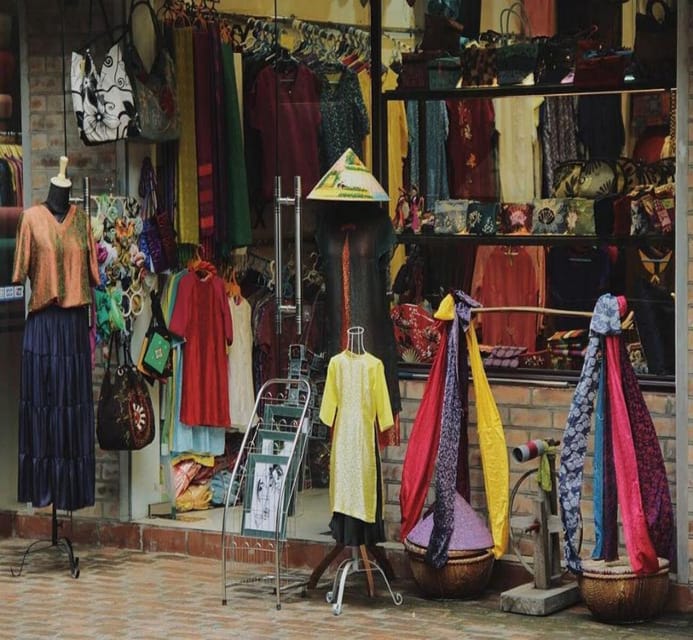
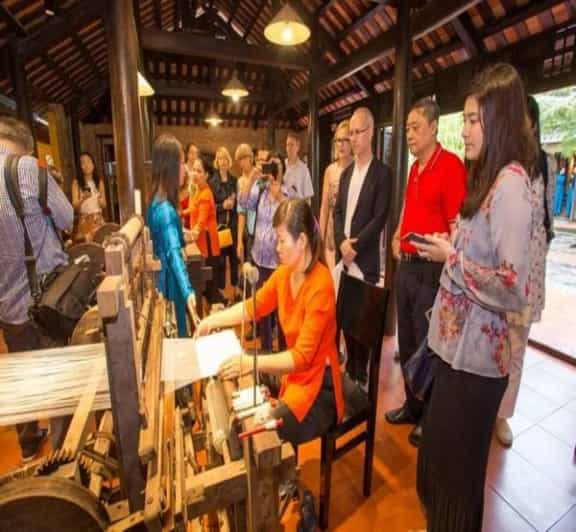
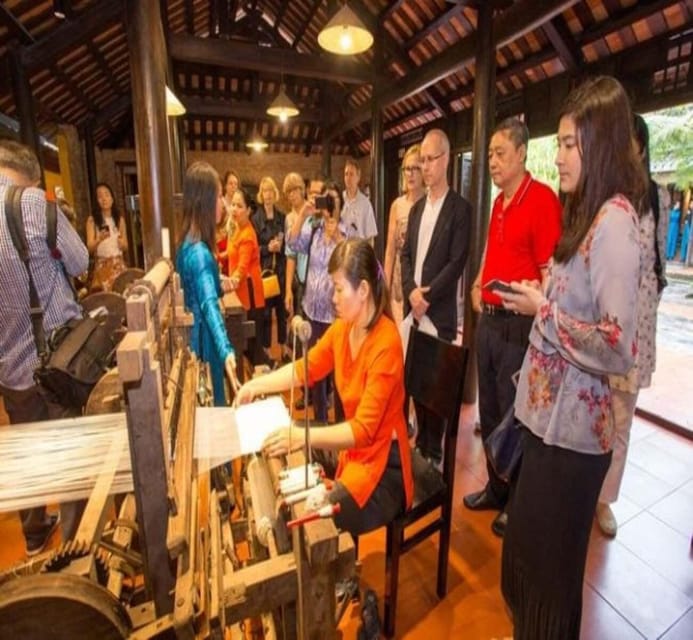
The Vietnamese traditional silk weaving house shows the next stage. Here, workers turn thread into cloth on looms, and you can watch the steady rhythm of the weaving process.
The craft is easy to underestimate. A finished piece of silk looks simple, but the fabric depends on careful control of thread, tension, pattern, and movement. Seeing the work in person helps you understand why handmade silk can cost more than mass-produced cloth.
This stop also introduces handicrafts of the Champa people and traditional textiles. The visit does not claim to recreate every part of the Champa or Dai Viet period, but it does show how older textile knowledge remains part of Vietnam’s craft identity.
The weaving room can feel compact. One account describes a small group of five, which allowed everyone to see inside the buildings without too much crowding. School groups can sometimes affect the timing, and one tour began later than its scheduled start because of arriving children. Staff kept the delayed participant informed, but you should leave a little space in your day if you have a strict onward booking.
Same base, a completely different day:
- Hoi An: Basket Boat Ride in the Coconut Forest
★ 4.9 · 4,956 reviews - Hoi An: Vietnamese Coffee Culture and Coffee Making Class
★ 4.9 · 4,006 reviews - Hoi An: Vietnamese Foldable Lantern Making Class
★ 4.9 · 3,742 reviews - Cooking Class Hoi An:Local Market, Basket Boat, Fishing & Cooking
★ 5.0 · 3,660 reviews
Comparing pure silk with imitation fabric
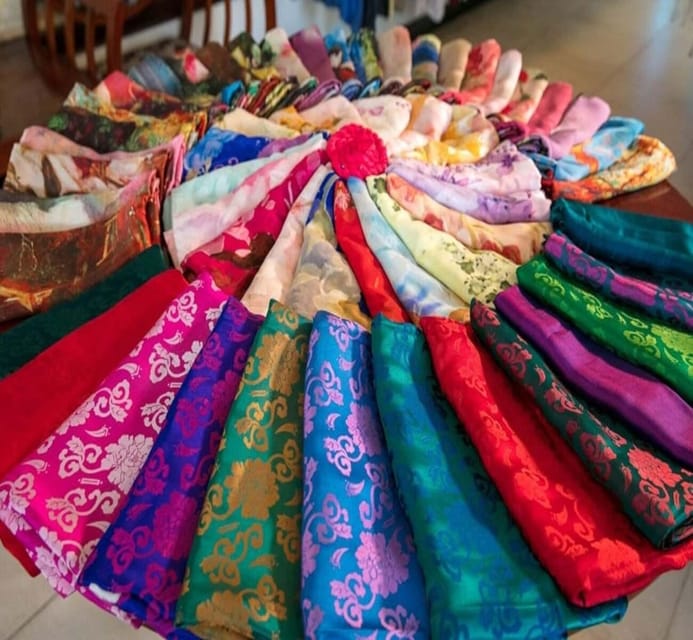
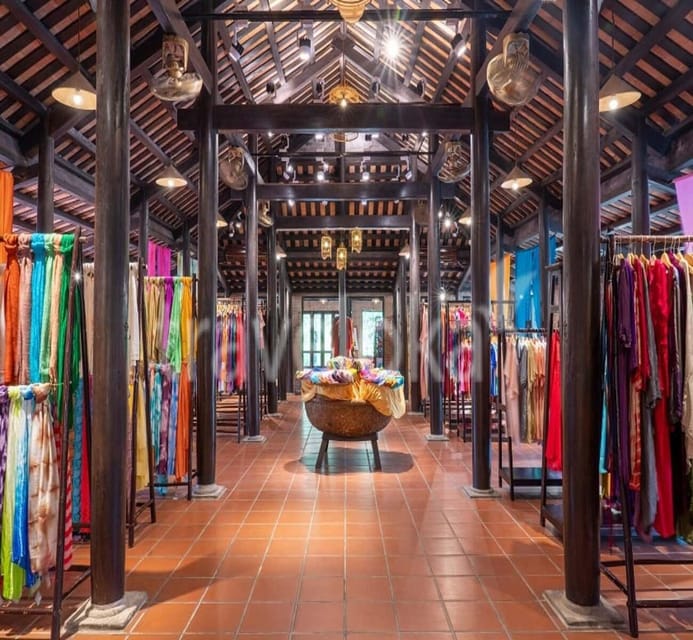
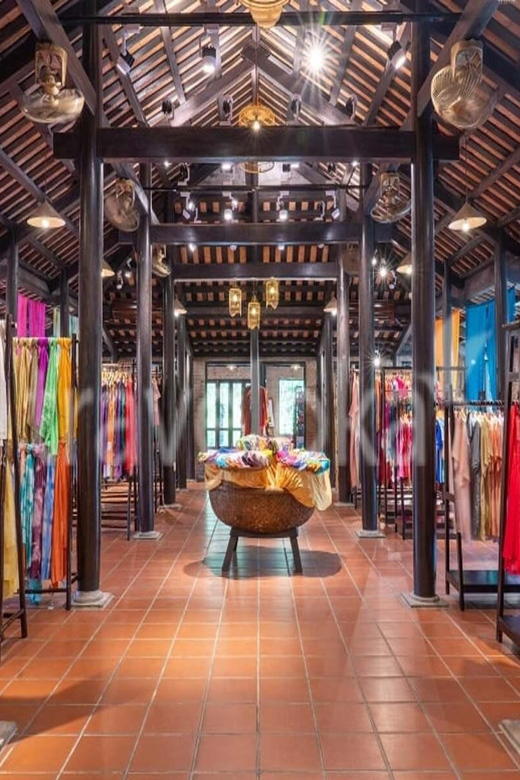
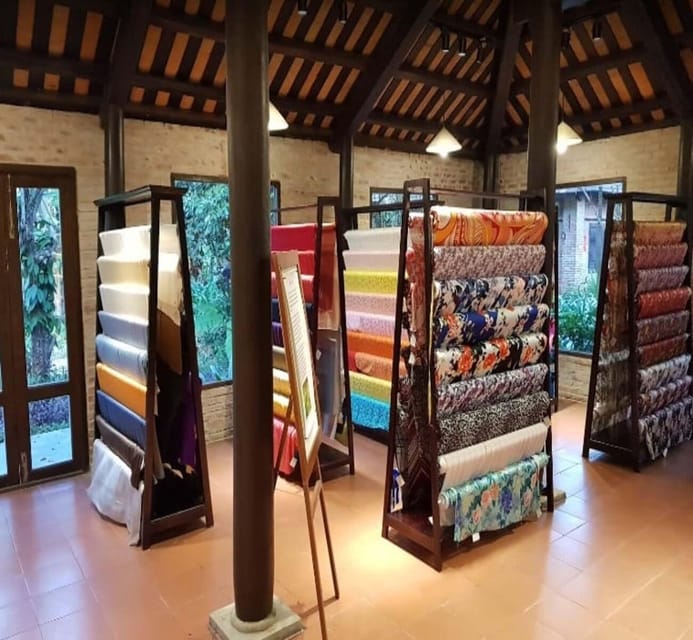
The final stop is the Hoi An Silk Village exhibition. Here, you learn how to distinguish pure silk from imitation fabric and see finished goods that may include clothing and other silk products.
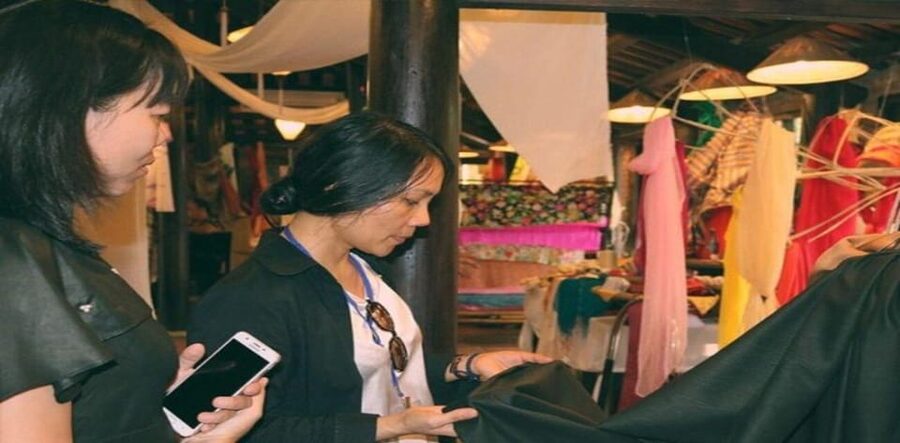
This part is useful if you plan to shop in Hoi An. Silk can be difficult to judge by appearance alone, especially when you are comparing fabrics under indoor lighting. A guide can point out differences in texture and construction, giving you more confidence before you spend money.
The shop also offers shirts and other items, with one visitor finding the silk shirts worth the cost because of their quality. Another buyer found the prints too limited and the color combinations too messy. Both points are fair. The material may be appealing, but the design selection will depend on your taste.
My advice is to treat the exhibition as a place to learn first and shop second. Ask to compare fabrics, check what is pure silk, and do not feel obliged to buy. If you already know you want a silk garment, the visit gives you a better basis for judging the purchase. Tailoring and shopping needs can also be handled through the range of silk products on display, though the provided details do not specify tailoring prices or turnaround times.
What the $11 price really covers
At $11 per person, this is a good-value cultural stop if you want a guided explanation rather than a quick look around. The price includes entrance, an English-speaking guide, and a bottle of water. It does not include hotel transport, food, or personal purchases.
The value comes from the number of stages packed into 50 minutes. You see farming, breeding, cocoon work, unwinding, weaving, cultural textiles, and fabric comparison in one compact visit. A self-guided visit might show you the buildings, but the explanations help connect each stage.
The short duration also limits the commitment. You do not need to give up half a day in Hoi An, and the visit can fit into a schedule built around the Old Town and nearby sights. There is a cafe on site, which gives you a possible place to pause, though the drink and food arrangements beyond the welcome drink are not included.
The price is less attractive if your main goal is extensive shopping or a hands-on weaving class. This is primarily a demonstration and interpretation visit. You watch and ask questions, but the supplied details do not promise that you will operate a loom or raise silkworms yourself.
Timing, groups, and the guide
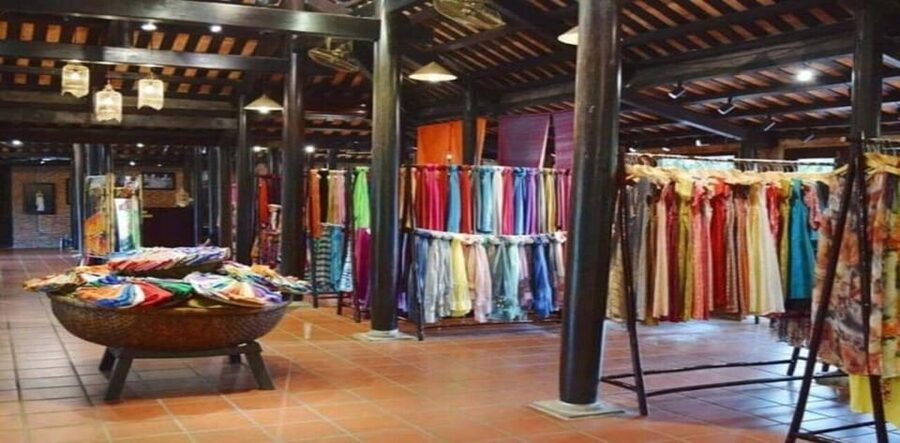
The official duration is 50 minutes, and that is a realistic way to think about it. The visit moves at a steady pace through several locations, so it is best suited to people who want a clear overview.
Guide quality matters here because the buildings and tools will mean little without explanation. English-speaking guides have received strong praise for clear speech, including Thu and Tsu. Questions are welcome, and one participant specifically appreciated the patience of the guide and the women working at the looms.
Group size can change the feel of the visit. A small group lets you stand closer to the demonstrations and ask more questions. A school group may make the buildings feel crowded or delay the start, although staff can provide updates if the schedule shifts.
The meeting point is 28 Nguyen Tat Thanh in Hoi An, Quang Nam. You should give your name at reception when you arrive. Hotel pickup and drop-off are not included, so you need to arrange your own way to the meeting point.
Who will enjoy this short Hoi An stop
I would choose this experience for anyone curious about how everyday goods are made. It is especially useful if you are considering buying silk in Vietnam and want to understand the difference between pure and imitation fabric before spending money.
Families with older children may also find the process memorable, particularly the cocoon stage. The explanation that the silkworm dies during extraction gives the visit a serious edge and may lead to worthwhile questions about traditional production.
It suits a relaxed schedule better than a tightly timed sightseeing day. The tour is brief, but the delay caused by school groups shows why you should not place it immediately before a train, flight, or fixed appointment.
People with mobility limits should take the suitability warning seriously. The visit requires movement through the village buildings and is not designed for wheelchair users or people with mobility impairments. Large bags and luggage are not allowed either.
Practical ways to get more from the visit
Arrive ready to pay attention to the sequence. The central idea is simple: mulberry leaves feed silkworms, silkworms create cocoons, cocoons provide silk thread, and thread becomes cloth. If you keep that chain in mind, each room adds something useful.
Ask questions at the cocoon and weaving stages. Those are the places where a short explanation can make the biggest difference. If you are interested in buying, ask the guide to help you compare pure silk and imitation fabric before you look at colors and patterns.
Keep your shopping expectations flexible. The fabric quality may impress you, but the prints may not match your taste. A silk shirt can be a worthwhile purchase, yet there is no reason to buy simply because you have reached the exhibition.
Choose comfortable shoes and clothing, carry water only if needed since a bottle is included, and leave large bags elsewhere. You can cancel up to 24 hours in advance for a full refund, and the reserve-now, pay-later option may help if your Hoi An plans are still changing.
Should you book the Hoi An Silk Village visit?
Book it if you want a short, focused look at a real craft process and value explanation over entertainment. The $11 cost is reasonable for the range of demonstrations, especially the cocoon unwinding, hand weaving, and pure-silk comparison.
Skip it if you want a long practical workshop, extensive design choices, or a guaranteed on-time start. The visit is compact, some rooms may be crowded, and the shop’s prints may not appeal to everyone.
For most people with an open hour in Hoi An, I think it earns its place. You leave with a clearer idea of what silk production demands, a better eye for fabric, and a more honest understanding of the garment you may buy.
FAQ
How long does the Hoi An Silk Village experience last?
The activity lasts 50 minutes. Check the available starting times when booking.
What is included in the price?
The $11 price includes an English-speaking guide, entrance, and a bottle of water.
Is transportation from my hotel included?
No. Hotel pickup and drop-off are not included. The meeting point is 28 Nguyen Tat Thanh, Hoi An, Quang Nam, Vietnam.
What language is the tour offered in?
The tour is offered in English with a live English-speaking guide.
Can I buy silk products at the village?
Yes. The exhibition includes silk products for shopping and tailoring needs. You can also learn how to compare pure silk with imitation fabric.
What should I bring?
Wear comfortable shoes and comfortable clothing. Large bags and luggage are not allowed.
Is the activity suitable for wheelchair users?
No. The experience is not suitable for wheelchair users or people with mobility impairments.
Newly reviewed in Hoi An
- Romantic Sunset Dinner Cruise in Hoi An★ 4.7 · 108 reviews
- Snorkeling Cham Island: Snorkeling Tour by Speed Boat★ 3.6 · 26 reviews
- Hoi An: Rural Cycling Tour to Village with Basket Boat Ride★ 5.0 · 174 reviews
- Private Car Hoi An to Hue Via Hai Van Pass, Lagoon & More★ 5.0 · 22 reviews
- From Hoi An: Day Tour of My Son Temples and Marble Mountain★ 4.8 · 44 reviews
- Market Tour – Cooking Class – Coconut Boat Riding★ 4.4 · 43 reviews
- From Hoi An: Marble Mountains and My Son Sanctuary Day Trip★ 4.7 · 209 reviews
- Lantern Making Class With Lynn★ 4.8 · 44 reviews
Craft & Incense Village Tours, compared.
Incense Village, Hat Making & Lacquer Artisan Small Group Hanoi
Read our review →
Incense Village, Conical Hat, Lacquer Art, SMALL GROUP From Hanoi
Read our review →
Incense Village, Hat, and Lacquer Artisanal Tour
Read our review →
Incense Village Small Group of 9 Tour From Hanoi to Ninh Binh
Read our review →
Incense Village, Hat, Lacquer Tour & City Highlights
Read our review →
Countryside Tour with Silk Village & Elephant Falls
Read our review →
Incense Village Quang Phu Cau, Hat, Lacquer Hanoi Artisan Tour
Read our review →
Incense Village, Conical Hat and HaThai Art Tour
Read our review →Browse the lists this tour appears in