Reviewed · TOURS IN HANOI
Discover Vietnam – Cambodia – Thailand in 22 Days
The best thing about this 22-day Southeast Asia journey is its range. You move from Hanoi’s old streets and Halong Bay’s limestone towers to Hue’s royal tombs, Hoi An’s lantern-lit lanes, Cambodia’s sobering Khmer Rouge sites, Angkor Wat, and Thailand’s beaches. Two things I especially like are the local stays in Ba Vi and the Mekong Delta, plus the practical mix of included flights, buses, private transfers, and sightseeing.
The trade-off is the pace. You change hotels often, take several early starts, and cover three countries in just over three weeks. The group is capped at 15 people, which helps, but you should still expect long road days, airport time, and a full schedule rather than a slow, stay-put holiday.
What makes this 22-day route worth considering
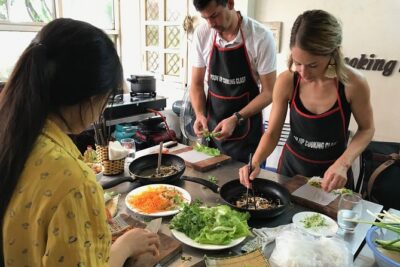
- Local life in Ba Vi and Ben Tre: You spend time with local communities, cycle through coconut country, and see more than major monuments.
- A strong historic arc: Imperial Hue, the Cu Chi Tunnels, Phnom Penh’s genocide museums, and Angkor show very different chapters of Southeast Asian history.
- Three useful internal flights: Flights connect Hanoi with Hue, Da Nang with Ho Chi Minh City, and Siem Reap with Phuket, with 20 kilograms of checked luggage included per person.
- A small maximum group: The tour accepts up to 15 participants, with English-speaking guides and 24-hour hotline support.
- Two free days in Phuket: After a demanding sightseeing schedule, you have time for beaches such as Kata Beach.
- A package with many basics covered: Hotels, 21 breakfasts, eight lunches, two dinners, entrance tickets, transfers, and taxes are included.
Hanoi begins with easy airport support
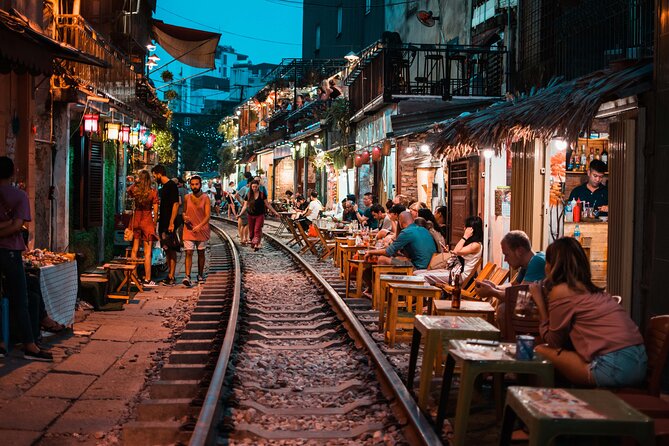
Your trip starts at Noi Bai International Airport, where a private driver meets you with a sign bearing your name. You are taken straight to your accommodation in central Hanoi, a welcome arrangement after a long international flight.
Hanoi gives you a good first taste of Vietnam. The program does not spend several days on formal city sightseeing, so you have some freedom to explore on your own. That is useful if you want to walk around the Old Quarter, try local food, or simply recover from jet lag.
On day two, you drive about 1.5 hours from Hanoi to Ba Vi. Here, the focus shifts from city sights to village life. You visit Mr. Duo and see a more rural side of Vietnam, with about seven hours devoted to the outing.
I like this early stop because it gives the trip a human scale. Large monuments can tell you about a country, but a village visit shows you how ordinary life works. The day is also a reminder that this is not just a checklist of famous attractions.
More days out you can book in Hanoi:
- Hanoi Jeep Tour: Food, Culture and Fun by Vietnam Army Jeep
★ 5.0 · 15,222 reviews - Full-Day Ninh Binh Highlights Tour from Hanoi
★ 5.0 · 7,761 reviews - Hanoi: Ha Long Bay Day Cruise – Swimming, Meal, Kayaking
★ 4.7 · 7,415 reviews
Halong Bay brings a comfortable overnight cruise
On day three, you leave Hanoi and cross the Red River Delta by coach. The drive takes about four hours before you board your Halong Bay cruise. Rice paddies and countryside views make the route part of the experience rather than a simple transfer.
Once aboard, you have a seafood lunch and time on deck among the limestone islands and karst formations. The cruise includes an overnight stay, which is a much better way to see Halong Bay than racing in for a few hours and leaving before sunset.
The next morning starts early with sunrise viewing, breakfast, and Tai Chi on the sun deck. You also visit a limestone cave before returning to Hanoi. The schedule is attractive, but keep your expectations practical: this is a short cruise, not several quiet days on the water.
Hoa Lu and Tam Coc add Vietnam’s rural drama
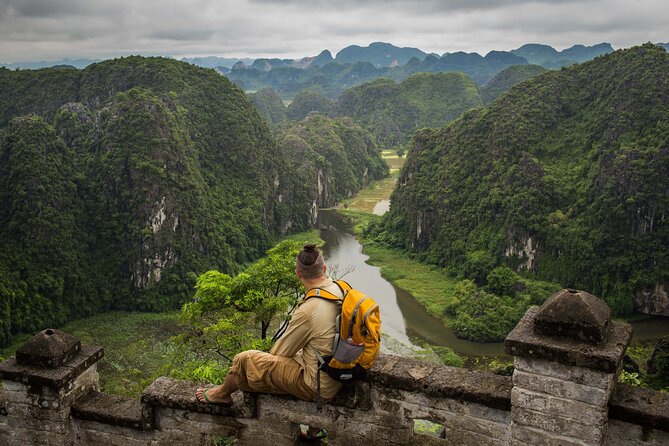
Day five takes you by coach to Hoa Lu, the former capital of Vietnam. The journey from Hanoi takes about 2.5 hours, followed by visits to the ancient temples of the Dinh and Le dynasties.
After lunch, a small boat carries you through Tam Coc and its limestone formations. The route passes beneath caves and along waterways framed by towering rock. An hour of cycling on quiet roads follows the boat ride.
This is one of the better-balanced days in northern Vietnam. Hoa Lu provides history, Tam Coc provides scenery, and cycling gives you a closer view of the countryside. The drawback is the long return to Hanoi, with arrival around 6 p.m. It is a rewarding day, but not a restful one.
Hue reveals Vietnam’s imperial past
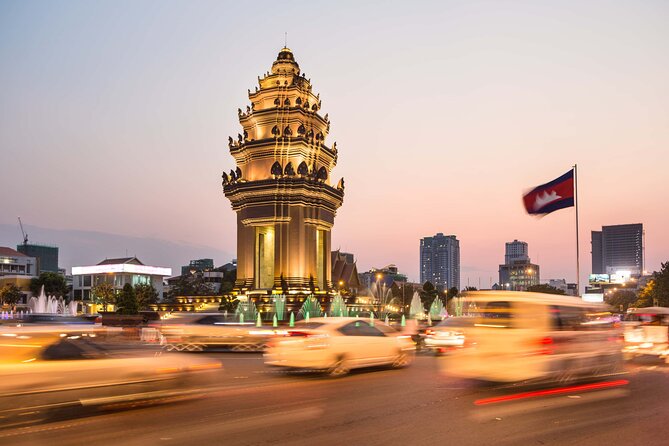
You fly from Hanoi to Hue on day six, with 20 kilograms of checked luggage included. Once in Hue, the next day brings a concentrated look at the Nguyen Dynasty and its former capital.
A dragon boat on the Perfume River takes you to Thien Mu Pagoda. You then enter Hue Imperial City, where halls, gardens, and royal antiques help explain Vietnam’s last royal dynasty.
The day continues to Dong Ba Market, Hue’s main market. This is a useful contrast to the palace grounds. You see everyday food and goods, and you have a chance to observe local buying and selling rather than only visiting preserved sights.
In the afternoon, you visit Khai Dinh’s tomb, known for its mix of Vietnamese and Western design, then Minh Mang’s tomb, noted for its setting and formal architecture. A complimentary herbal foot bath is included during the day.
Hue’s schedule is packed, with five major stops. You should expect plenty of walking, heat, and time in the vehicle between sites. Still, this is a strong section for anyone interested in Vietnamese architecture and royal history.
Same base, a completely different day:
- Hanoi: Water Puppet Show Tickets
★ 4.6 · 7,029 reviews - Hanoi Motorbike Tour: Food, Culture and Fun by Vintage Motorbike
★ 5.0 · 6,699 reviews - Hanoi: Guided Food Tour with Train Street Visit
★ 4.9 · 6,239 reviews - Hanoi Cooking Class: Culture, Local Market & Meaning CSR Impact
★ 5.0 · 5,147 reviews
Hoi An gives you space to slow down

On day eight, you transfer by car to Hoi An. The next morning begins with a boat trip to the central market, where an English-speaking guide explains noodles, fish, spices, herbs, rice, and grains.
I like this market visit because it connects food with place. Instead of treating Vietnamese cuisine as a restaurant menu, you see the ingredients and trading habits behind it.
Day ten is free. You can walk among Hoi An’s Japanese merchant houses, pagodas, temples, and old warehouses, or simply take a slower day. This pause matters. Without it, the route would feel like one long chain of departures and arrivals.
Hoi An is also the point where you may want to add personal spending for food, drinks, tailoring, or souvenirs. Those costs are not included, so keep some room in your budget.
The Mekong Delta adds a personal touch

After a flight from Da Nang to Ho Chi Minh City, you travel south toward Ben Tre on day twelve. The drive takes about two hours, and you stay at Mekong Home, a family-run property with bungalows in a tropical garden beside the river.
This is one of the most distinctive parts of the trip. You are not only looking at the Mekong from a road or boat. You spend time in a local setting and have the chance to see how life is shaped by coconut trees, waterways, gardens, and small markets.
The next day includes a two to 2.5-hour cycling trip to the island of Oc. The concrete track passes fruit and coconut trees and goes by a local market. You return to Ho Chi Minh City around midday after checking out.
The cycling is a highlight for active visitors, but it also adds effort to an already busy trip. If you prefer a slow holiday, this section may feel demanding. If you like seeing rural areas at ground level, it gives you a useful break from major cities.
Ho Chi Minh City and the Cu Chi Tunnels
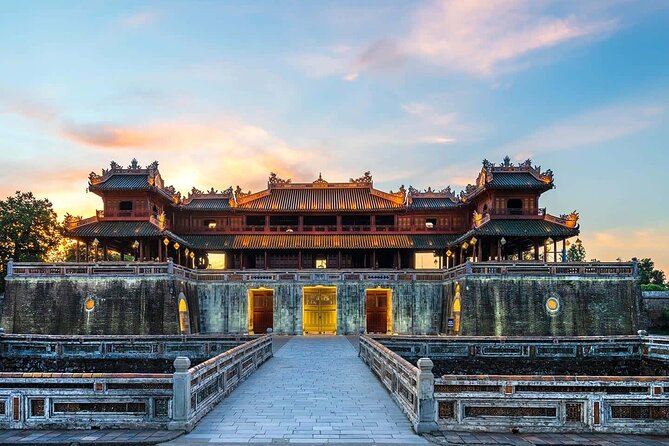
Ho Chi Minh City receives one main sightseeing day, focused on the Cu Chi Tunnels. A 1.5-hour drive takes you to the underground system, which stretches for more than 220 kilometers and played a major role during the Vietnam War.
The visit lasts about six hours, including transportation and time at the site. It offers direct wartime context, but it is not a light attraction. The subject matter and confined tunnel setting may not suit everyone.
This part of the trip works best when you approach it as history, not entertainment. Your guide can help connect the physical site with the wider conflict, and the experience provides a sharp contrast to the food, markets, and rural stays earlier in Vietnam.
Phnom Penh confronts Cambodia’s recent past
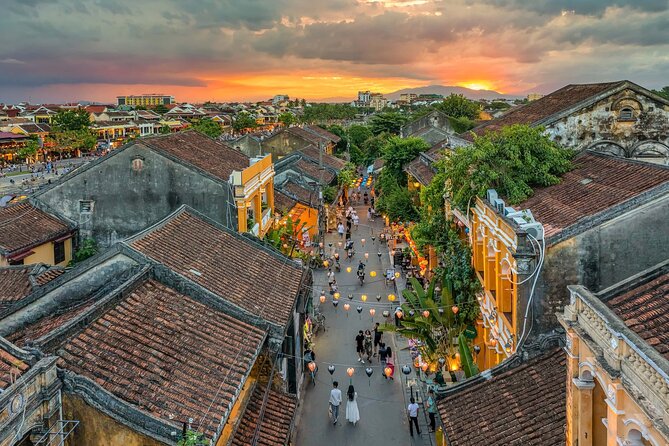
You leave Ho Chi Minh City by bus for Phnom Penh, a journey of about six hours. This border crossing is slower and less private than an internal flight, but it lets you move overland between the two countries.
In the afternoon, you visit Cambodia’s Royal Palace, Silver Pagoda, and Wat Phnom. The Royal Palace remains a royal residence, while the Silver Pagoda holds major cultural objects, including a 90-kilogram golden Buddha decorated with 2,086 diamonds.
The following day is more difficult. Tuol Sleng Genocide Museum, formerly S-21 prison, and Choeung Ek, commonly called the Killing Fields, explain the crimes of the Khmer Rouge. These visits deserve time and quiet attention.
You then visit the Russian Market, where you can browse clothing, Buddha images, woodcarvings, silk, silver jewelry, and other goods. The contrast can feel abrupt after the genocide sites, but it also reflects the structure of the city: history, daily commerce, and modern life sit close together.
Siem Reap and Angkor Wat are the grand finale
A six-hour bus ride takes you from Phnom Penh to Siem Reap. On arrival, you visit Wat Thmey, which contains a glass-walled stupa with the bones of Khmer Rouge victims.
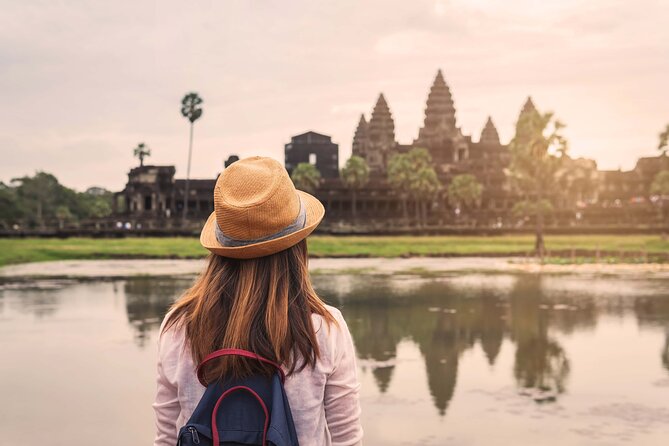
Day eighteen is devoted to the major Angkor temples. You begin with Angkor Thom and its South Gate, then see Bayon Temple, with its many towers and carved faces. Ta Prohm follows, where jungle growth surrounds the temple made famous by Tomb Raider.
The day ends at Angkor Wat, the largest temple complex in the world. Its scale is hard to grasp from photographs. The moat, outer wall, galleries, and towers demand time, and the two-hour visit gives you a meaningful look without using the entire day.
This is another very full day, and the heat can make the schedule feel tougher. Still, the progression from Bayon to Ta Prohm to Angkor Wat gives you three distinct experiences rather than repeating the same kind of temple.
Phuket provides a needed change of pace
After a final morning in Siem Reap, you fly to Phuket. The flight includes 20 kilograms of checked luggage, and a private transfer takes you to your hotel.
Days twenty and twenty-one are free. You can visit beaches such as Kata Beach, with soft sand, palm shade, water sports, and a relaxed setting. The program does not include specific Phuket excursions, so these days are yours to plan and pay for as needed.
I like ending here. The route has included long drives, flights, temples, museums, and early mornings. Two open beach days let you recover before your flight home from Phuket International Airport on day twenty-two.
What the $2,481 price covers
At $2,481 per person, this is not a bare-bones land package. The price includes accommodation, 21 breakfasts, eight lunches, two dinners, sightseeing tickets, English-speaking guides, service charges, government tax, and bottled water and tissues on the coach.
It also includes three internal flights, the Hanoi to Halong Bay coach, ground transport for excursions, private airport transfers, and the bus from Ho Chi Minh City to Phnom Penh. Those logistics would take considerable time to arrange independently.
You still need to budget for international flights, travel insurance, drinks, tips, personal purchases, visas, and some holiday surcharges. Christmas, New Year, Tet, and local New Year periods in Cambodia and Thailand may bring extra charges. Compulsory gala dinners can also apply on specified holiday dates.
The package is strongest for you if you value convenience. It is less suitable if you want to choose every hotel, spend several days in each city, or travel without fixed departure times.
Guide support and group size
The maximum group size is 15, and English-speaking guides accompany the included sightseeing. That is small enough to keep transfers manageable without making the trip a private tour.
The company also provides a 24-hour hotline. Named staff praised for personal help include Thang, Linh, and Jennifer Bui. Linh helped arrange a surprise honeymoon, Jennifer handled detailed planning and custom changes, and Thang was repeatedly noted for being available and helpful.
That support matters on a route with three countries, border crossings, airport transfers, and several flights. The company also contributes $20 from each booking to local community projects, with updates shared through its social media.
You need to provide passport details at booking and check visa rules before crossing borders. Visa responsibility remains with you, although an invitation letter can be provided for arrival visas where applicable.
Who should book this Southeast Asia tour?
I would recommend it to a first-time visitor who wants to see the major sights of Vietnam and Cambodia, add Thailand, and avoid managing every transfer. It is also a good fit for solo visitors who like organized company, couples who want a ready-made route, and anyone who values local stays as much as famous monuments.
I would hesitate if you dislike early starts, long road journeys, or changing hotels. The non-refundable policy also makes travel insurance especially important, since cancellations or amendments do not result in a refund. Poor weather may lead to a new date or full refund, but that is the stated exception.
Should you book it?
Book this tour if you want a broad first look at mainland Southeast Asia with the practical work handled for you. Its best moments are the family stay in the Mekong Delta, the Ba Vi village visit, the overnight Halong Bay cruise, and the carefully chosen historic sites in Hue, Phnom Penh, and Angkor.
Skip it if you want a slow beach holiday or independent travel. Twenty-two days sounds generous, but Vietnam, Cambodia, and Thailand require movement. For the right person, the packed schedule is the point: you get a memorable sweep of three countries, then two days in Phuket to catch your breath.
FAQ
How long is the tour?
The tour lasts approximately 22 days, beginning at Noi Bai International Airport in Hanoi and ending with transfer to Phuket International Airport.
What flights are included?
Flights from Hanoi to Hue, Da Nang to Ho Chi Minh City, and Siem Reap to Phuket are included. Each listed flight includes 20 kilograms of checked luggage per person.
How large is the group?
The tour has a maximum of 15 participants.
Are meals included?
The package includes 21 breakfasts, eight lunches, and two dinners. Drinks and personal expenses are not included.
Are airport transfers provided?
Yes. Door-to-door pickup and drop-off by private car are included, including the arrival transfer in Hanoi and the departure transfer to Phuket International Airport.
Do I need to arrange visas?
You are responsible for confirming and obtaining visa requirements before crossing each border. The operator can provide a visa invitation letter for obtaining a visa at the airport upon arrival where applicable.
Newly reviewed in Hanoi
- Private transfer between Hanoi and Halong★ 5.0 · 51 reviews
- Private Transfers Hanoi <=> Halong One Way (Free Hotel Pickup)★ 5.0 · 31 reviews
- Private LUXURY Hanoi City Full day guided tour★ 4.5 · 21 reviews
- Private kid-friendly Hanoi food tour with a taste of great dishes★ 5.0 · 18 reviews
- Private transfers HALONG <=> SAPA One Way (Free Hotel Pickup)★ 5.0 · 19 reviews
- Hanoi Airport See-off (Private Ride from Hotels to Hanoi Airport)★ 4.5 · 70 reviews
- Private transfer Ninh Binh <=> Halong One Way (Free Hotel Pickup)★ 5.0 · 21 reviews
- Private transfer between Hanoi and Sapa★ 5.0 · 27 reviews
Tours in Hanoi, compared.
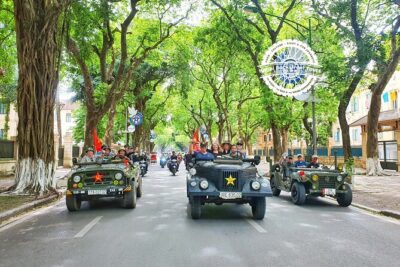
Hanoi Jeep Tour: Food, Culture and Fun by Vietnam Army Jeep
Read our review →
Full-Day Ninh Binh Highlights Tour from Hanoi
Read our review →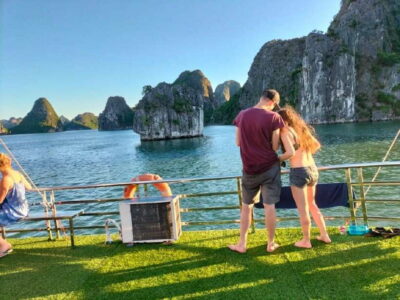
Ha Long Bay Day Cruise – Swimming, Meal, Kayaking
Read our review →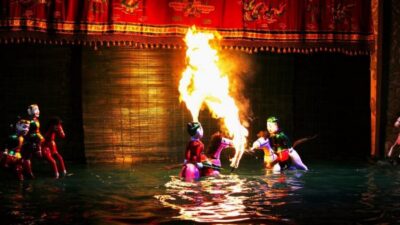
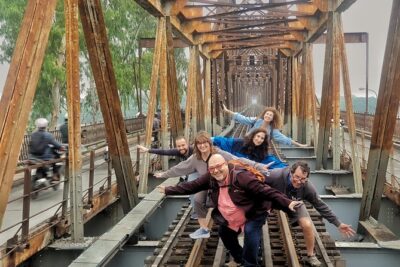
Hanoi Motorbike Tour: Food, Culture and Fun by Vintage Motorbike
Read our review →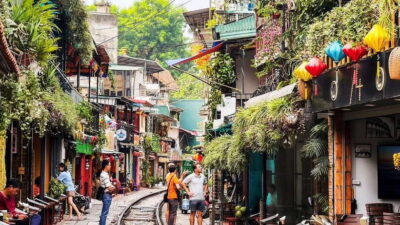
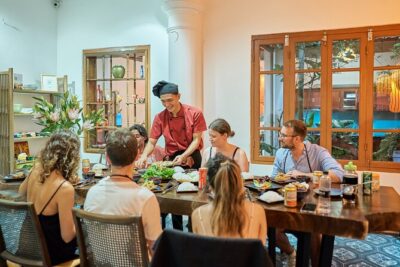
Hanoi Cooking Class: Culture, Local Market & Meaning CSR Impact
Read our review →