Reviewed · TOURS IN HANOI
Half-Day Mindfulness Meditation Retreat in Hanoi
The most meaningful part of this Hanoi experience is its clear path from Buddhist ritual to practical meditation. You begin by learning how to behave at the pagoda, chant sutras, and listen to Buddhist teachings, then put those ideas into practice through qigong, breathing, walking meditation, and quiet sitting.
I like the hands-on structure. You are not simply shown a temple and sent on your way. I also like the chance to speak with monks, since that gives you a direct look at Buddhist discipline and the choice to live without ordinary worldly pleasures. The included vegetarian lunch adds a simple, fitting finish.
The main consideration is time. Four hours may sound generous, but the program includes many separate activities, so this is a guided introduction rather than a long retreat in silence. You should also note that transportation in an air-conditioned vehicle is not included.
Key Points at a Glance
- Sutra chanting comes first: Learn basic pagoda rules, then take part in solemn Buddhist chanting.
- Meditation is taught in several forms: The program includes mindful breathing, qigong, walking meditation, and seated meditation.
- A monk conversation is built into the visit: Use this time to ask about Buddhist doctrine, renunciation, and daily ideals.
- The animal-release ritual gives compassion a practical shape: The activity connects Buddhist teaching with an act of care.
- Vegetarian lunch is included: The meal is part of the retreat, not an extra purchase.
- Plan for a focused half-day: The experience lasts about four hours and is booked, on average, 47 days ahead.
From Pagoda Etiquette to Buddhist Chanting
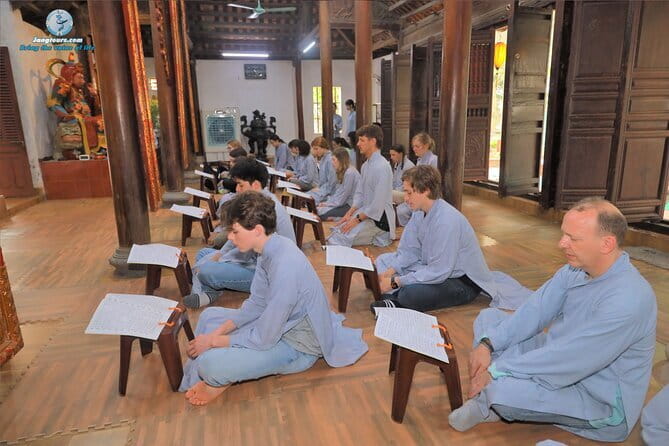
Your first lesson is not meditation. It is learning how to enter and behave in the pagoda. That may sound small, but it matters. Buddhist spaces have their own customs, and a short explanation helps you take part with respect instead of guessing your way through the visit.
The opening activity is chanting sutras. These texts contain the teachings of Buddha, so the chanting is not presented as background music or a show for visitors. It is a ritual with a purpose. You listen, follow the guidance, and begin to understand how sound, repetition, and attention work together.
I like this order. It gives the program a spiritual frame before moving into exercises that may feel more familiar to a modern wellness class. The morning or afternoon is not just about reducing stress. It connects meditation with ethics, gratitude, loving-kindness, and compassion.
You may find the chanting unfamiliar, especially if you have never joined a Buddhist ceremony. That is part of the point, but it also means you should arrive ready to observe and participate as instructed. The experience is better suited to someone open to ritual than to someone seeking only a quiet relaxation session.
A few more ways to spend a day in Hanoi
- Hanoi Half-day with Food + Fun + Culture By Russian Jeep
★ 5.0 · 1,243 reviews - Hanoi City Half-Day Private Tour: Train Street And All Highlights
★ 5.0 · 298 reviews - Hanoi Highlights: Half-day City Tour
★ 5.0 · 298 reviews
Buddhist Teachings You Can Carry Beyond the Pagoda
After the chanting, the guide explains Buddhist doctrines and how they can apply to ordinary life. The description of the experience places weight on ethics and on lessons that continue after you leave Hanoi. This gives the retreat more substance than a simple meditation class.
I would listen for the connection between belief and behavior. Ideas such as gratitude, loving-kindness, and compassion are not treated as loose slogans. They return later in the animal-release activity, the shared meal, and the conversation with monks.
The four-hour format gives you enough time to see how the pieces relate. Still, you should keep your expectations sensible. A half-day can introduce Buddhist ideas, but it cannot provide a full study of Buddhist doctrine. If you want a serious academic course or long silent retreat, this will feel brief.
For a first contact with Buddhist practice, though, the mix is useful. You hear the teachings, take part in rituals, practice with your body and breath, and then discuss the tradition with people who have chosen it as a way of life.
Qigong and Mindful Breathing Before Meditation
The physical section includes qigong and mindful breathing. These exercises prepare you for the meditation session and are also presented as practices that support good health.
Qigong gives the program movement before stillness. That is helpful if sitting quietly for a long period does not come naturally to you. Mindful breathing then narrows your attention and gives you a simple point of focus.
I like that the retreat does not treat meditation as one single technique. You get several ways to work with attention: movement through qigong, breath awareness, walking, and seated practice. You can notice which method feels most natural instead of assuming that one posture suits everyone.
The program does not state how long each activity lasts, so you should expect the exact balance to depend on the day and the guide. The description also does not promise advanced instruction. Think of this as an introductory lesson in correct meditation method, with enough variety to keep the session approachable.
Walking Meditation and the Art of Touching Peace
Walking meditation follows the qigong and breathing exercises. It offers a useful change of pace. Rather than treating meditation as something that happens only while sitting still, the practice asks you to bring attention to movement.
The phrase touching peace describes the next stage: learning methods for calming the mind and focusing attention. The goal is not simply to empty your head. The focus is on finding a steadier mind and a more lasting sense of happiness.
I find this part especially practical for daily life. You may not always have a quiet room, a cushion, or a long block of free time. Learning to pay attention while walking gives you a practice that can fit into ordinary routines.
Do not expect the noisy energy of Hanoi to disappear from your mind at once. The value is in learning the method and seeing how the guide introduces it. The pagoda setting may help, but the real test comes later, when you try to use the same attention away from the retreat.
Same base, a completely different day:
- Hanoi Jeep Tour: Food, Culture and Fun by Vietnam Army Jeep
★ 5.0 · 15,222 reviews - Full-Day Ninh Binh Highlights Tour from Hanoi
★ 5.0 · 7,761 reviews - Hanoi: Ha Long Bay Day Cruise – Swimming, Meal, Kayaking
★ 4.7 · 7,415 reviews - Hanoi: Water Puppet Show Tickets
★ 4.6 · 7,029 reviews
Speaking With Monks About a Renounced Life

The conversation with monks is the experience’s most distinctive human element. You have a chance to ask about Buddhist doctrine, the noble life of people who have renounced worldly pleasures, and the ideals that guide them.
This is different from hearing a general explanation from a tour guide. A monk can speak from within the religious life the retreat is explaining. That does not mean every question will receive a long personal answer, but the setting gives the discussion a direct connection to practice.
I would prepare a few thoughtful questions before you arrive. You might ask how meditation relates to daily conduct, how compassion is practiced, or how renunciation changes a person’s priorities. The supplied information does not provide the monks’ names or the language arrangements, so you should not book this expecting a named speaker or a guaranteed private interview.
The conversation also keeps the retreat from becoming a wellness product separated from Buddhism. Meditation here is linked to doctrine, ethics, ritual, and service. That wider context is one of the strongest reasons to choose this experience.
Releasing Animals and Sharing a Vegetarian Meal

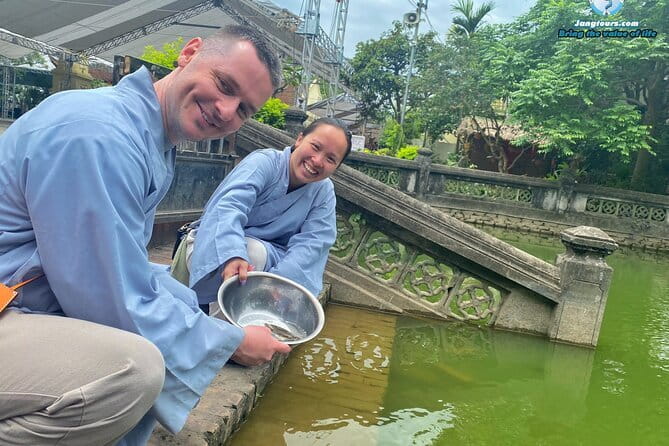
The animal-release activity gives compassion a physical action. Buddhist traditions often place importance on protecting living beings, and this ritual lets you take part in that idea rather than only hearing about it.
The activity may be unfamiliar, and its meaning will depend on the explanation given at the pagoda. Listen closely to the purpose behind it. The value is not in treating the ritual as a photo opportunity, but in understanding why releasing animals is connected with compassion and gratitude.
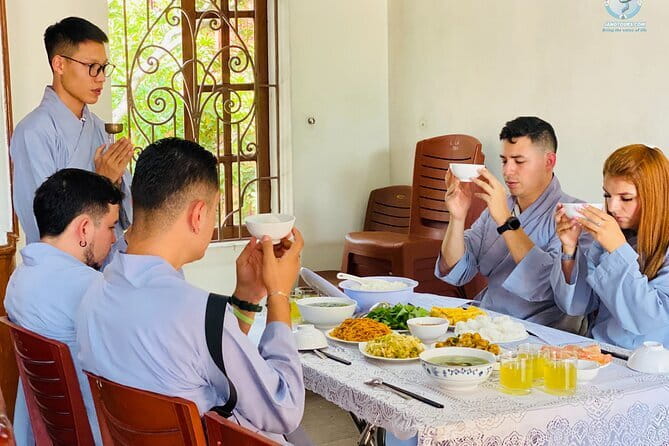
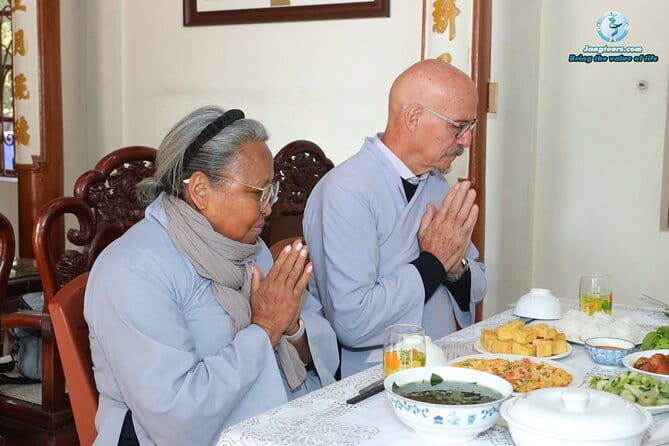
Lunch follows as a vegetarian meal. It is included in the price, which helps the experience feel complete and avoids turning the meal into an extra expense. The food also fits the tone of the retreat: simple nourishment after a morning or afternoon of concentration and ritual.
No menu is provided, so you should not assume a particular dish or level of choice. If you have strict dietary needs, the available information does not confirm how those needs are handled. The meal is specifically described as vegetarian, and that is the detail you can count on.
What Four Hours and $60 Actually Buy You
The price is $60 per person for about four hours. That is not the cheapest way to spend half a day in Hanoi, especially since an air-conditioned vehicle is not included. The price makes more sense if you value instruction, access to a pagoda program, the monk conversation, the ritual activities, and the included vegetarian lunch.
You are paying for a planned sequence rather than a single attraction. The schedule joins Buddhist teaching, chanting, physical practice, several forms of meditation, conversation, compassion work, and food. If you tried to arrange all of those elements independently, the cost would not be the only challenge. You would also need the right setting and people to guide you.
Still, value depends on your goal. If you mainly want a temple visit and a few quiet minutes, this may feel too involved. If you want to understand how meditation fits into Buddhist life, the wider program gives you more for the money.
The experience is booked, on average, 47 days in advance. That suggests you should plan ahead if it is important to fit this retreat into a fixed Hanoi schedule. A mobile ticket makes entry easier, but it does not replace the need to arrange your own transport.
Getting There and Preparing for the Pagoda

Because an air-conditioned vehicle is not included, transport is your responsibility. The available details do not specify pickup points, driving time, or the pagoda’s exact location within Hanoi, so check those practical details before booking.
The mobile ticket is useful for keeping the booking on your phone. I would also set aside enough time to reach the pagoda without rushing. Arriving flustered is not the best beginning for a program built around attention and calm.
Wear something suitable for a religious setting and be ready to follow the pagoda’s rules. The program begins with an explanation of those rules, so you will receive guidance on site. You should approach the visit as a spiritual activity, not simply as sightseeing inside an old building.
Who Will Get the Most From This Retreat
I would choose this for a first introduction to Buddhist practice in Hanoi. It suits you if you want more than a tourist explanation and are willing to chant, listen, move, sit quietly, and take part in a compassion-focused ritual.
It is also a good match for someone curious about the connection between meditation and ethics. The retreat repeatedly links inner calm with gratitude, loving-kindness, and conduct toward other living beings.
You may want a different activity if your priority is a long period of silence, advanced meditation coaching, or a flexible schedule. Four hours includes many activities, and the program is structured from beginning to end. It is also less convenient if you need included transport.
Should You Book the Hanoi Meditation Retreat?
Book it if you want a thoughtful half-day built around Buddhist practice rather than a quick temple stop. The strongest reasons are the combination of sutra chanting, qigong, walking and seated meditation, a conversation with monks, animal release, and vegetarian lunch.
Skip it if you want a purely sightseeing-focused outing or if arranging your own transport is a problem. At $60, it earns its value through the depth and variety of the program, not through convenience alone.
For the right person, this is a calm, structured way to meet an important part of Hanoi’s spiritual life. Go with patience, respect the rituals, and treat the meditation lessons as something you can continue using after the pagoda visit.
FAQ
How long does the meditation retreat last?
The experience lasts approximately four hours.
Where does the experience take place?
It takes place at a pagoda in Hanoi, Vietnam.
Is lunch included?
Yes. A vegetarian lunch is included.
Is transportation in an air-conditioned vehicle included?
No. An air-conditioned vehicle is not included.
What meditation practices are part of the program?
The program includes mindful breathing, qigong, walking meditation, and a meditation session focused on learning proper methods and concentration.
Can I speak with monks during the experience?
Yes. A conversation with monks is included, covering Buddhist doctrine, the life of people who have renounced worldly pleasures, and Buddhist ideals.
Newly reviewed in Hanoi
- Private Full-Day Tour to Halong Bay from Hanoi★ 5.0 · 44 reviews
- Private Evening Walking Tour – Cyclo & Water Puppet Show in Hanoi Old Quarter★ 5.0 · 19 reviews
- Ba Vi National Park Private Tour: Sightseeings & Jungle Hikking★ 4.5 · 26 reviews
- Full-Day Hanoi City Tour with Hidden Local Life Experience★ 5.0 · 27 reviews
- Hanoi Epic tour 6D5N Hanoi – Halong Bay – Ninh Binh – Sapa★ 5.0 · 51 reviews
- Private transfers Hanoi <=> Puluong 1 Way (Free Hotel Pickup)★ 5.0 · 20 reviews
- Hanoi Airport Pick-up (Private Ride From Hanoi Airport to Hotels)★ 4.5 · 253 reviews
- Noi Bai Airport transfer to Hotel or Vice versa★ 5.0 · 144 reviews
Tours in Hanoi, compared.

Hanoi Jeep Tour: Food, Culture and Fun by Vietnam Army Jeep
Read our review →
Full-Day Ninh Binh Highlights Tour from Hanoi
Read our review →
Ha Long Bay Day Cruise – Swimming, Meal, Kayaking
Read our review →
Hanoi Motorbike Tour: Food, Culture and Fun by Vintage Motorbike
Read our review →
Hanoi Cooking Class: Culture, Local Market & Meaning CSR Impact
Read our review →