
Reviewed · TOURS IN HANOI
Hanoi: Master the Art of 4-6 Signature Vietnameses Coffees
The most interesting part of this Hanoi coffee class is that you do not simply watch someone prepare egg coffee or pour condensed milk into a glass. You make the drinks yourself, inside a lived-in local home, using ceramic tools and fresh ingredients. You grind, brew, whisk, taste, and adjust until the cup suits you.
I like the small-group format, capped at 10 people, because a coffee class can quickly become a spectator sport when too many guests crowd around one table. I also like the practical recipes and home-friendly substitutions. The main caution is simple: four to six coffees in one or two hours is a serious caffeine load, so book a morning slot if you can.
Key points at a glance
- Six classic cups in one sitting: Prepare black, brown, egg, white or silver, coconut, and salted coffee.
- Hands-on from start to finish: Use a phin filter, whisk egg foam, control strength, and taste your way through each recipe.
- A real Hanoi setting: The class takes place in a local home near the Old Quarter, not a polished cooking-school studio.
- Guides who add local color: Jade, Eddie, Daisy, Tyler, Jessica, Mint, Zoey, and Ngoc are among the instructors who lead sessions in English and Vietnamese.
- Useful take-home material: You receive full recipes and local suggestions for cafés, food, markets, bars, and restaurants.
- Good value at $22: You get several drinks, instruction, cultural context, and skills you can use after leaving Vietnam.
Walking into a Hanoi home for coffee
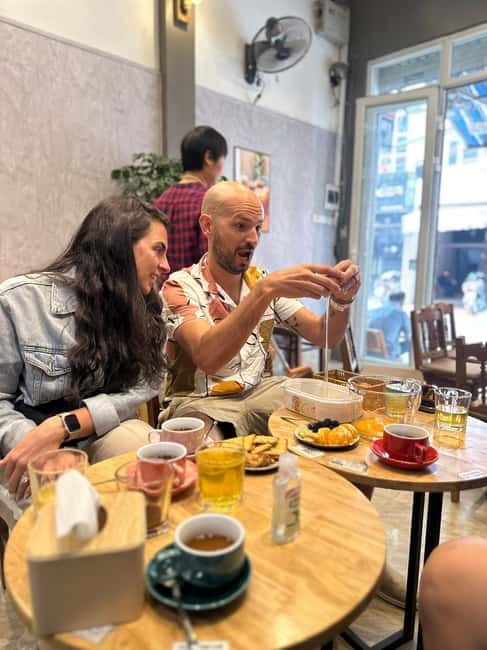
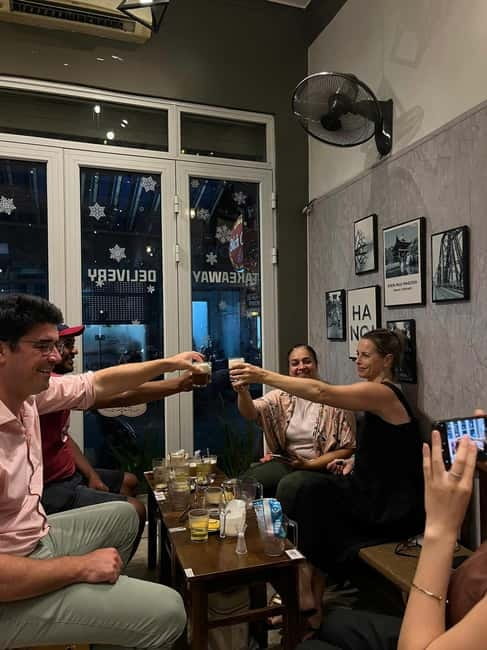
The meeting point is a cozy local café in a quiet corner of the Old Quarter. It is close to the Hanoi Opera House, the French Quarter, the Red River, and Vinh Tuy Bridge, so you can fit the class around sightseeing in central Hanoi.
From the street, you move into a home where daily life continues around the lesson. Voices drift outside. People pause between brews. Coffee warms the room slowly rather than arriving all at once from a commercial machine.
That setting matters. Vietnamese coffee is not only a drink ordered at a café counter. It is part of the rhythm of mornings, conversations, breaks, and family life. Here, the space gives you a sense of that everyday setting without pretending to be a museum display.
The home has air conditioning, clean restrooms, a dishwasher, and sterilized utensils. A pet-friendly garden area is available, and childcare can be arranged. Those details make the experience easier for families and for anyone who prefers a more comfortable setup than a tiny street café.
The class is wheelchair accessible. Babies under one year and people over 95 are not suited to this activity, according to the stated participation guidelines.
More days out you can book in Hanoi:
- Hanoi Jeep Tour: Food, Culture and Fun by Vietnam Army Jeep
★ 5.0 · 15,222 reviews - Full-Day Ninh Binh Highlights Tour from Hanoi
★ 5.0 · 7,761 reviews - Hanoi: Ha Long Bay Day Cruise – Swimming, Meal, Kayaking
★ 4.7 · 7,415 reviews
Your first lesson: how Vietnamese coffee gets its strength
The class usually begins with the foundations. Vietnamese specialty beans come from the Central Highlands, and the coffee changes with the season and harvest. The host explains how the beans are selected, then shows you how to work with the equipment in front of you.
The phin filter is the key tool. It sits directly over your glass or cup and lets hot water pass slowly through ground coffee. This is not an automatic, push-button method. You need to pay attention to the grind, the amount of coffee, the water, and the pace of the drip.
You learn how locals judge a cup by tasting it, not by following a rigid formula. You can make the coffee sweeter, stronger, or bolder while keeping the basic character of the drink intact. That lesson is more useful than memorizing one recipe, since coffee behaves differently at home depending on the beans, water, grind, and equipment.
The hosts also explain practical substitutes for ingredients and tools. You do not need a perfect Vietnamese kitchen to repeat the drinks later. The class focuses on methods that can work with ordinary home equipment, which gives the $22 fee real value beyond the afternoon itself.
Six styles, six different ideas of Vietnamese coffee
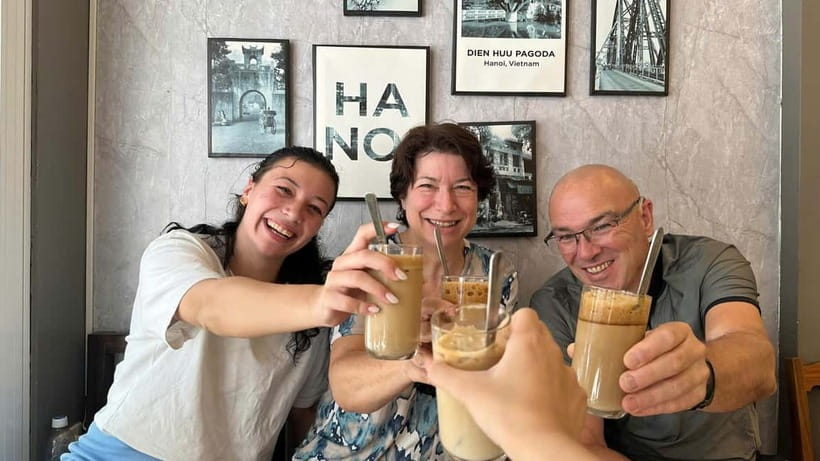
The exact number can be four to six coffees depending on the session, but the full set includes black, brown, egg, white or silver, coconut, and salted coffee. Each one shows a different way of balancing coffee bitterness with sweetness, dairy, foam, salt, or fruit-like richness.
Black coffee
The black version is the clearest test of the beans and the brew. It is served without the sweet additions that soften many Vietnamese coffee drinks, so you can focus on strength, aroma, and bitterness.
If you usually avoid black coffee, this can be a useful surprise. The preparation and tasting help you understand that a strong cup does not have to taste harsh. You learn how brewing choices affect the final flavor before sugar or milk changes the balance.
Same base, a completely different day:
- Hanoi: Water Puppet Show Tickets
★ 4.6 · 7,029 reviews - Hanoi Motorbike Tour: Food, Culture and Fun by Vintage Motorbike
★ 5.0 · 6,699 reviews - Hanoi: Guided Food Tour with Train Street Visit
★ 4.9 · 6,239 reviews - Hanoi Cooking Class: Culture, Local Market & Meaning CSR Impact
★ 5.0 · 5,147 reviews
Brown coffee
Brown coffee brings in condensed milk, the familiar sweet and creamy partner to strong Vietnamese coffee. You see how much to add and how to adjust the ratio rather than treating sweetness as a fixed rule.
This is often the style that first makes Vietnamese coffee approachable for people who find black coffee too intense. You can make it sweeter or more forceful, and the class encourages you to notice the difference between the two.
Egg coffee
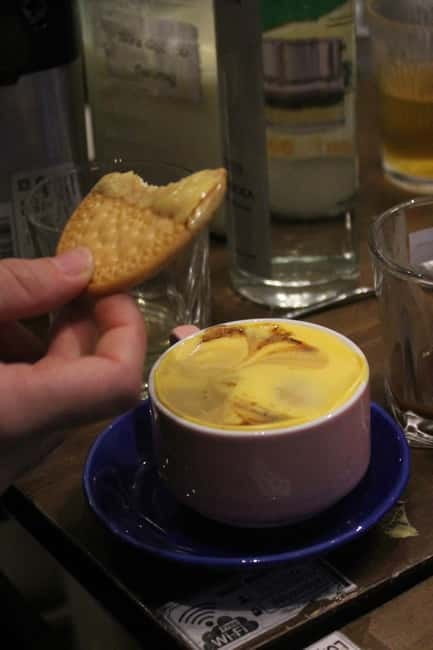
Egg coffee is one of Hanoi’s signature drinks, and the lesson gives you more than a quick explanation of its origins. You whisk the egg mixture yourself and learn how to create the smooth topping that turns coffee into something closer to a dessert.
This is where technique matters. The texture depends on careful whisking and a good balance between the foam and the coffee below it. Your guide explains the process clearly, then helps you adjust the result.
Jade has been praised for making the egg coffee lesson easy to follow and for explaining its background in an engaging way. Other instructors, including Daisy and Eddie, have also led sessions centered on the story and preparation of this Hanoi favorite.
White or silver coffee
The white, sometimes called silver, version offers another look at the relationship between coffee and milk. The name can vary, so listen to the guide’s explanation of the local terminology and preparation.
This style is useful for comparison. After making the black, brown, and egg versions, you can taste how milk changes the body and sharpness of the brew without relying on the thick foam of egg coffee.
Coconut coffee
Coconut coffee is a favorite for many people taking this class. It combines strong coffee with coconut for a smooth, creamy, slightly sweet drink.
The coconut version is especially helpful if you want something less traditional in appearance but still tied to Vietnamese café culture. It has a clear flavor of its own rather than simply masking the coffee.
You prepare it with fresh coconut ingredients, not a premixed artificial base. That fresh preparation is one of the small details that separates this experience from a quick tasting flight.
Salted coffee
Salted coffee sounds odd until you understand the purpose of the salt. A small amount can change how you perceive bitterness and sweetness, giving the drink a more rounded taste.
The lesson lets you experiment rather than assuming one ratio suits everyone. You can see how a very small adjustment affects the cup. This is exactly the sort of trick that can improve your coffee at home without buying expensive equipment.
The value of making every cup yourself

Many food tours give you a sample and move on. This class asks you to take part in each stage. You grind the coffee, set up the filter, add water, whisk foam, taste the result, and make changes.
That hands-on pace is the strongest reason to book. You are not only collecting photographs of attractive drinks. You are learning what each ingredient does and how to correct a cup that is too bitter, weak, sweet, or heavy.
The instructors keep the group limited to 10 participants. That does not guarantee a private class, but it gives you a better chance to ask questions and handle the tools. Several sessions have been especially small, including one reported two-person class and another private lesson for a solo participant.
You should still expect the class to vary with the group and the instructor. Some sessions may take close to an hour, while others run nearer two hours. If you want detailed explanations and time to adjust each drink, allow the longer window rather than planning a tight connection afterward.
Local stories between the brews
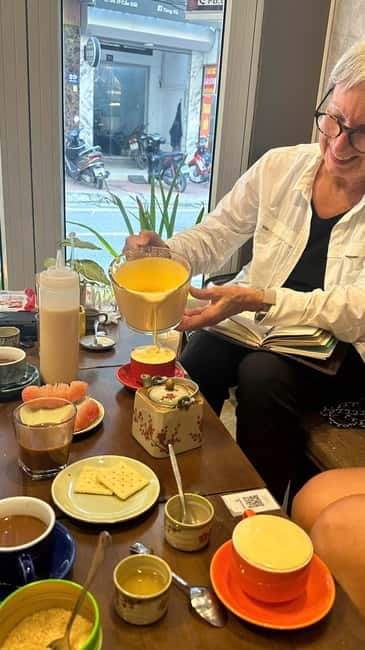
The hosts were born and raised in Hanoi’s Old Quarter and learned about coffee through family, chefs, street cafés, and years of tasting. That background gives the lesson a local point of view.
The stories cover old cafés, morning routines, changing tastes, and the way coffee became part of life in Vietnam. You learn not only what goes into a drink, but why certain styles feel especially connected to Hanoi.
The tone is informal. Stories come while the coffee drips or the foam is whisked, so the cultural material does not feel like a lecture. Jade, Eddie, Daisy, Tyler, Jessica, Mint, Zoey, and Ngoc have all led sessions, and the repeated strength across the instructors is clear English, patience, and careful step-by-step guidance.
Guides also share practical city advice. You may receive a map or suggestions for local cafés, restaurants, markets, and bars that are less obvious to first-time visitors. This extra information can be useful on your first day in Hanoi, when you want quick help deciding where to eat and drink next.
Fresh ingredients and a comfortable setup
Eggs, milk, and coconut are prepared fresh each day. Nothing is pre-made or artificial, which matters most in the egg and coconut coffees, where texture and freshness are part of the appeal.
You also handle ceramic tools from local pottery villages. The ceramics make the class feel connected to Vietnamese craft traditions, while the ordinary home setting keeps the focus on use rather than display.
The space is air-conditioned, and the utensils are cleaned and sterilized. That may sound routine, but it is reassuring during Hanoi’s warmer months and after several rounds of tasting.
A cat or other household detail may add to the home atmosphere, but the important point is that this is not a silent test kitchen. Everyday life remains nearby. If you want a formal culinary course with a polished demonstration counter, this may feel too casual. If you want a personal introduction to the way coffee fits into Hanoi life, the setting is a good match.
Is $22 a fair price?
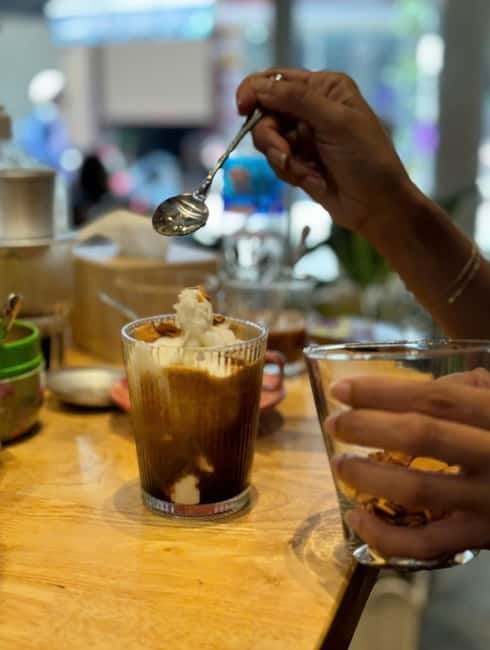
At $22 per person, the class costs more than buying one Vietnamese coffee at a local café. That comparison is not quite fair, since you are paying for six tasting experiences, ingredients, equipment, instruction, recipes, and conversation about Hanoi.
The value is strongest if you will actually repeat the recipes at home. You receive the instructions for the drinks, and the advice on substitutions means you can continue using the skills after your trip. A phin filter may also be available to buy, which is handy if you want to recreate the brewing method.
The price also covers time with a local instructor rather than a quick drink order. A good guide can explain why your coffee tastes too bitter, show you how to correct it, and answer questions about the city at the same time.
The value is weaker if you do not drink coffee, dislike sweet drinks, or plan to avoid caffeine. Six coffees can be a lot, even when the portions are modest. You might ask your instructor about pacing, or choose the class early enough that the caffeine does not interfere with your evening.
Who should book this coffee class?
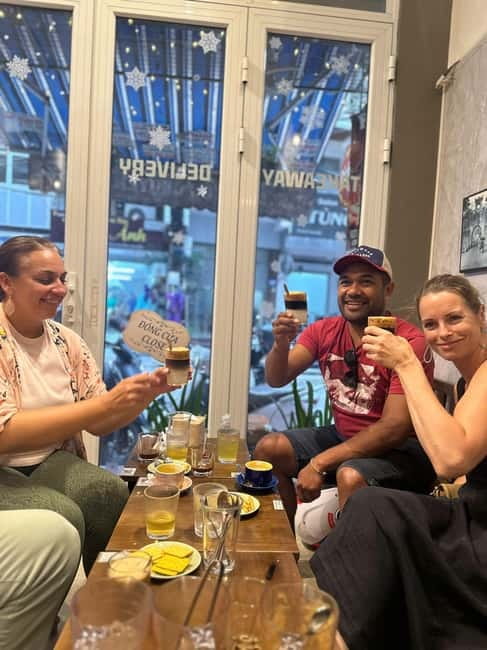
I would choose this for coffee lovers, curious eaters, and anyone who has already tried egg or coconut coffee in Vietnam and wants to understand how it is made.
It also works well for couples, friends, solo visitors, and families with older children. The small format makes it easy to talk with other participants, and the shared preparation gives solo visitors a natural way to meet people without forcing a group activity.
This is a particularly good first or second-day Hanoi activity. You get local café suggestions, learn useful words and styles, and gain a better idea of what to order around the city.
You may want to skip it if you are highly sensitive to caffeine, want a fast 30-minute tasting, or prefer a large professional cooking studio. The class is deliberately personal and home-based, and that means the pace and atmosphere are less formal.
Booking in the morning is sensible. One participant specifically appreciated starting the day with the class, while another advised preparing for a strong caffeine kick. Afterward, you can spend the rest of the day walking the Old Quarter, visiting the Opera House area, or simply taking a slower lunch.
Practical details before you book
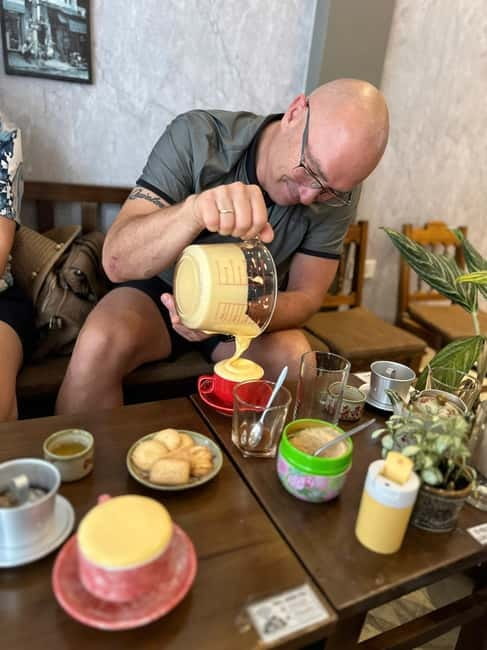
The experience lasts one to two hours, with starting times shown according to availability. The group limit is 10 people, and instruction is available in Vietnamese and English.
Free cancellation is available up to 24 hours before the activity for a full refund. You can also reserve now and pay later, which helps if your Hanoi plans are still shifting.
The meeting point is near central Old Quarter sights, but confirm the precise café address when booking. The location description covers a peaceful corner near the Hanoi Opera House, French Quarter, Red River, and Vinh Tuy Bridge, so allow time to find the entrance.
You receive coffees and teas, recipes, instruction, and photography from your instructor. The host may take photos during the class, giving you a record of the preparation without needing to manage your phone while whisking egg foam.
Should you book it?
Book this experience if you want to do more than drink Vietnamese coffee. The best parts are the hands-on brewing, the fresh ingredients, the small group, and the useful advice you can take home.
The main tradeoff is caffeine and time. Four to six coffees in up to two hours is not a light tasting, and the home setting may feel informal if you expect a polished school. For most visitors who enjoy coffee and want a friendly introduction to Hanoi culture, $22 is a sensible price for a class that keeps giving after you leave Vietnam.
FAQ
How many Vietnamese coffees will I make?
You will make four to six coffees, depending on the session. The full selection includes black, brown, egg, white or silver, coconut, and salted coffee.
How long does the coffee class last?
The activity lasts one to two hours. Starting times depend on availability.
Where does the experience take place?
It begins at a cozy local café in a peaceful corner of Hanoi’s Old Quarter, near the Hanoi Opera House and the French Quarter. The experience then takes place in a lived-in local home.
Is the class taught in English?
Yes. The instructors speak Vietnamese and English, and the class is available in both languages.
How large is the group?
The class is limited to 10 participants. Some time slots may be smaller, and private-style sessions can happen when only one or two people book.
Is the activity wheelchair accessible?
Yes, the activity is wheelchair accessible. Childcare is also available, and the space includes clean restrooms, air conditioning, and sterilized utensils.
Can I cancel the booking?
Yes. You can cancel up to 24 hours in advance for a full refund. You can also reserve now and pay later.
Newly reviewed in Hanoi
- Ha Noi Egg Coffee Class★ 5.0 · 227 reviews
- Vegan Street Food & Stories of Hanoi★ 5.0 · 282 reviews
- Halong Bay 2D1N BEST CRUISES All-Inclusive: Transfer, Meals, Kayak, Cave, Island★ 5.0 · 288 reviews
- Hanoi City Half Day Private Tour: Hidden Corners & Train Street★ 4.5 · 291 reviews
- Hanoi Maya Kitchen: Traditional Cooking Class & Market Tour★ 5.0 · 287 reviews
- Private Street Food Tour – Walking Hanoi Old Quarter★ 5.0 · 294 reviews
- Hanoi: Cat Ba Island & Lan Ha Bay Day Trip Cruise with Lunch★ 4.8 · 308 reviews
- Vespa City Tour &Train Street Female With Ao Dai Riders 4,5 Hours★ 5.0 · 314 reviews
Tours in Hanoi, compared.

Hanoi Jeep Tour: Food, Culture and Fun by Vietnam Army Jeep
Read our review →
Full-Day Ninh Binh Highlights Tour from Hanoi
Read our review →
Ha Long Bay Day Cruise – Swimming, Meal, Kayaking
Read our review →

Hanoi Motorbike Tour: Food, Culture and Fun by Vintage Motorbike
Read our review →
Hanoi Cooking Class: Culture, Local Market & Meaning CSR Impact
Read our review →
5 Traditional Dishes Hanoi Cooking Class with Market Trip
Read our review →Browse the lists this tour appears in