Reviewed · TOURS IN HANOI
Hanoi: Private Half-day City Highlights and Hidden Gems Tour
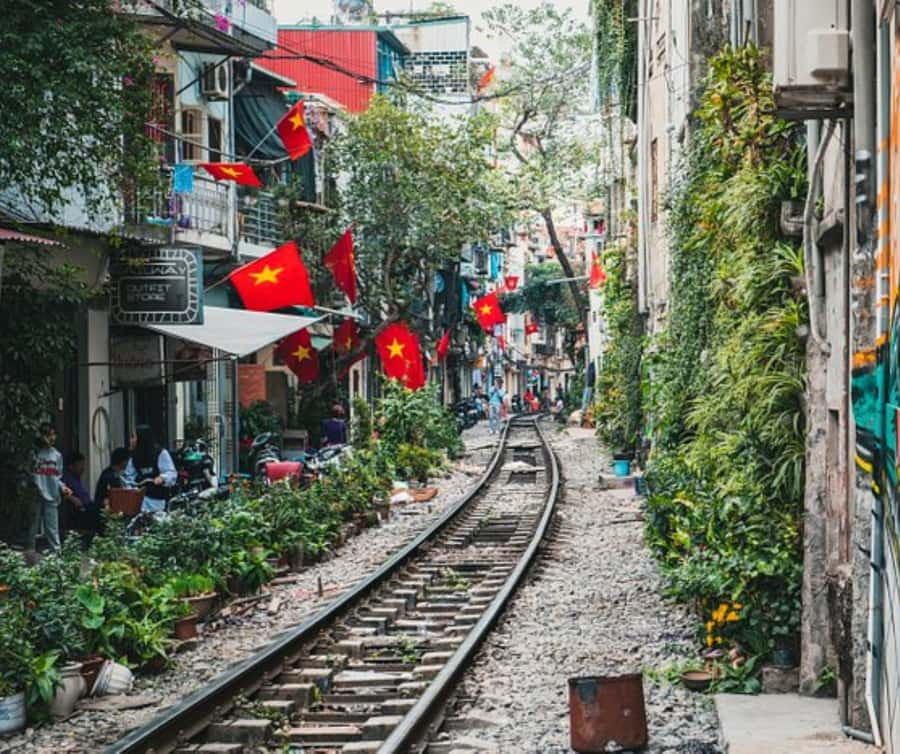
Hanoi’s railway line cuts through the old city, passing startlingly close to homes and cafés. This private half-day tour links that unusual scene with the city’s major sights, from the Ho Chi Minh Mausoleum to Hoan Kiem Lake, without making you wrestle with Hanoi traffic.
I like the private car and hotel pickup, especially on a first day when the city can feel like a wall of scooters. I also like the flexible format. Guides such as Lucas, Duy, Duc, and Tony have adjusted routes, added stops, and helped arrange the day around what their groups wanted to see.
The main tradeoff is time. This is a fast introduction, not a slow cultural walk, and the Mausoleum may be closed on some days. You’ll see a lot, but you should expect short visits and city driving between stops.
Key points
- Train Street gives the tour its most unusual stop: old railway tracks run through Hanoi’s built-up center, and the guide may help time your visit around a passing train.
- A private vehicle saves energy: hotel pickup and drop-off in Hanoi’s Old Quarter make the half-day easier in hot weather and heavy traffic.
- The route covers Hanoi’s main symbols: the Ho Chi Minh Mausoleum, Temple of Literature, Hoan Kiem Lake, Opera House, cathedral, and market.
- The itinerary can bend to your interests: the departure time and stops may be adjusted, and guides have added sights at the group’s request.
- Dress carefully for Ba Dinh Square: shorts must reach the knee, and modest clothing is required at the Mausoleum.
- The $67 price buys convenience more than depth: private transport, entry tickets, water, and a guide make it useful for a first orientation, but meals and drinks cost extra.
Why this half-day works well on a first morning

Hanoi rewards wandering, but it can be hard to know where to begin. The streets around the Old Quarter are crowded, crossings take nerve, and several important sights sit well apart. This tour gives you a city overview before you decide where to return on your own.
You travel only with your group in an air-conditioned vehicle. That matters more than it sounds. After a walk around Hoan Kiem Lake or a warm visit to Dong Xuan Market, having a cool car waiting is a real comfort.
The route also mixes formal sights with ordinary city life. You’ll see political history at Ba Dinh Square, education and architecture at the Temple of Literature, shopping at Dong Xuan Market, Catholic Hanoi at St. Joseph’s Cathedral, and the odd meeting of rail and residential streets at Train Street.
I would treat it as a well-organized orientation tour, not a full study of Hanoi. The half-day schedule gives you breadth. It does not give you long stretches to sit, eat, shop, or explore each stop at its own pace.
A few more ways to spend a day in Hanoi
- Hanoi Half-day with Food + Fun + Culture By Russian Jeep
★ 5.0 · 1,243 reviews - Hanoi City Half-Day Private Tour: Train Street And All Highlights
★ 5.0 · 298 reviews - Hanoi Highlights: Half-day City Tour
★ 5.0 · 298 reviews
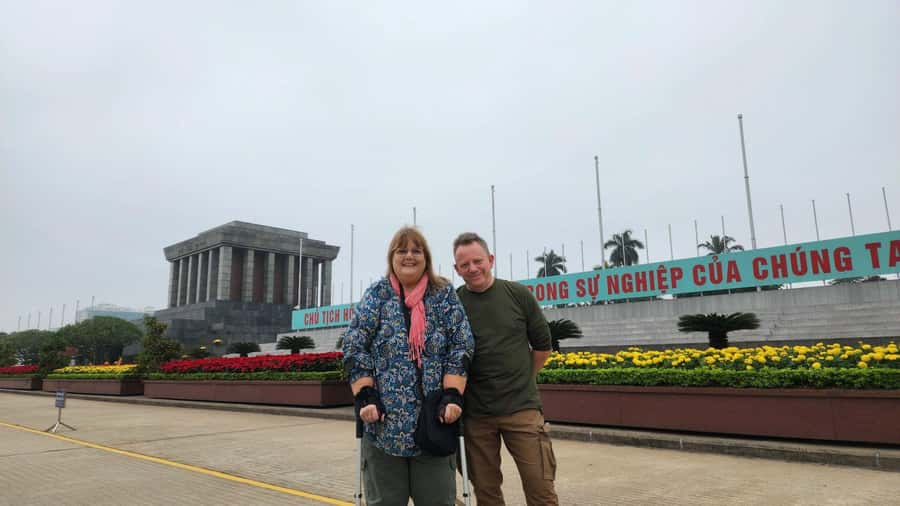
Ho Chi Minh Mausoleum and Ba Dinh Square
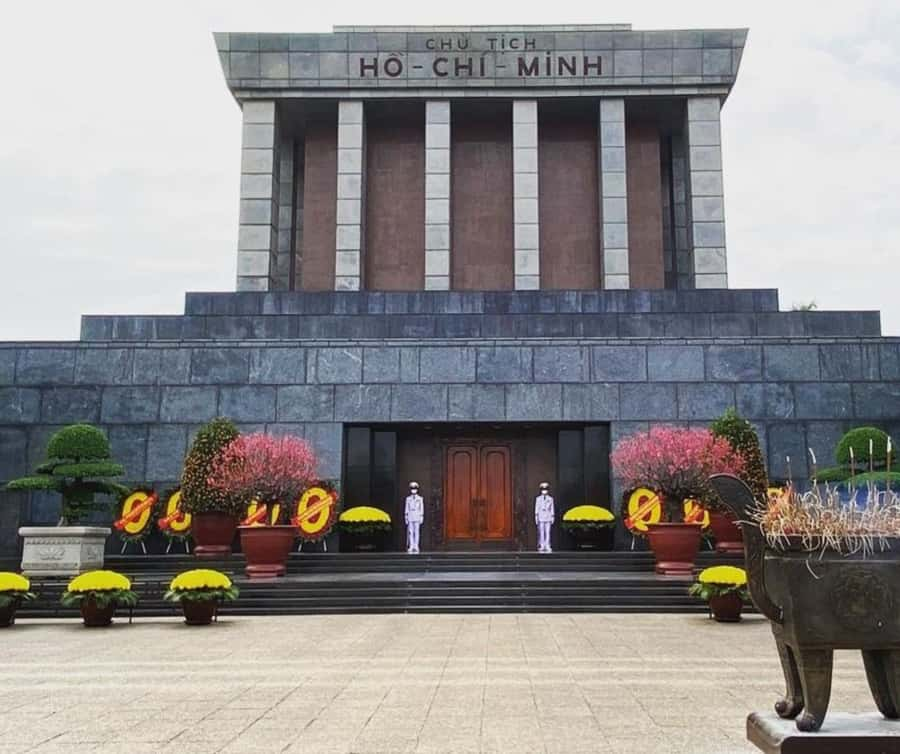
The day begins with the Ho Chi Minh Mausoleum, in Ba Dinh Square. Ho Chi Minh, widely known in Vietnam as Uncle Ho, is preserved in a glass case here, despite his stated wish for cremation.
This stop offers a direct introduction to modern Vietnamese history. Your guide can explain Ho Chi Minh’s place in the country’s political story and the meaning of the square around the mausoleum. The setting is formal and carefully maintained, so this is not a casual photo stop.
Dress modestly. Shorts must be knee-length, and conservative clothing is the sensible choice. The mausoleum can also be closed on some days, as happened during one tour, so keep your expectations flexible. A good private guide should be able to adjust the plan and use the time elsewhere, rather than leaving you with a gap in the morning.
The stop may feel more ceremonial than personal. If you prefer markets, food, and street scenes, you might find the rules and formal atmosphere a little stiff. Still, it gives useful context for understanding many later sights and conversations about Vietnam.
The Temple of Literature, Hanoi’s quiet pause
The Temple of Literature was built in 1070 as a university devoted to Confucius, scholars, and sages. Its traditional Vietnamese buildings, courtyards, and covered walkways offer a calmer change after the traffic around Ba Dinh Square.
I like this stop because it explains how education and scholarship were honored in older Vietnamese society. It is also one of the more attractive places on the route, with carefully preserved architecture that rewards a slower look.
Your guide can add meaning to details that might otherwise pass unnoticed. Several guides on this tour, including Lucas and Duc, have been praised for explaining Confucian ideas, Buddhism, Vietnamese culture, and current affairs in clear terms. The quality of the visit depends partly on how much context you want, so tell your guide early if history interests you.
The Temple of Literature is still a scheduled sightseeing stop, not a private archaeological discovery. You’ll share the setting with other people, and the half-day format limits how long you can linger. Even so, it is a strong contrast to the city’s traffic and one of the tour’s most worthwhile architectural visits.
Dong Xuan Market and the practical side of Hanoi
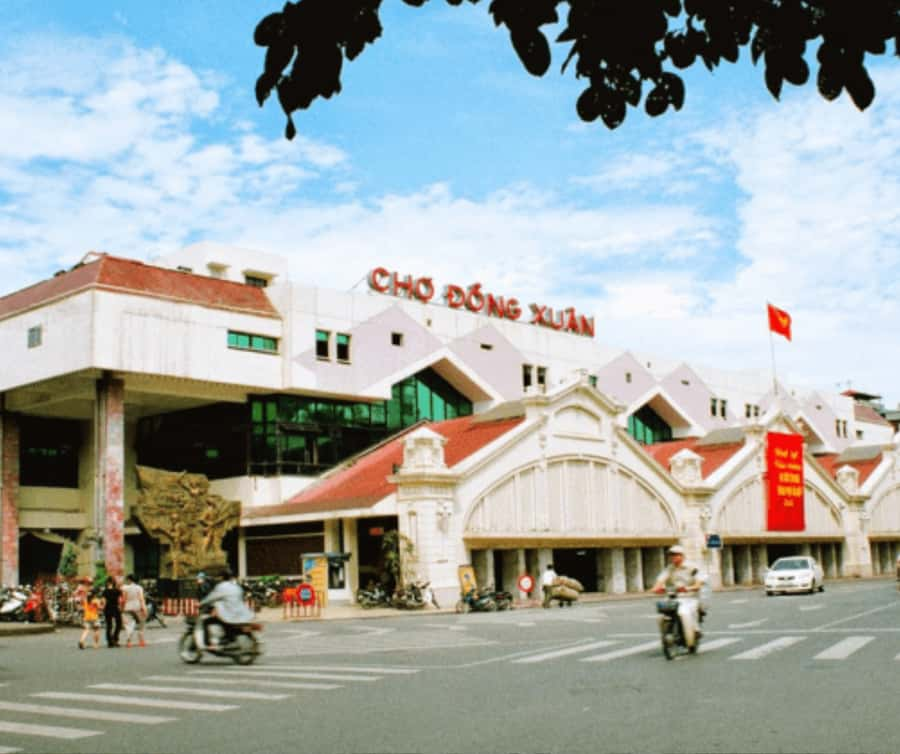
Dong Xuan Market is Hanoi’s largest wholesale market and dates to 1889. Inside, you’ll find fabric, clothes, handicrafts, souvenirs, and food stalls.
This is the place to see Hanoi as a working city rather than only a collection of monuments. The market is useful for spotting the goods that move through local commerce, and it gives your guide plenty to explain about shopping habits and daily life.
You should not expect a long shopping session. The tour includes a stop, but not a meal or a dedicated market-shopping block. If you see something you want, ask how much time is available before you start bargaining or browsing.
The market can feel more practical than polished. That is its appeal, but it also means the visit may be crowded and visually busy. Keep your belongings close and follow your guide through the busiest sections. The air-conditioned car waiting afterward is welcome, particularly on a hot day.
Same base, a completely different day:
- Hanoi Jeep Tour: Food, Culture and Fun by Vietnam Army Jeep
★ 5.0 · 15,222 reviews - Full-Day Ninh Binh Highlights Tour from Hanoi
★ 5.0 · 7,761 reviews - Hanoi: Ha Long Bay Day Cruise – Swimming, Meal, Kayaking
★ 4.7 · 7,415 reviews - Hanoi: Water Puppet Show Tickets
★ 4.6 · 7,029 reviews
St. Joseph’s Cathedral and French-era Hanoi
St. Joseph’s Cathedral sits on Nha Chung Street and was built about 120 years ago in a neo-Gothic style. Its stone facade and European form may surprise you in the middle of Hanoi, but it reflects the city’s long period under French colonial administration.
This stop helps widen your view of Hanoi’s past. The city is not defined by one tradition. Confucian learning, Vietnamese political history, Catholic worship, French architecture, and modern commerce all sit within a short drive of one another.
The cathedral is mainly an exterior viewing stop in the information provided, so don’t count on an extended interior visit or a service. Your guide can explain the building and its setting, then move you on to the next part of the route.
I like the way this stop breaks up the itinerary. After the solemnity of the Mausoleum and the formal beauty of the Temple of Literature, the cathedral places you back in the everyday center of Hanoi.
Train Street, where the railway meets the old town
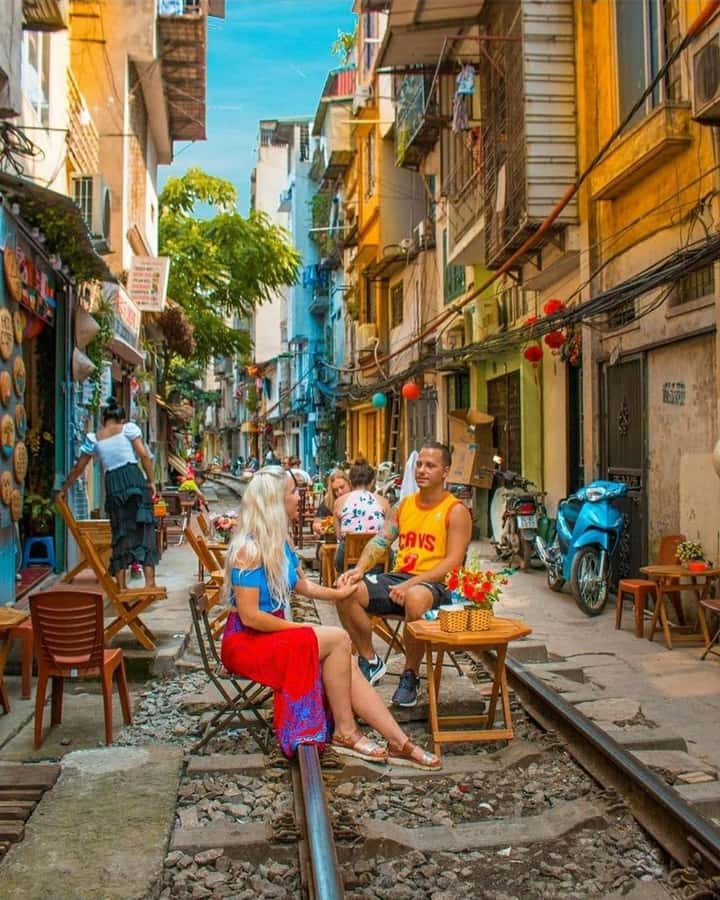
Train Street is the tour’s most distinctive stop. A real railway line runs through a narrow built-up part of Hanoi, with homes and cafés close to the tracks.
The sight is memorable because it feels so unlike a normal city railway. You see old tracks passing through the heart of the urban fabric, with daily life arranged around them. The unusual setting also shows how Hanoi’s neighborhoods have grown tightly around limited space.
A practical warning: train timing matters. One guide, Lucas, specifically planned the day so his group could see the train pass. That suggests the schedule can sometimes be arranged around a train, but you should not assume a passing train is guaranteed unless your guide confirms it that day.
Access and viewing conditions can change. Listen to your guide, stay clear of the tracks, and do not treat the railway as a photo prop. The narrow setting is part of what makes the stop interesting, but it also leaves little room for careless movement.
This is a place where the private format helps. Your guide can explain what you are seeing, manage the timing, and move the group along without the confusion of a large coach party. If Train Street is your main reason for booking, ask about the train schedule and current access when you reserve.
Hoan Kiem Lake and the Lake of the Restored Sword
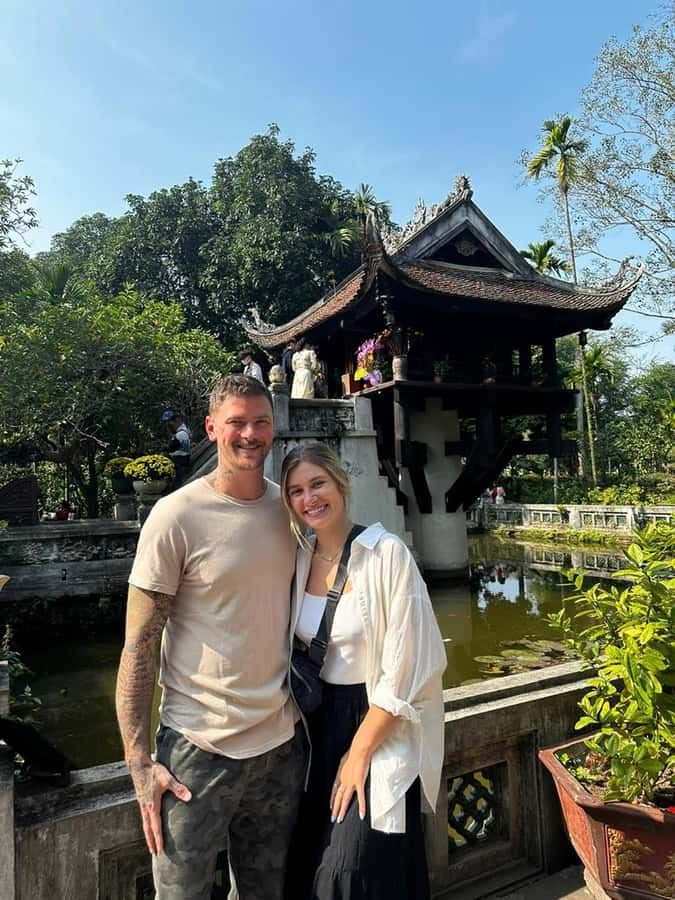
Hoan Kiem Lake is the symbolic center of Hanoi. Its name means Lake of the Restored Sword, and it is important not only for its central location but also for its place in Vietnamese legend and civic life.
This is one of the better places to get a sense of Hanoi’s rhythm. The lake gives the dense city an open focal point, and the surrounding streets connect naturally with the Old Quarter. Your guide can explain the lake’s name and why it matters to the city.
You may have only a short walk or viewing period here, depending on traffic, opening conditions, and how much time earlier stops take. That is fine for orientation, but I would return independently if you want to sit by the water, explore nearby streets, or take photographs without watching the clock.
The lake also helps place the rest of the tour on a map. After seeing distant attractions by car, you are back in Hanoi’s central core, close to the Old Quarter and its cafés, shops, and narrow lanes.
Hanoi Opera House and Ta Hien Corner

The Hanoi Opera House was built by the French colonial administration between 1901 and 1911. Its grand exterior gives you another clear look at the French influence on the city, this time on a larger civic scale.
You’ll usually pass by or stop briefly rather than attend a performance. The value is architectural and historical. The building helps show how colonial planners tried to impose European public forms on Hanoi, while the streets around it remain unmistakably Vietnamese.
The final pass through Ta Hien Corner brings the tour back to the Old Quarter. This is a lively street area known for casual food and drinks, and it is a useful place to end if you want to continue exploring after the guide says goodbye.
The tour then returns you to your hotel. If you would rather finish near Ta Hien Corner or another point in the Old Quarter, ask whether the drop-off can be adjusted. The stated service includes hotel drop-off in the Old Quarter, while exact arrangements may depend on your plan.
What the private format is really worth
The price is $67 per person. That is not the cheapest way to see Hanoi, but the value becomes clearer when you consider what is included: private air-conditioned transportation, an English-speaking guide, entry tickets, a bottle of water, and hotel pickup and drop-off in the Old Quarter.
For one or two people, the cost may feel high compared with walking independently or hiring local transport between a few sights. You are paying for time saved, route planning, and a private vehicle, not simply admission to the attractions.
For a small group, the calculation improves. You avoid sharing a coach, can ask questions throughout the day, and may adjust the route to your interests. Guides such as Duy, Duc, and Harry have adapted the schedule or added stops when groups wanted more from the morning.
The guide is the most important part of the value. Lucas, Duy, Duc, Tuong, and Tony are among the guides who have been praised for friendly service, clear explanations, and flexibility. English is included, while French, German, Chinese, Japanese, Russian, Spanish, and Kazakh are also listed as available. Other languages may cost extra.
A few practical limits remain. Meals and drinks are not included, so carry money for food or plan to eat after the tour. Holiday surcharges may apply. Also, a private tour does not remove Hanoi’s traffic. The car makes the route easier, but it cannot make the city move faster.
Who should book this Hanoi tour?
I would choose this tour if you have only a short time in Hanoi, are visiting for the first time, or want to understand the city before exploring alone. It is also a good fit if you dislike negotiating transport, prefer a private group, or want a guide to connect the sights with Vietnamese history and culture.
Families and older visitors may appreciate the car and limited walking between attractions. The tour also suits people who want a broad sample rather than spending half a day at one museum or historic site.
You might choose another format if your main goal is street food, long market browsing, or an unhurried Old Quarter walk. This route has plenty of stops, and the schedule works best when you accept that each one will be fairly focused.
If Train Street is your priority, ask about the day’s timing before you book. If the Mausoleum is essential, confirm its opening schedule as well. The private format gives the operator room to change the plan, but it cannot guarantee that every attraction will operate normally on every date.
Should you book it?
Book this tour if you want a comfortable, flexible first look at Hanoi and value a good guide more than the lowest possible price. The combination of major landmarks, Train Street, hotel transport, and a private group is hard to manage as neatly on your own in half a day.
Skip it if you already know Hanoi well or want to spend your morning eating and wandering at your own pace. For a first visit, though, $67 per person is a fair price for an efficient introduction, especially when your group can shape the route and the guide brings the history to life.
FAQ
How long is the Hanoi city tour?
It is described as a private half-day tour. The exact duration is not stated.
Is hotel pickup included?
Yes. Hotel pickup and drop-off are included for hotels in Hanoi’s Old Quarter.
Is the tour private?
Yes. Only your group participates.
What language does the guide speak?
English is included. French, German, Chinese, Japanese, Russian, Spanish, and Kazakh are also listed as available languages. Other languages may involve an additional charge.
Is transportation included?
Yes. You travel in an air-conditioned private vehicle during the tour.
Are entry tickets included?
Yes. Entry tickets are included in the tour price.
Is food included?
No. Meals and drinks are not included. A bottle of water is provided.
What should I wear to the Ho Chi Minh Mausoleum?
Dress modestly. Shorts must be knee-length.
Can the itinerary or departure time change?
Yes. The itinerary and departure time may be changed according to your expectations. The private format also allows the guide to adjust the route, although attraction opening conditions can affect the plan.
Newly reviewed in Hanoi
- Private Full-Day Tour to Halong Bay from Hanoi★ 5.0 · 44 reviews
- Private Evening Walking Tour – Cyclo & Water Puppet Show in Hanoi Old Quarter★ 5.0 · 19 reviews
- Ba Vi National Park Private Tour: Sightseeings & Jungle Hikking★ 4.5 · 26 reviews
- Full-Day Hanoi City Tour with Hidden Local Life Experience★ 5.0 · 27 reviews
- Hanoi Epic tour 6D5N Hanoi – Halong Bay – Ninh Binh – Sapa★ 5.0 · 51 reviews
- Private transfers Hanoi <=> Puluong 1 Way (Free Hotel Pickup)★ 5.0 · 20 reviews
- Hanoi Airport Pick-up (Private Ride From Hanoi Airport to Hotels)★ 4.5 · 253 reviews
- Noi Bai Airport transfer to Hotel or Vice versa★ 5.0 · 144 reviews
Tours in Hanoi, compared.

Hanoi Jeep Tour: Food, Culture and Fun by Vietnam Army Jeep
Read our review →
Full-Day Ninh Binh Highlights Tour from Hanoi
Read our review →
Ha Long Bay Day Cruise – Swimming, Meal, Kayaking
Read our review →
Hanoi Motorbike Tour: Food, Culture and Fun by Vintage Motorbike
Read our review →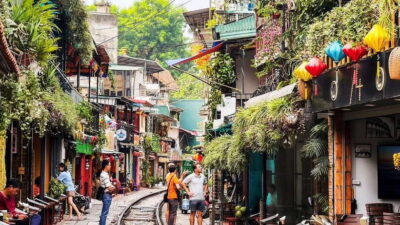

Hanoi Cooking Class: Culture, Local Market & Meaning CSR Impact
Read our review →