
Reviewed · HUE IMPERIAL CITY TOURS
Hue Imperial city walking tour and optional royal tombs
Hue’s Imperial City is more than a pretty collection of gates and courtyards. It is a place where architecture, royal politics, flood control, Feng Shui, and the rise and fall of Vietnam’s Nguyen Dynasty all meet. This 2.5-hour walking tour gives you a historian guide to explain what you are seeing, rather than leaving you to guess which temple, gate, or ruined palace mattered most.
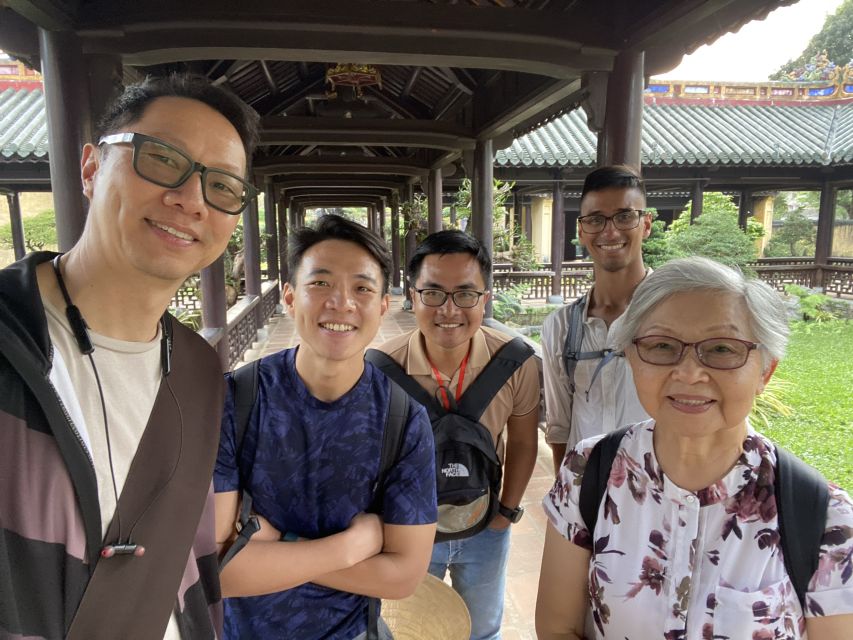
I like two things here. First, the guide explains the thinking behind the buildings, including weather, wind, water, and court design. Second, the small-group format lets you ask questions and shape the conversation. Guides named Matthew, Dang, and Tom have been praised for clear English, strong storytelling, and patience. The main consideration is cost: the $26 fee covers guiding only, while the Imperial City entrance ticket costs another 200,000 VND per person.
Key points to know before you book
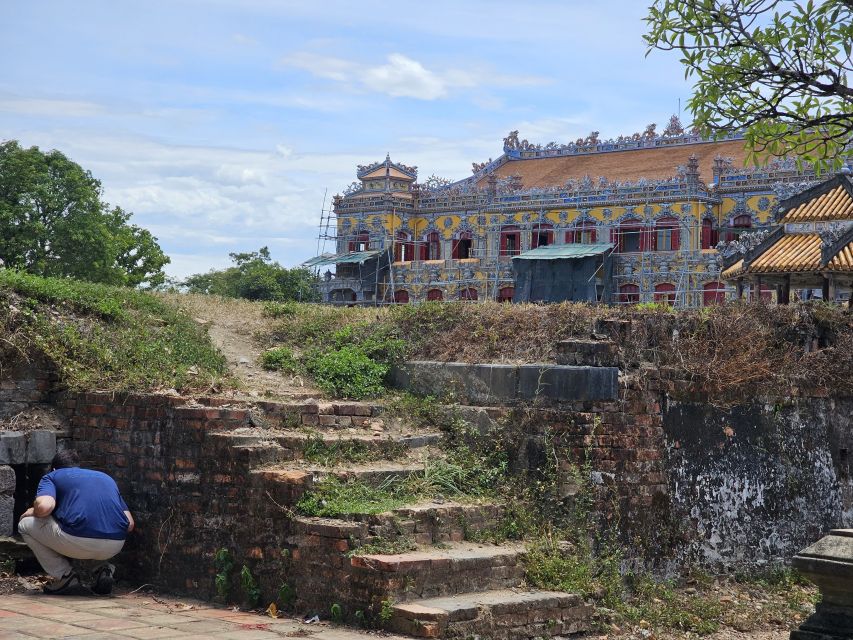
- See the Imperial and Forbidden Cities together: The route connects Hue’s formal royal court with the more private palace area once reserved for the emperor and his household.
- Learn why Hue became the capital: Your guide explains the Nguyen Dynasty’s choice of Hue in 1802 and how the city served Vietnam until 1945.
- Expect architecture with a practical purpose: Feng Shui, storms, heat, wind, drainage, and floodwaters all enter the story.
- Use the morning start for an extra ceremony: Book the morning option to watch the Changing Guard Ceremony at 8 am in front of Ngo Mon Gate.
- Add royal tombs if you want more than the citadel: The optional tomb choices extend the tour beyond the palace compound and into the burial monuments of Nguyen rulers.
- Plan for heat: Hue can be hot and humid from May through August, so carry more water than you think you need.
Why a guide changes the Imperial City
You can walk through Hue’s citadel alone, but the scale and repeated names can blur together. A guide gives each section a job in the larger story. You learn why the Nguyen rulers selected Hue, how the royal court worked, and what changed when the dynasty lost power in 1945.
That context matters because the Imperial City is not simply a set of surviving walls. It was the political center of the Nguyen Dynasty, which ruled from 1802 to 1945. The buildings reflect royal ceremony, private life, religious practice, and the strict order of court life.
The best part of this experience is the chance to ask questions as you walk. Matthew, for example, has been praised for explaining palace intrigues while also showing the engineering behind the buildings and water management. That combination is useful. You get the human drama, but you also understand how the complex worked as a built environment.
The tour is conducted in English. Some guides have additional language skills. Tom, for instance, has led the visit in French as well as English. The exact guide depends on availability, but Matthew, Dang, and Tom are names associated with especially strong feedback.
More imperial history around Hue Vietnam:
- From Da Nang/Hoian/Hue: Hue Imperial City Full-Day Tour
★ 4.8 · 295 reviews - Hue: Royal Tombs & Pagoda Private Tour By Dragon Boat & Car
★ 4.9 · 257 reviews - Hue Imperial City Walking Tour: Citadel & Forbidden City
★ 4.8 · 245 reviews
Meeting at the Nine Holy Cannons
The meeting point is specific, and it is worth paying attention to the details. Your guide waits at the 4-cannon side of the Nine Holy Cannons, not the opposite side with five cannons. The guide sends a WhatsApp message before the meeting, which helps confirm that you are in the right place.
This small detail can save time. Hue’s historic zone has large open areas, formal gates, and several visually similar points where a first-time visitor can wait on the wrong side. Arrive with enough time to identify the cannon display and check your messages.
The tour ends back at the same meeting point. There is no transport included in the basic walking experience, so you should arrange your own way to and from the meeting area.
Entering the Imperial Citadel
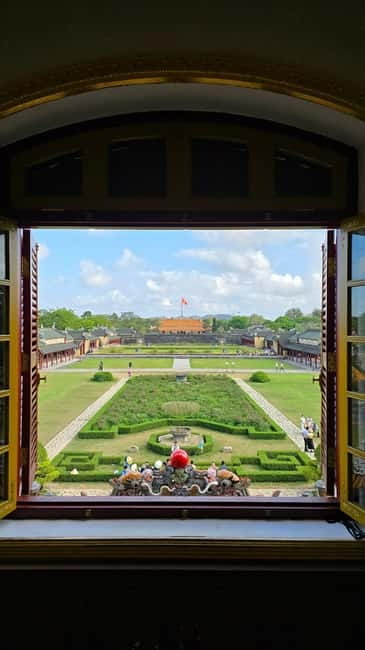
The Imperial Citadel is the broad fortified complex surrounding the royal center. The tour uses the buildings and courtyards to explain how the Nguyen court organized authority.
Your guide helps answer the basic questions that make the site easier to read:
- Why was Hue selected as the capital?
- How did the Nguyen Dynasty use architecture to express royal power?
- Which spaces were public, religious, administrative, or private?
- How did local weather and water affect construction?
The answers connect the site to Vietnam’s geography and political history. Hue’s hot, humid climate and exposure to floods were not minor details for royal builders. They affected how structures were placed, protected, and connected.
You also learn about the architectural influences used during the Nguyen period. Feng Shui is part of the discussion, but the tour also considers practical factors such as wind currents, drainage, and floodwaters. That makes the buildings easier to appreciate. Decorative choices were not only about appearance or ceremony.
Hien Lam Cac Pavilion and The Mieu Temple
Hien Lam Cac Pavilion is one of the key architectural stops. Its name and form belong to the ceremonial world of the Nguyen court, and your guide uses it to explain how the dynasty presented its authority.
The nearby The Mieu Temple adds another layer. This temple was connected with worship of Nguyen emperors, so it helps explain how royal memory was shaped after a ruler’s death. You are not just looking at a temple facade. You are seeing how the dynasty linked political power with ancestor worship.
I find these stops especially useful early in the tour because they show the difference between the court’s official image and the more private spaces farther inside. The details can be easy to miss without explanation, particularly if you do not already know the roles of the various buildings.
A guide may also point out how the complex was planned as a sequence of spaces. Gates, courtyards, halls, temples, and residences each carried a different level of access and importance. The walk becomes a lesson in royal protocol as much as a visit to historic buildings.
Other walks around Hue Vietnam:
- Hue Imperial Ancient City Walking Tour
★ 4.8 · 308 reviews - Eat like a local with a local – Walking Tour
★ 4.9 · 57 reviews - Hue Imperial City and Forbidden City Walking Private Tour
★ 4.9 · 42 reviews - Private Street Food Evening Walking Tour in Ho Chi Minh City
★ 5.0 · 3,175 reviews
The Queen Mother’s Residence
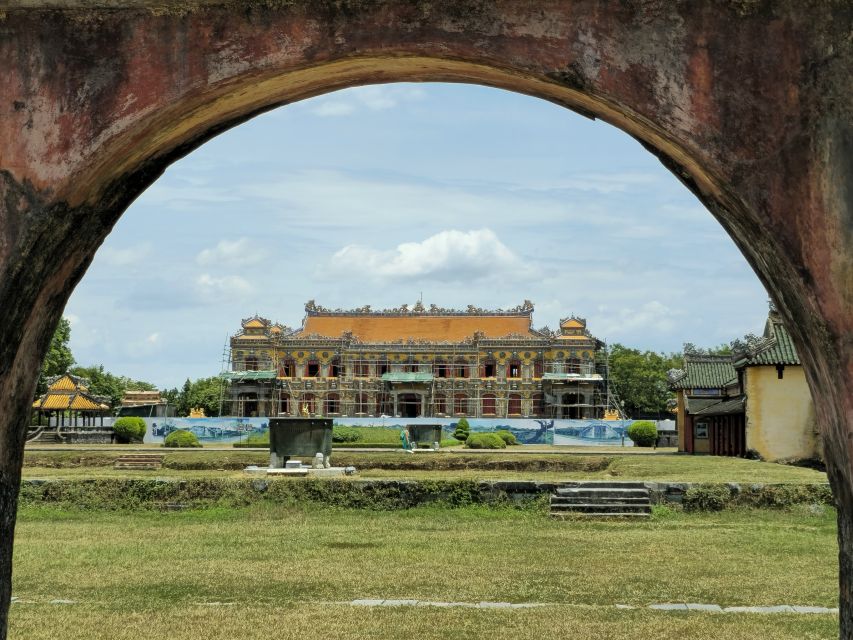
The Queen Mother’s Residence shifts the focus from public ceremony to royal family life. This area helps you picture the people who lived within the court system, especially the senior women whose position was connected to the imperial household.
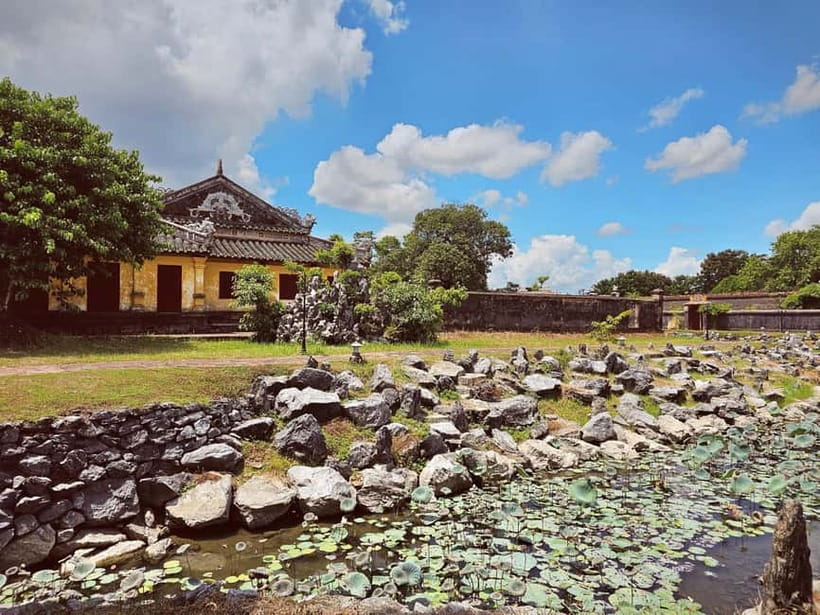
Do not expect every building to survive in its original form. Hue’s Imperial City has suffered damage and loss over time, and parts of the complex may appear open or incomplete. That is one reason the guide matters. A knowledgeable explanation can help you understand what a space meant, even when the physical remains are partial.
This is also a useful point to ask questions about court hierarchy and daily life. The tour is not limited to dates and names. Guides such as Matthew have been praised for adjusting the discussion to personal interests, including palace intrigue and the people behind the formal institution.
The Purple Forbidden City and Royal Garden
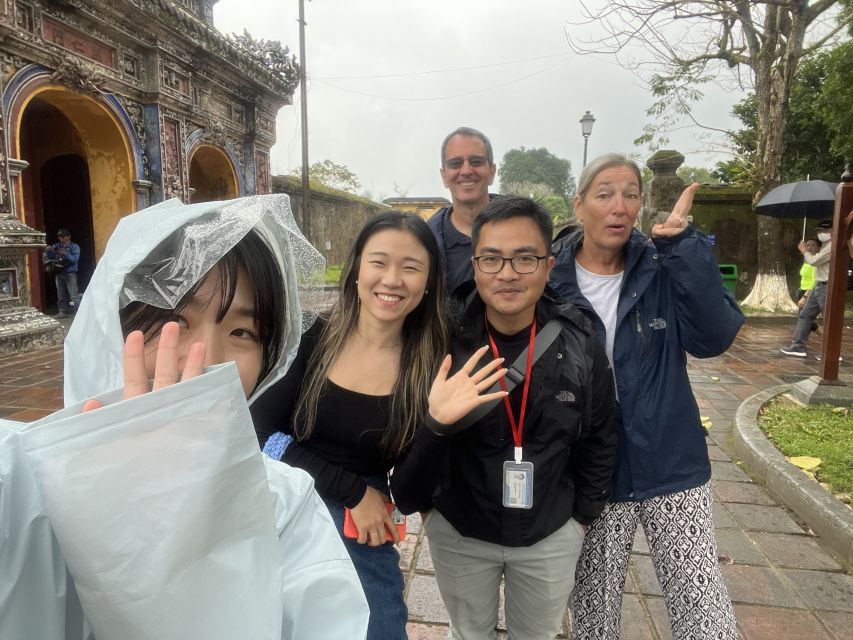
The Purple Forbidden City was the most private section of the royal complex, reserved for the emperor, members of the royal family, and selected court personnel. The tour includes this area, along with Kien Trung Palace and the Royal Garden.
The name can create the wrong expectation. This is not a separate fantasy-style castle. It is a historic palace zone whose importance comes from its restricted access and connection to imperial life. Your guide explains how the area functioned within the wider citadel and what its surviving features reveal.
Kien Trung Palace is one of the named highlights, and it gives the tour a chance to discuss the changing character of Nguyen-era architecture. The royal complex was not frozen in one style. It developed across generations and reflected different influences and periods of construction.
The Royal Garden offers a different mood from the formal gates and temple areas. It helps you think about the imperial compound as a place where people lived, not only as a stage for ceremonies. Still, conditions vary across the site, and restoration or missing structures may affect what you can see on the day.
Stories of power and the dynasty’s downfall
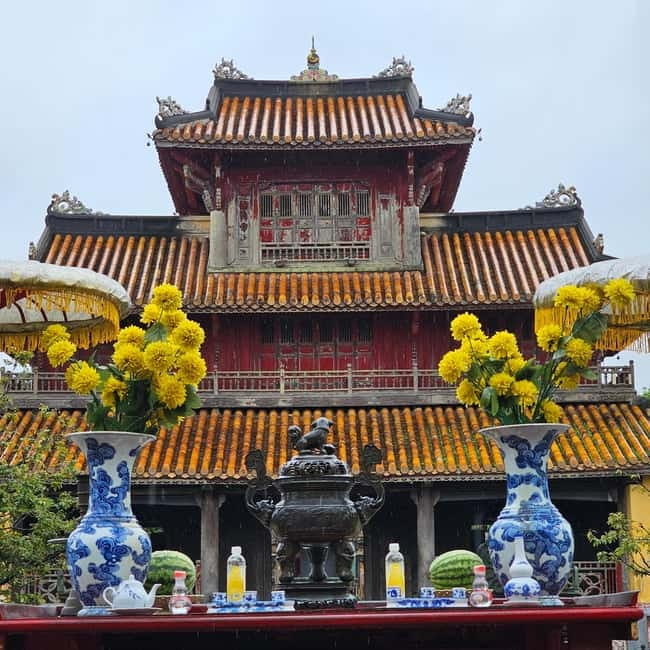
A strong reason to choose this tour is the focus on the Nguyen Dynasty’s decline. You do not simply hear that the dynasty ended in 1945. The guide explains the forces and circumstances behind that downfall, placing Hue’s buildings within the larger story of Vietnam.
The palace setting makes this history more immediate. Formal halls and restricted residences are easier to understand when you know who could enter them, who made decisions there, and how royal authority was maintained.
The guides also bring a human scale to the story. One praised approach combines political intrigue with details about engineering and construction. That balance suits Hue well. You can move from questions about emperors and court factions to practical matters such as managing water and wind within a large palace compound.
If you prefer a tour that sticks to quick facts and photo stops, this may feel more detailed than necessary. If you want to understand why the site matters, the extra explanation is the main value.
Optional royal tombs for a fuller Hue visit
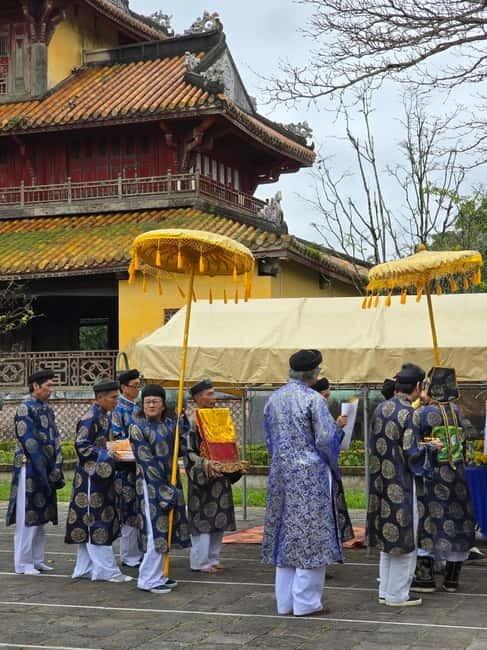
The basic experience centers on the Imperial City. You can also choose an option that adds royal tombs, giving you a broader view of Nguyen architecture and imperial identity.
The tombs are important because they show how rulers presented themselves beyond the capital. The Imperial City was built for governance and court life. Royal tombs were designed around remembrance, ceremony, and the ruler’s relationship with nature and the afterlife.
The supplied tour details do not specify which tombs are included in every option, so check the exact choice before paying. The price also changes according to the option selected. Do not assume that the $26 rate covers the tombs or all admissions.
One useful clue comes from the experience of a couple who used Matthew on a later day to visit two royal tombs and Dong Ba Market. That suggests the guide can provide broader Hue support beyond the 2.5-hour citadel walk, but you should confirm the precise itinerary, transport, timing, and extra costs for any customized arrangement.
How the price works
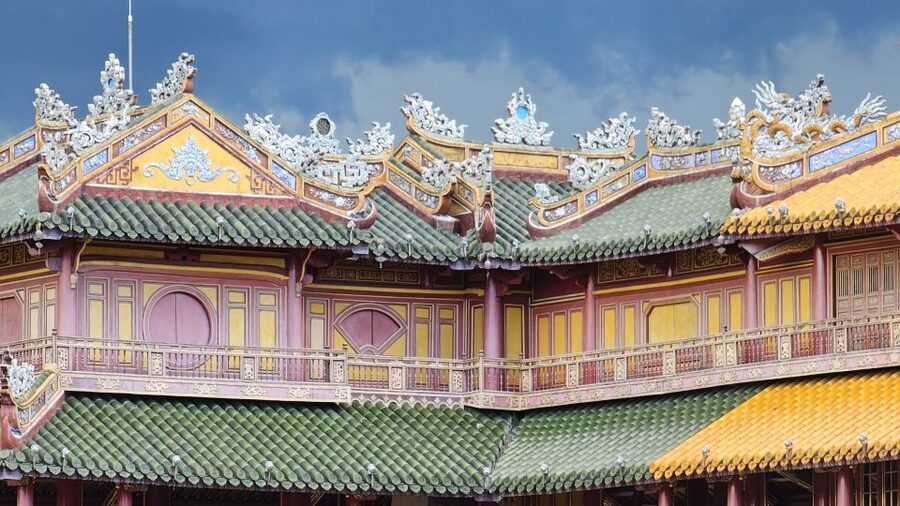
The listed price is $26 per person, but it is a guiding fee rather than an all-inclusive admission price. The Imperial City ticket costs 200,000 VND per person and is not included.
That can still be good value if you care about interpretation. You are paying for a small-group historian-led walk through a large and complicated site, not for transport or a packaged meal. The guides’ strongest qualities are clear explanation, enthusiasm, patience, and the ability to answer questions. Those are exactly the things that help at Hue’s citadel.
The value is less convincing if you only want a quick walk around the gates for photographs. In that case, the entrance ticket may be your main expense and you may not need a paid guide.
Because the price changes with the chosen option, compare the basic citadel walk with any royal tomb package. Look closely at what is included, especially entrance fees and any additional guiding or transport.
Timing, weather, and physical comfort
The walk lasts about 2.5 hours. That is long enough to cover the main royal areas without turning the visit into an all-day commitment, but you will be outdoors for much of it.
Hue is often hot and humid from May through August. Bring plenty of water, wear practical shoes, and consider booking the morning if you want cooler conditions. The morning option also gives you the chance to watch the Changing Guard Ceremony at 8 am in front of Ngo Mon Gate.
The ceremony is a useful bonus, but do not book the tour solely for it unless the timing is confirmed for your selected departure. The important point is that the morning start can add a formal military moment before the main walking route.
The citadel is a large historic site, so you should expect steady walking rather than a short stop between buildings. The supplied information does not give specific accessibility details. If you have mobility concerns, ask the provider before booking.
Who will get the most from this tour
I would choose this experience if you want Hue to make sense, not just look attractive. It suits you especially well if you enjoy political history, architecture, royal customs, or stories about how buildings were planned for their setting.
It is also a good fit for first-time visitors who would rather ask questions than read several panels on their own. Families with older children may appreciate the palace intrigue and engineering details, though the heat and walking time are worth considering.
The small-group format is useful for couples and solo visitors who want a more personal conversation. Guides such as Matthew have been praised for patience and for adapting explanations to the interests of the people in the group.
You may want to skip it if you strongly prefer independent sightseeing, have only a short time in Hue, or do not want to pay extra for the guide on top of admission.
Should you book the Hue Imperial City walking tour?
Book it if you want the Imperial City explained by someone who can connect royal politics, architecture, Feng Shui, weather, water management, and the dynasty’s downfall. The strongest reason to go is the quality of interpretation, especially with guides such as Matthew, Dang, or Tom.
Choose the morning departure if the 8 am Changing Guard Ceremony appeals to you, and carry water in the hotter months. If you want a larger picture of Nguyen-era Hue, compare the optional royal tomb choices carefully and confirm the extra price and inclusions.
At $26 plus the 200,000 VND entrance ticket, this is a fair choice for a focused history walk. It is not the cheapest way to enter the citadel, but it can be the better value if you want to leave knowing what you saw and why it mattered.
FAQ
How long does the Hue Imperial City walking tour last?
The guided walking tour lasts 2.5 hours.
What sites are included in the Imperial City walk?
The tour includes Hue’s Imperial Citadel and Forbidden City, with stops such as Hien Lam Cac Pavilion, The Mieu Temple, the Queen Mother’s Residence, Kien Trung Palace, and the Royal Garden.
Is the Imperial City entrance ticket included?
No. The entrance fee is 200,000 VND per person and must be paid separately.
What does the $26 price include?
The $26 price includes the guiding fee. The exact total changes according to the option you choose.
Is the tour conducted in English?
Yes. English is listed as the tour language.
Can I visit royal tombs as part of the experience?
Optional royal tomb choices are available. Check the selected option for the exact sites, price, and inclusions.
Where do I meet the guide?
Meet at the 4-cannon side of the Nine Holy Cannons. The opposite side has five cannons.
How will the guide confirm the meeting?
The guide will contact you through WhatsApp before the meeting to make sure the arrangements are clear.
Can I watch a ceremony on the morning tour?
The morning tour gives you the opportunity to watch the Changing Guard Ceremony at 8 am in front of Ngo Mon Gate.
Newly reviewed in Hue Vietnam
- Phong Nha National Park: Paradise Cave Half-Day Tour★ 5.0 · 23 reviews
- Official Hue: Dragon Boat, Imperial Citadel, & Market tour★ 4.7 · 32 reviews
- Hue to Hoi An/Da Nang: Private Scenic Motorbike Tour★ 4.9 · 63 reviews
- Hue: Royal Tombs Private Tour with 3 Best Tombs & Pagoda★ 4.9 · 213 reviews
- Hue to Hoi An by bus: Hai Van Pass, Lang Co, Marble mountain★ 4.6 · 27 reviews
- Hue: Private Transfer to/from Hoi An via Sightseeing Stops★ 4.9 · 111 reviews
- Hue: Royal Tombs & Pagoda Private Tour By Dragon Boat & Car★ 4.9 · 257 reviews
- Hue Private Tour with Local Guide – Customize Your Itinerary★ 4.8 · 28 reviews
Hue Imperial City Tours, compared.

Imperial City, Hue: Day Tour from Hoi An and Da Nang
Read our review →
Imperial City Walk, Motorbike Tour & Private Car Options
Read our review →
From Da Nang/Hoian/Hue: Hue Imperial City Full-Day Tour
Read our review →
Royal Tombs & Pagoda Private Tour By Dragon Boat & Car
Read our review →
Hue Imperial City Walking Tour: Citadel & Forbidden City
Read our review →
Royal Tombs Private Tour with 3 Best Tombs & Pagoda
Read our review →
Dragon Boat, Perfume River, Pagoda & Royal Tomb Tour
Read our review →Browse the lists this tour appears in