
Reviewed · HAI VAN PASS & MOTORBIKE TOURS
Sapa: Local Exploration on a Guided Motorbike Tour
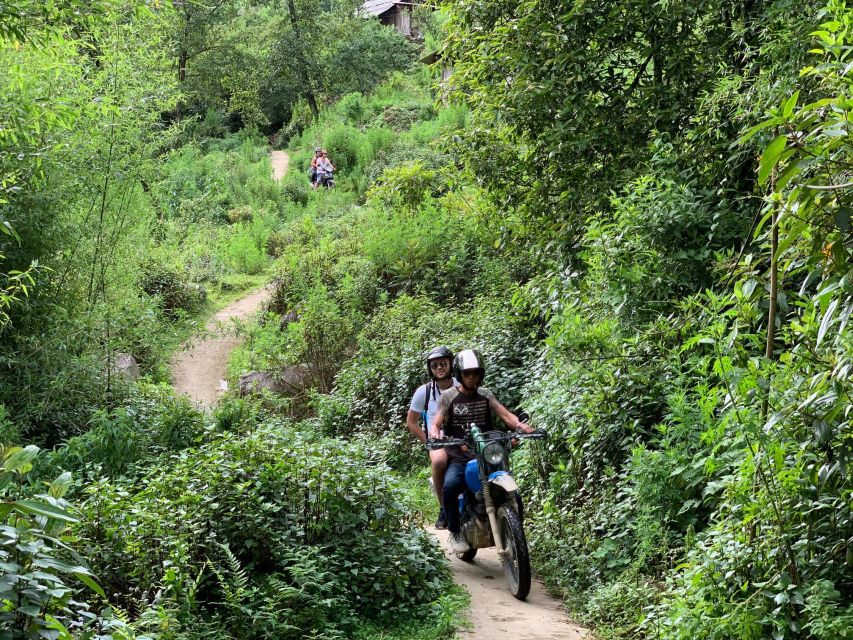
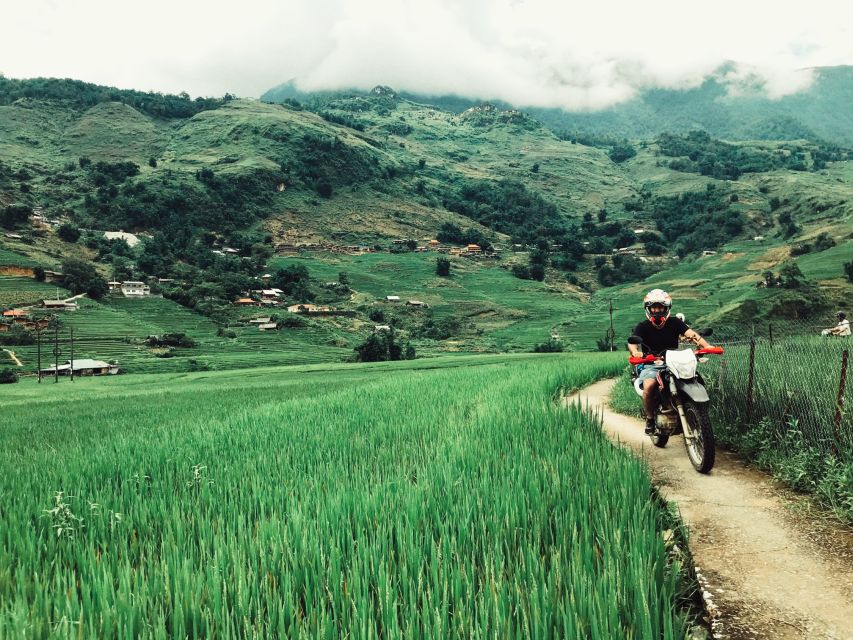
Sapa’s best moments often come away from the main roads. This motorbike trip takes you along rough village tracks, steep mountain edges, and quiet routes near Tavan, Lao Chai, Y Linh Ho, and Cat Cat. You get a close look at daily life, with time for a swim and, on longer outings, sunset views from high ground.
I like the local guides, who know which roads are passable and can adjust the ride to the weather. I also like the choice of difficulty, from mostly paved roads to a much rougher route that brings you closer to homes, animals, and farm life.
The main drawback is that the route can change after rain or a landslide, and the rougher levels are genuinely demanding. The price also deserves a close look: the advertised amount is $58 per person, while the detailed half-day and full-day prices are listed as $50 and $80, so confirm the current rate before paying.
Key points to know before you ride
- Ride with a local guide: You normally sit behind an English-speaking guide, with hotel or homestay pickup included.
- Choose your road level: Easy, moderate, and hard routes change how much time you spend on muddy, rocky, steep village tracks.
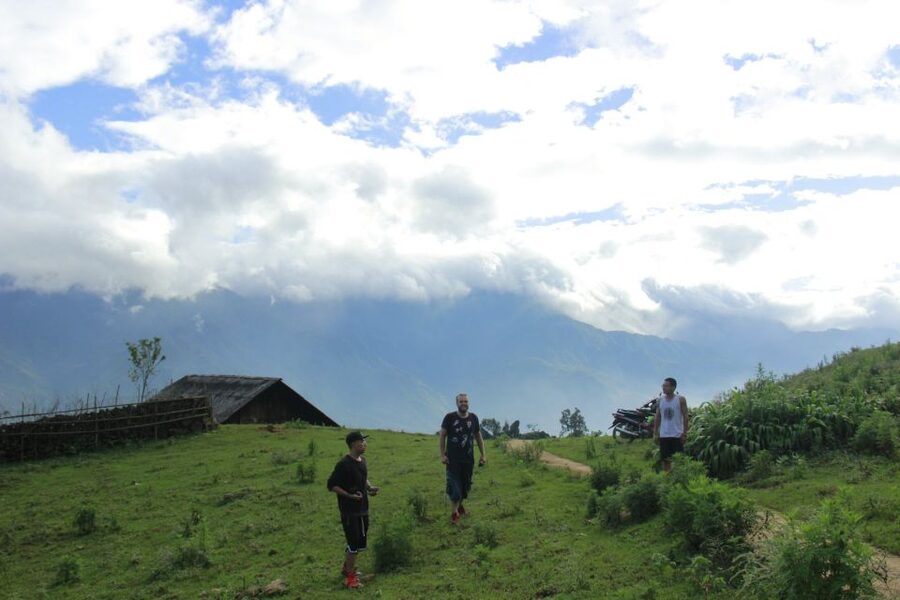
- Reach villages by motorbike: Tavan, Lao Chai, Y Linh Ho, and Cat Cat are part of the usual half-day route.
- Bring swim gear: The Cat Cat stop includes swimming time in cool river water, with a towel and dry clothes worth packing.
- Expect real mountain conditions: Rain, mud, steep slopes, and landslides can affect the route, and you may need to walk beside the bike.
- Best for confident, active people: The ride is not suitable for pregnant women, people with heart problems, or people over 60.
Why a motorbike is a smart way to see Sapa
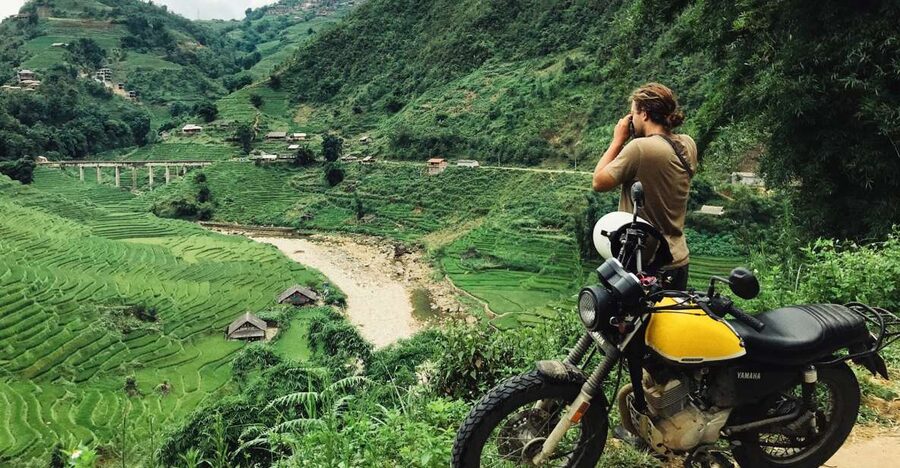
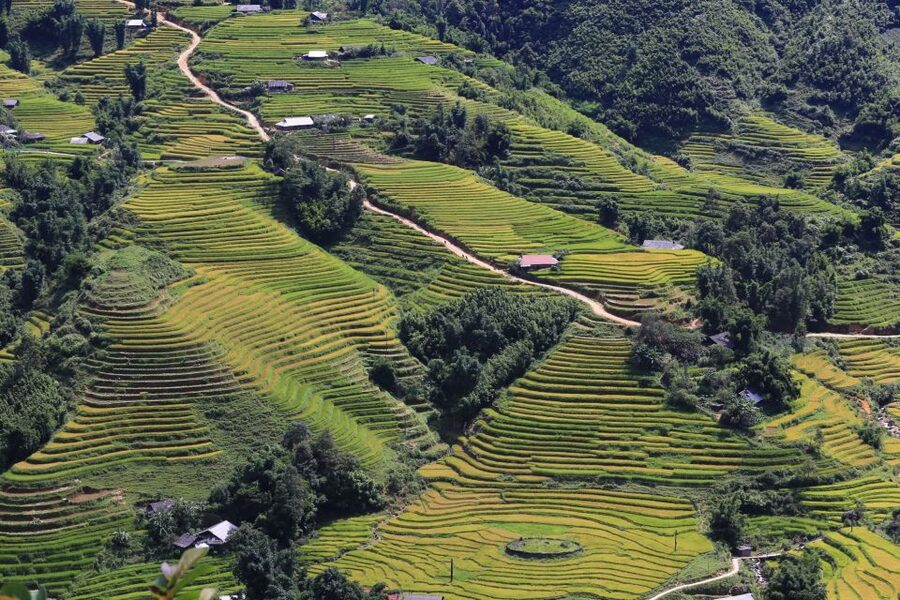
Sapa has more than 40 villages, many set high above the valleys or tucked into side roads. Walking between several of them in one half-day would be tiring, while a standard car ride would miss the narrow tracks and rough lanes where local life is most visible.
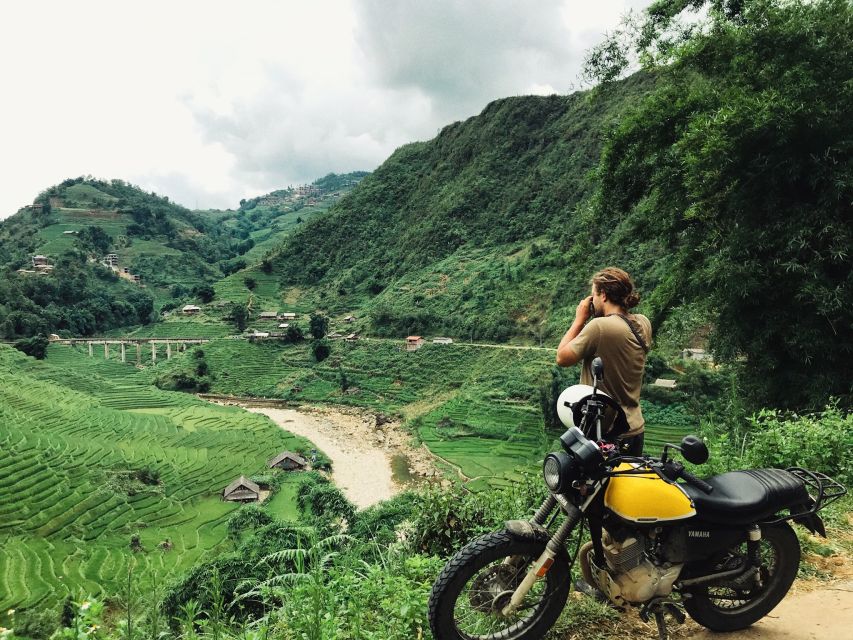
A motorbike gives you a better sense of the terrain. You feel the climb, see how sharply the road drops away, and stop at viewpoints that are easy to pass by in a larger vehicle. The ride is not only about reaching a village. The road itself is the main event.
You normally ride behind a local guide. That is the sensible choice if you do not have experience on steep mountain roads. If you want to drive, you must request it in advance and state whether you prefer an automatic or geared motorbike.
The provider limits the group to seven people, though the experience can also operate as a private outing. A small group matters here because the guide may need to stop often, explain the route, or help you get off the bike on a rough section.
More Motorbike Tours in Sapa
- Sapa Motorbike Tour With Local Guide 1 Day – Waterfalls, Villages
★ 5.0 · 254 reviews - Motorbike 1 Day Off The Beaten Track, Hidden Villages, rice field
★ 5.0 · 203 reviews - Sapa: Motorbike Tour 1 Day Visit Waterfalls & Local Villages
★ 5.0 · 112 reviews
Tavan, Lao Chai, and Y Linh Ho on the half-day route
The usual half-day ride starts around 9am with pickup from your homestay or another meeting point in Sapa. The guide explains the riding rules, safety instructions, and how the day will work before you set off.
Tavan is normally the first village, reached within about 30 minutes. This gives you an early look at the valley settlements before the ride moves farther into the hills. The exact stop can depend on road conditions, so treat the timing as a guide rather than a promise.
Lao Chai follows shortly afterward. The route between villages is part of the attraction, with mountain scenery and local roads replacing the more familiar town streets. You may see homes and animals close to the road, especially on the moderate and hard versions.
Y Linh Ho comes next, usually around the 10am to 11am portion of the ride. This is where the sense of getting away from the main tourist circuit becomes stronger. The road may be narrow, rough, muddy, or steep, depending on recent weather and the route chosen.
The easy level keeps about 95 percent of the ride on main roads, though these roads still pass through villages and offer good views. The moderate version puts about 20 percent of the ride on smaller tracks. The hard version uses these rough roads for about 40 percent of the trip.
Those percentages are useful because they tell you what kind of day you are booking. Easy does not mean dull, and hard does not simply mean faster. It means more time close to local homes and more exposure to the conditions of daily transport in the mountains.
Cat Cat village and time in the river
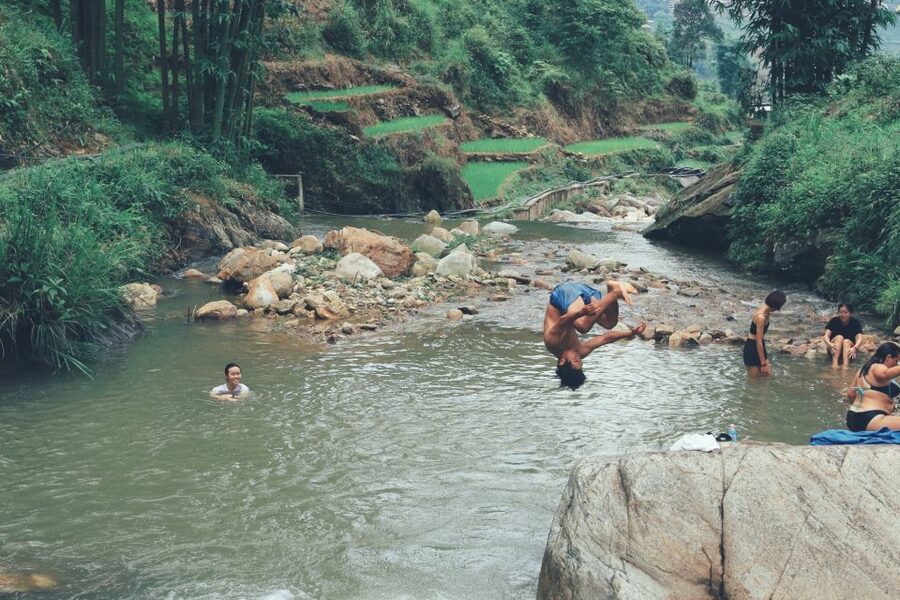
The route usually reaches Cat Cat around late morning. Entrance fees are not included, so bring money for that cost. The stop includes swimming time, and the cool river water is one of the experience’s more unusual features.
The water is described as having a pleasant temperature under 20 degrees Celsius. That will feel refreshing after a warm ride, though it may be too cold for a long swim. Bring a towel, spare clothes, and a waterproof way to protect your phone.
You should also pack snacks and water. Drinking water is included, but food is not. Bug spray and sun cream are also excluded, and both are sensible additions for a day spent outdoors around water and mountain roads.
Cat Cat is not the only possible waterfall or water stop in the wider area. Entrance fees for Love Waterfall and Silver Waterfall are also not included, so ask your guide before the ride if either is part of the planned route. Seasonal road damage can force changes.
The longer ride adds food and high mountain views
The full-day version continues after Cat Cat and lunch in Sapa town. The published schedule allows about an hour for lunch, but food is not included in the stated price.
One of the most memorable meals described for this experience was cooked by the guide at her father’s home. That is not guaranteed for every departure, but it shows the kind of personal contact you may have when the guide is a local resident rather than a guide brought in from outside the area.
After lunch, the full-day route heads toward Saxeng and Sau Chua, then continues to Hau Thao. Hau Thao is a useful viewpoint stop because it can give you a broad look across the valley on a clear day.
The phrase on a clear day matters. Clouds, fog, rain, and winter weather can block the broad views, and a mountain ride is always subject to conditions. Even when the distant view disappears, the changing road and close village scenery still give the ride its character.
The final section runs through Su Pan and back toward Tavan before returning to the meeting point. A full-day ride is the better option if you want more road time, larger views, and a chance to see several sides of the Sapa area. It is also a bigger physical commitment.
More trips on two wheels from Sapa:
- Sapa Motorbike Experience: Local Life, Rice Fields & Waterfalls
★ 5.0 · 70 reviews - Sapa: 3-Day Ha Giang Loop Motorbike Tour
★ 4.9 · 34 reviews - Ho Chi Minh City Street Food Tour & Sightseeing By Motorbike
★ 5.0 · 9,413 reviews - Hanoi Motorbike Tour: Food, Culture and Fun by Vintage Motorbike
★ 5.0 · 6,699 reviews
Easy, moderate, or hard: choose honestly
The easy route is the best fit if you want village scenery without spending much time on difficult tracks. You still ride inside local areas and see mountain views, but the guide keeps most of the day on safer main roads.
The moderate route gives you more contact with everyday village life. You may pass closer to houses and see how families keep chickens, pigs, or buffalo. Expect roughly one-fifth of the route to involve mud, rocks, steep climbs, and steep descents.
The hard route is for someone who actively wants a rougher adventure. Around 40 percent of the route may use small tracks, including muddy and rocky sections. It can show you more of the way local people travel, but you need to accept that it may be uncomfortable and physically tiring.
There is no need to prove anything. If your riding experience is limited, choose easy or moderate. Safety instructions are not optional, and the guide may tell you to walk off the bike on a steep or slippery section while she rides it through alone.
That rule is a good sign. It shows that the guide is not trying to turn a scenic tour into a risky motorcycle challenge. Listen carefully, keep your feet and hands positioned as instructed, and do not pressure the guide to take a road she considers unsafe.
Riding with a local guide
The English-speaking guides are local women and men who know the roads, weather patterns, and village routes. Ms Lai received particular praise for careful driving on steep roads after several days of rain. That sort of caution is more valuable here than a fast pace.
One guide and her husband also stopped to help a German rider who had fallen on a dangerous route. That incident is a reminder that these roads can create real problems, not just a little holiday excitement. It also shows why local judgment matters.
Your guide can stop for photographs, point out views, and help you manage the route. Direct communication before the tour is useful. One person had trouble connecting with the operator until reaching the actual guide, so ask for the guide’s contact details and confirm the meeting point ahead of time.
The guide can also tell you which parts of the planned route are open. Landslides may close roads, and the seasonal version of the trip can differ from the standard route. Ask what you will actually see that day if a particular village, waterfall, or viewpoint is important to you.
What the $58 price means in practice
At $58 per person, this is not the cheapest way to see Sapa by motorbike. The detailed pricing also gives $50 per person for a half-day trip and $80 for a full-day trip, so the exact price needs confirmation before booking.
The value comes from the personal format. Pickup and drop-off are included, along with an English-speaking local guide and drinking water. You are paying for local route knowledge, a small group, and access to roads that would be difficult to find alone.
The value is weaker if you only want a quick scenic ride on paved roads. Similar motorbike outings elsewhere in Vietnam can cost much less, and this trip is relatively expensive for the country. Sapa itself tends to cost more than many other Vietnamese destinations, but that does not remove the need to compare.
If the ride includes the rougher tracks, direct village contact, a swim, and a full day with a locally prepared meal, the price can make sense for you. If you want only the half-day route, confirm whether the current charge is $50, $58, or another amount.
Weather, clothing, and practical preparation
Rain gear is essential. Wet weather can make the road muddy and can change the route, while even a dry start does not guarantee a dry finish in the mountains.
Wear clothes that can get dirty and shoes suitable for walking beside the bike. Pack a towel, swimsuit, dry clothes, snacks, water, sun cream, and bug spray. A phone pouch or waterproof bag will help during the river stop and sudden rain.
Pickup is included from your accommodation in Sapa if you provide the address. The tour usually begins at 9am, though the booking system may show different available starting times for the four to six-hour experience.
The tour requires at least two people. It is not suitable for people with heart problems, pregnant women, or people over 60. The rough roads, steep slopes, and need to walk beside the bike make these restrictions important rather than minor fine print.
Free cancellation is available up to 24 hours before the start, and you can reserve while paying later. Those terms give you some flexibility, but they do not solve the weather issue, so check the forecast and keep rain protection ready.
Who should book this Sapa motorbike tour?
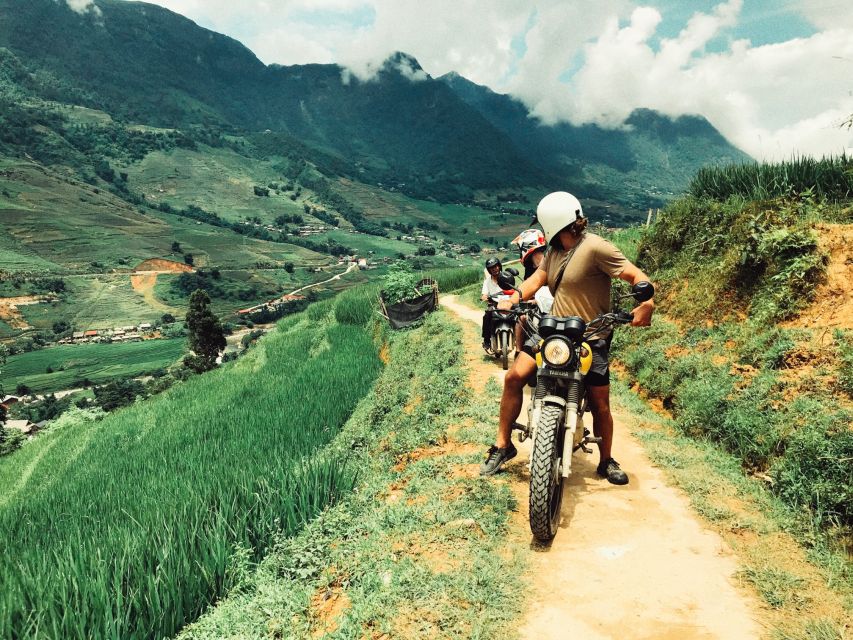
I would choose this for an active person who wants to see Sapa from village roads rather than from a vehicle window. It suits you if you enjoy imperfect roads, changing weather, local contact, and the chance to stop somewhere that is not part of a fixed sightseeing circuit.
The easy version can work for someone who wants a gentler outing, provided you are comfortable riding as a passenger. The moderate and hard versions suit people who already know they enjoy off-road conditions and steep mountain routes.
I would not book it for a relaxed sightseeing day, a family with young children, or anyone uncomfortable with motorbikes. I would also avoid the hard route if you are nervous about mud, heights, or walking on steep ground.
Should you book it?
Book this tour if your priority is local access and mountain adventure, not a polished or predictable sightseeing ride. The strongest parts are the careful local guides, the choice of route difficulty, the village roads, and the chance to swim in cool river water.
Before you commit, confirm the current price, ask which route is open, and tell the operator exactly what you want to see. Choose easy for a safer introduction, moderate for a closer look at village life, and hard only if rough roads are part of the reason you came to Sapa.
FAQ
How long does the Sapa motorbike tour last?
The experience lasts about four to six hours, with starting times shown according to availability. A separate full-day schedule runs from around 9am to 4pm.
What villages does the half-day route visit?
The usual half-day route includes Tavan, Lao Chai, Y Linh Ho, and Cat Cat. Roads may close because of landslides or seasonal conditions, so the route can change.
Do I drive the motorbike or ride behind the guide?
You normally ride behind a local guide’s motorbike. You can request to drive yourself and should specify whether you want an automatic or geared motorbike.
Is food included?
No. Food and drinks are not included, although drinking water is provided. Bring snacks, and budget separately for lunch on the longer route.
Are entrance fees included?
No. Entrance fees for Cat Cat Village, Love Waterfall, and Silver Waterfall are not included.
What should I bring?
Bring rain gear, water, a towel, and snacks. Sun cream, bug spray, and spare clothes are also sensible because the tour includes outdoor riding and swimming.
Who should not take this tour?
The tour is not suitable for people with heart problems, pregnant women, or people over 60. You may also need to walk off the bike on steep or muddy sections for safety.
Newly reviewed in Sapa
- Sapa: Y Linh Ho – Lao Chai, and Ta Van Trekking Day Tour★ 5.0 · 25 reviews
- Sapa: Ta Phin Village Trek & Red Dao Herbal Bath★ 5.0 · 22 reviews
- Sapa3D2N TrekkingAdventures,Valleys,Bambooforest,Waterfall★ 4.8 · 24 reviews
- From Sapa: Guided Full-Day Trekking with Lunch and Drop-Off★ 4.2 · 86 reviews
- Sapa Trekking Bargains With Local Guide★ 4.9 · 91 reviews
- Sapa: Muong Hoa Mountain Views and Villages Trek with Lunch★ 4.3 · 28 reviews
- Sapa: Private Highlights Day Tour with Lunch★ 4.8 · 61 reviews
- Sapa: 3-Day Ha Giang Loop Motorbike Tour★ 4.9 · 34 reviews
Hai Van Pass & Motorbike Tours, compared.

Ho Chi Minh City Street Food Tour & Sightseeing By Motorbike
Read our review →
Hanoi Motorbike Tour: Food, Culture and Fun by Vintage Motorbike
Read our review →
Saigon By Night and Street Food By Motorbike | Opt: Ao Dai Riders
Read our review →
Private Street Food Tour by Motorbike/Car with Local Students
Read our review →
Top Notch Street Food Motorbike Tour In Ho Chi Minh City
Read our review →
Hanoi Motorbike Tours Led By Women: Hanoi By Night Foodie Motorbike Tours
Read our review →
Ho Chi Minh City Motorbike Tour with Student | Saigon Adventure
Read our review →
Easy Rider private tour via Hai Van pass from Hue – Da Nang – Hoi An (1Way|Loop)
Read our review →Browse the lists this tour appears in