
Reviewed · WALKING TOURS
Hoi An: Half-Day Heritage Walking Tour
Hoi An’s old town makes most sense on foot, where Chinese, Japanese, Vietnamese, and French influences meet in timber houses, shaded lanes, assembly halls, and small courtyards. This tour gives you a useful first look without asking you to plan every entrance and stop yourself. I especially like the visit to Tan Ky House and the short stop for a local lemongrass drink.
I also like the mix of sights: the market shows daily life, while the Japanese Covered Bridge and Fujian Assembly Hall explain Hoi An’s cross-cultural past. The main caution is consistency. Some bookings have run well short of four hours, and a few visitors felt the tour leaned too much toward shops and not enough toward history. Ask your guide at the start what route and timing you should expect.
Key points at a glance
- A four-hour introduction to old Hoi An: The route links the market, historic houses, museums, assembly halls, and Japanese Covered Bridge.
- Architecture is the main event: You see how Chinese, Japanese, Vietnamese, and French elements appear side by side.
- The Fujian Assembly Hall and Tan Ky House add real context: These are not just photo stops, but places where design reflects trade, family life, and belief.
- A traditional art performance is included: Allow about 40 minutes for the theatre visit, a pleasant change from walking.
- Central hotel pickup and drop-off are included: South Hoi An is excluded, and other languages cost extra.
- The price is fair if the full route is delivered: At $33 per person, the package is useful for first-time visitors, but less attractive if the tour ends after two to three hours.
Why Hoi An works so well on foot
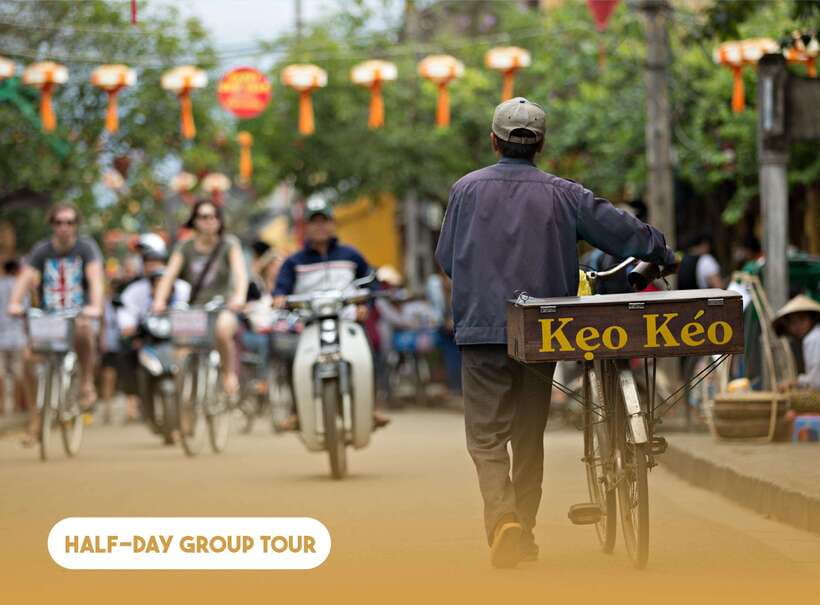
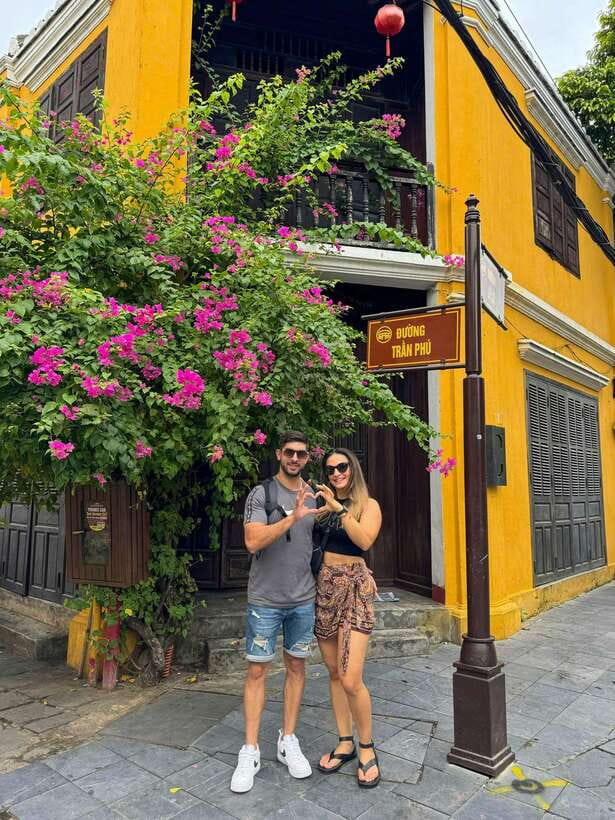
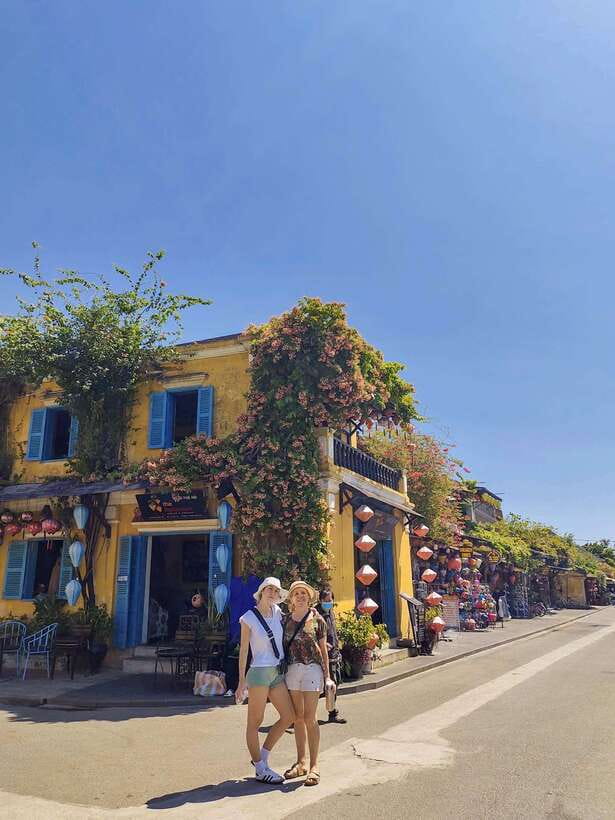
Hoi An is compact, and its appeal is easy to miss from a vehicle. The old streets are lined with narrow shop houses, wooden façades, tiled roofs, small shrines, and trellises covered with flowering plants. Walking lets you notice the modest details: an old doorway, a weathered beam, or a family house still used after generations of change.
The town also has a calm rhythm that differs from larger Vietnamese cities. You will see ordinary daily life alongside some of Central Vietnam’s best-known monuments. That mixture is the point. Hoi An is not a single preserved museum district. It is an old town where homes, shops, religious buildings, food stalls, and public spaces sit close together.
A guide helps you read that jumble. The same street can show Chinese clan connections, Japanese construction ideas, Vietnamese family traditions, and French colonial touches. Without explanation, you may simply see attractive old buildings. With a good guide, you have a better chance of understanding why they look the way they do.
The route is planned as a four-hour experience, including short coach transfers at the beginning and end. Most of the sightseeing happens on foot, so comfortable shoes and protection from sun or rain will matter.
More history within reach of Hoi An:
- Hanoi Heritage Premium Daily Tour
★ 5.0 · 914 reviews - From Ho Chi Minh: Cu Chi Tunnels Half-Day History Tour with Guide
★ 5.0 · 480 reviews - Heritage Binh Chuan 2 Days 1 Night discovery in Lan Ha Bay
★ 5.0 · 470 reviews
Hoi An Market: start with everyday life
The tour begins with about 35 minutes at Hoi An Market. This is a useful opening because it introduces the town through food and local trade before you move on to monuments.
Expect a food market visit, a guided walk, and a chance to see the ingredients and snacks that shape local meals. The stop is not only about buying something. It gives you a look at the working side of Hoi An, where produce, prepared food, and local goods are part of daily routine.
I would use this section to ask questions. If you see an unfamiliar herb, fruit, or snack, ask what it is used for and how it is prepared. The provided schedule does not promise a full tasting session, so you should not book this expecting a food tour. Still, the market adds useful color to the architectural stops that follow.
The main limitation is time. Thirty-five minutes is enough for orientation and a guided look, but not enough to inspect every aisle. If you want a slower market visit, return later on your own.
Fujian Assembly Hall and Chinese influence
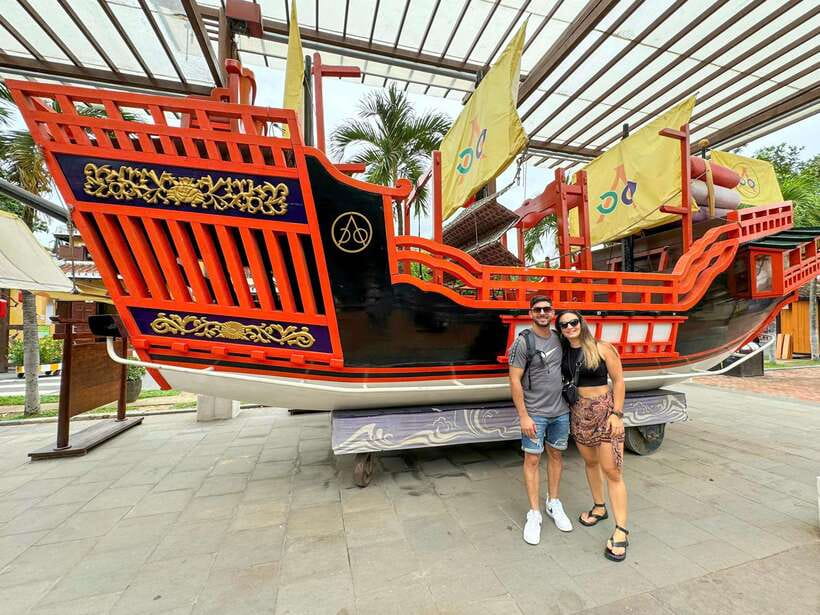
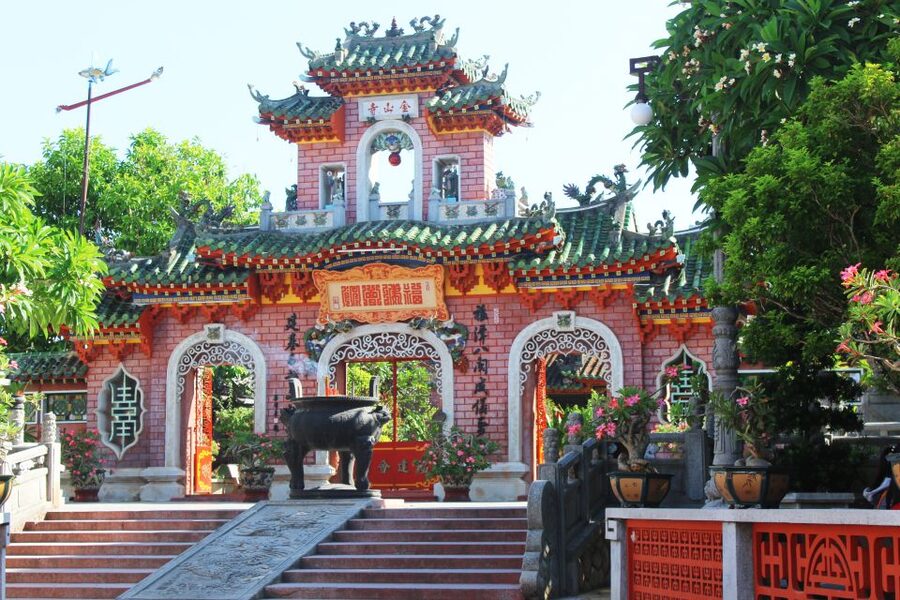
The 20-minute visit to Fujian Assembly Hall gives the tour a clear look at Chinese influence in Hoi An. Assembly halls were connected with Chinese communities and served social, religious, and cultural purposes. Here, the value lies in seeing how community identity shaped the town’s public buildings.
Look closely at the layout and decoration rather than rushing from one photo spot to the next. Your guide can help explain the building’s Chinese connections and point out details that are easy to pass without context.
Twenty minutes is a short visit, but it suits the tour’s broad coverage. You get a focused introduction, then move on before one site takes over the entire morning or afternoon. If you are especially interested in religious architecture, you may want more time here than the schedule allows.
This is one of the stops where a strong guide matters most. Phan received especially warm praise for clear explanations, complete answers, punctuality, and a friendly manner. If Phan leads your tour, use the opportunity to ask about the assembly hall’s symbols and community role.
Traditional performance: a 40-minute pause
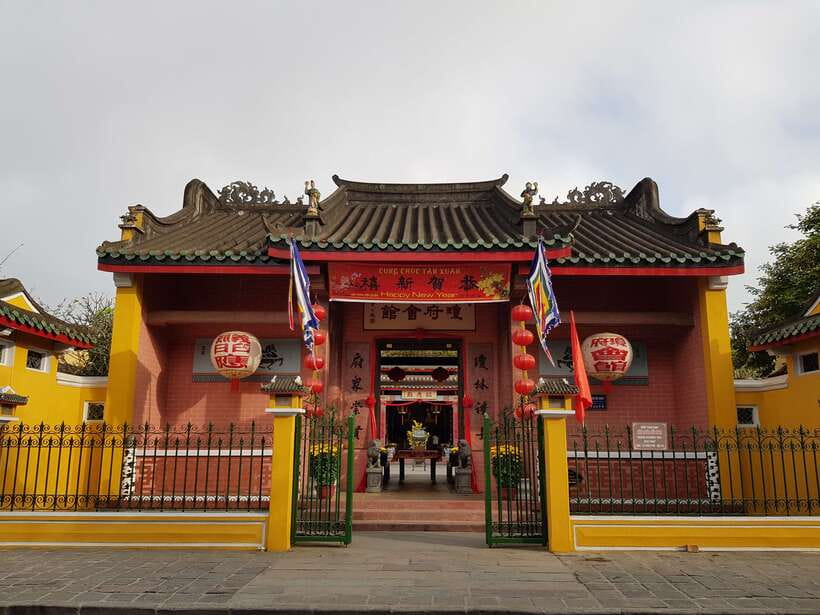
The Hoi An Traditional Art Performance Theatre receives about 40 minutes, including a traditional dance show. This is the longest single stop on the route, and it changes the pace from walking and building visits.
The performance gives you a short introduction to local stage traditions. It can be a welcome break, especially in hot or wet weather, and one visitor who expected a more typical city walk still enjoyed this part. It also gives the itinerary some variety. Four hours of buildings can blur together, while a live performance creates a clear change of mood.
Still, you should know what this means for the rest of the route. Forty minutes is a substantial share of a half-day tour. If your main goal is architecture and historical explanation, you may prefer a longer visit inside the old houses instead.
I would ask before departure how much of the theatre program is included and whether the performance time is fixed. That simple question can help you understand how the four hours will be divided.
Other walks around Hoi An:
- Evening Walking Food Tour, folk game and lantern boat
★ 5.0 · 665 reviews - Hoi An Ancient Town Walking Tour with a Local
★ 5.0 · 517 reviews - Hoi An Ancient Town – Walking Tour with Local Guide
★ 4.9 · 385 reviews - Hoi An Street Food Walking Tour with Tastings
★ 5.0 · 317 reviews
Folk museum and the story behind the buildings
The Hoi An folk museum is scheduled for 15 minutes. That is brief, but useful. A museum stop can give you objects and cultural references that make the old houses easier to understand.
You will not have time for a slow museum visit at this pace. Think of it as a guided introduction, not a full museum study. Pay attention to the objects your guide selects and ask for links between what you see inside and what you have already noticed in the streets.
This is also a point where the tour’s wide scope becomes clear. The program tries to cover food, community buildings, performance, museum displays, private homes, street life, and a famous bridge in one morning or afternoon. That gives you range, but each stop has limits.
Tan Ky House: the most revealing old home
The 20-minute visit to the Old House of Tan Ky is one of the tour’s strongest stops. An old family house can show you more about Hoi An than a grand monument because it reveals how people lived, worked, stored goods, and organized domestic space.
The house reflects the town’s mixed architectural character. Look for the way different design traditions come together rather than expecting a single, pure style. The tour description specifically points to Chinese, Japanese, and Vietnamese elements, and Tan Ky House is a good place to see that blend in practice.
The visit is short, so listen closely to the explanation of the structure. You may also want to ask how the house differs from the assembly hall and public buildings visited earlier. That comparison helps you understand that cultural exchange reached private homes as well as civic and religious spaces.
A possible drawback is crowding or a hurried explanation. The schedule leaves only 20 minutes, and the house is one of Hoi An’s well-known sights. If your guide moves quickly, stay near the group and ask one or two focused questions rather than trying to study every room.
A small local drink and a taste of Hoi An
The stop at Mót Hội An, Nước Thảo Mộc Sả Chanh, lasts about 10 minutes. This is a local herbal drink made with lemongrass and other ingredients. It is a small detail, but it gives the tour a pleasant connection to the town’s street-food culture.
Do not expect a full meal or an extended tasting. The stop is short and is best treated as a refreshment break. It also helps break up the sequence of formal sights, adding a little of the town’s modern street life to the heritage route.
If you have dietary concerns or do not want a drink, ask the guide what is included before accepting it. Personal expenses are not included, so bring some cash if you want to buy extra snacks or drinks.
Japanese Covered Bridge: the essential landmark
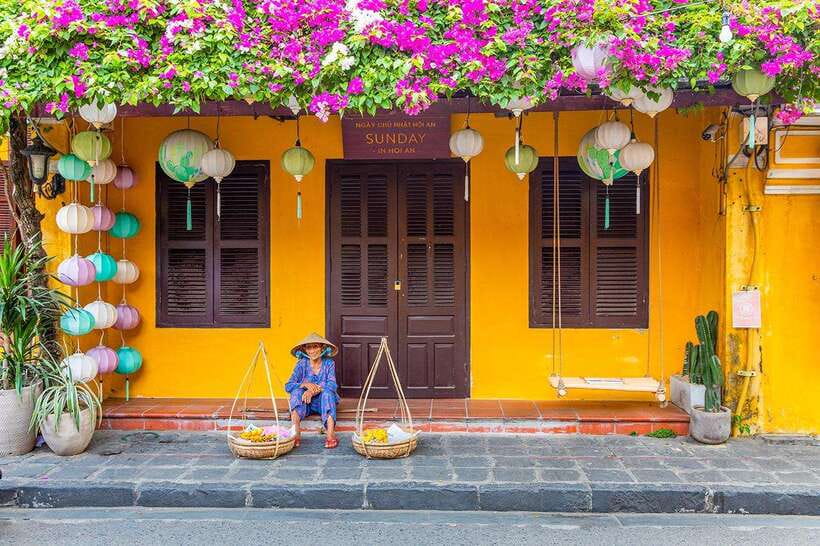
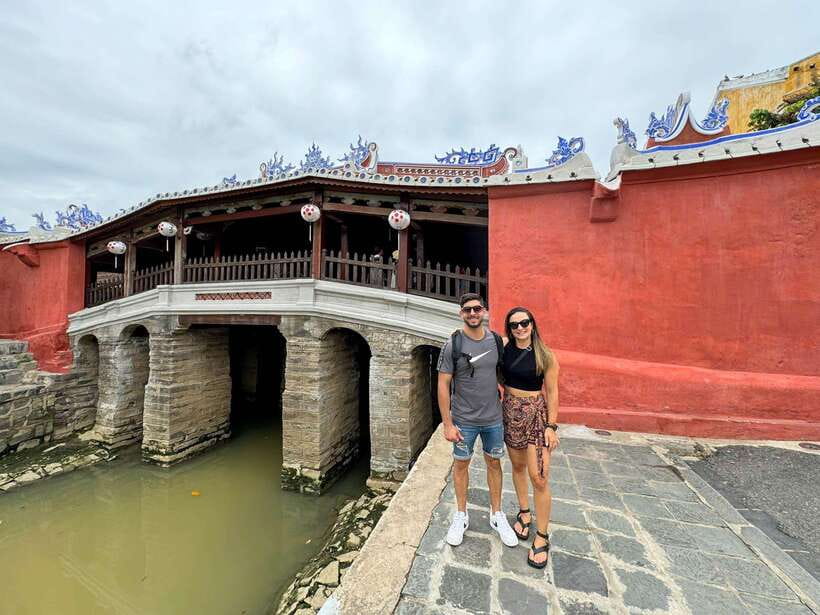
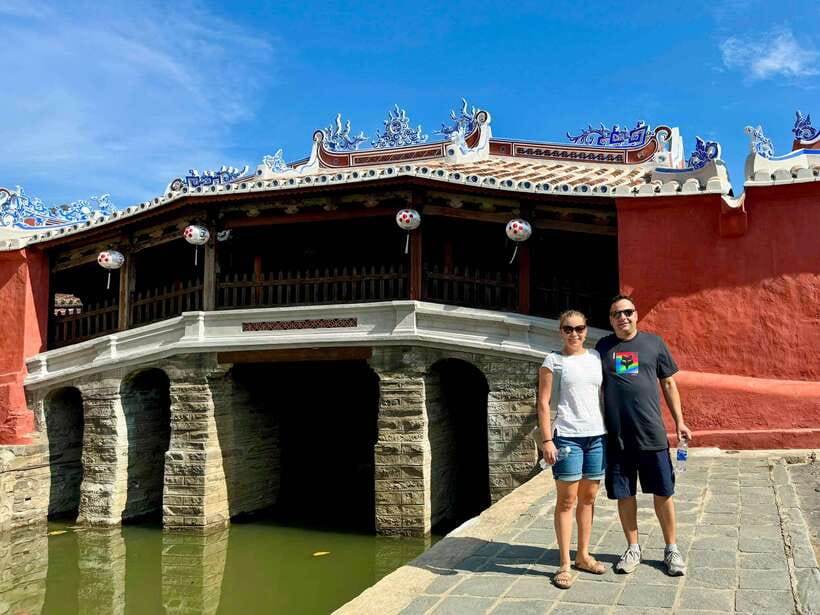
The Japanese Covered Bridge receives about 15 minutes, and no first visit to Hoi An feels complete without seeing it. The bridge is one of the town’s defining landmarks and a clear sign of the historic ties between Hoi An and Japanese trading communities.
Its importance is not only visual. The bridge helps explain Hoi An as a port shaped by contact between different groups. Set beside the Chinese-influenced assembly hall and the mixed-style houses, it becomes part of a larger story about trade and settlement.
Fifteen minutes is enough for a guided look and photographs, but it is not a leisurely study. If you want quiet images, your guide may be able to time the visit well, but the schedule does not promise a crowd-free stop. Keep your expectations practical: this is a short landmark visit within a wider walk, not a private session at the bridge.
The bridge is also a good place to ask your guide to connect the architecture you have seen so far. A thoughtful explanation here can tie together the Chinese, Japanese, Vietnamese, and French influences that shape the old town.
The final pass through town
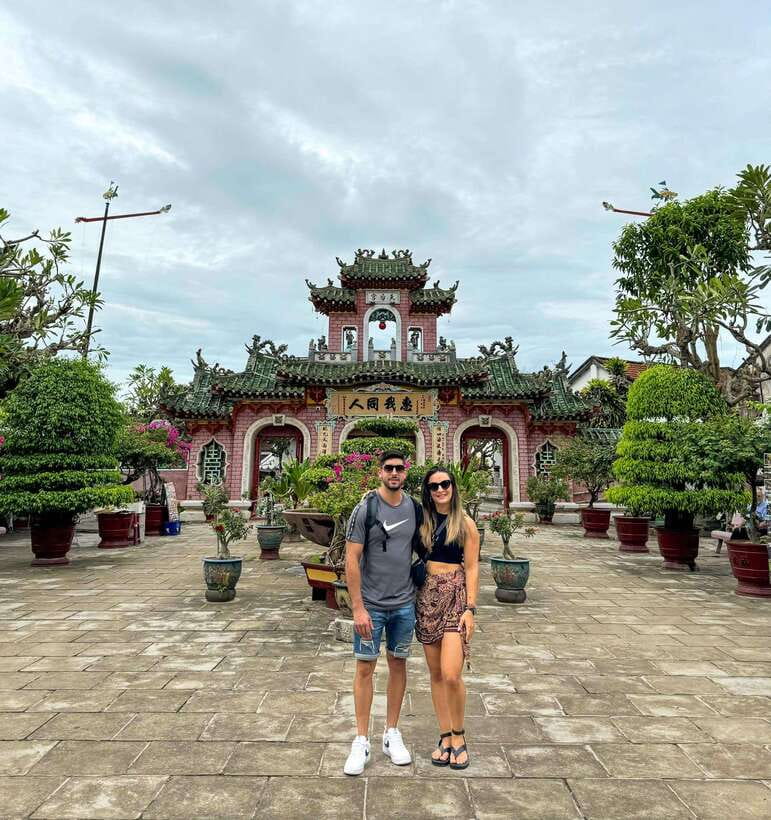
The route includes about 15 minutes passing by the Vietnamese Evangelical Church, listed as Hội Thánh Tin Lành Việt Nam, Chi Hội Hội An. It is not presented as a full interior visit. Instead, it adds another piece to the town’s religious and architectural mix.
This brief section may appeal to visitors who want to see how different faith communities fit into Hoi An’s built environment. It is less important if your priority is the old houses and major heritage sites, but it keeps the route from telling an overly narrow story about the town.
After this, you return by coach, with the outbound and return transport listed at about 15 minutes each. Hotel pickup and drop-off are included within central Hoi An, but hotels in South Hoi An are excluded.
What $33 buys you
At $33 per person, the tour sits in a reasonable range for a guided half-day visit if you receive the complete four-hour program. Your price includes transportation according to the route, entrance fees, bottled water, an English-speaking guide, and travel insurance. Those inclusions reduce the small costs and planning tasks that can add up when you visit the old town independently.
The value depends heavily on the guide and the actual length of the tour. Emily was praised for being attentive to an older family member during rainy weather, which is exactly the sort of care that can make a walking tour work for mixed-age groups. Phan was praised for clear, complete explanations and for answering questions. Those are strong signs of what you should want from the guide: good pacing, useful context, and attention to the people in the group.
But the reported experience has not been uniform. One booking lasted only a little over two and a half hours, and another was described as about two hours. There were also concerns about time spent visiting merchants instead of focusing on the town’s past, and one guide was criticized for paying too much attention to a phone.
I would not ignore these warnings. Before setting off, confirm the expected four-hour schedule and ask if any shop visits are part of the route. If the tour feels rushed or shifts toward sales stops, speak up early and ask to spend the available time at the heritage sites.
The option for a private group may improve control over pace and questions, but the supplied information does not state the private-group surcharge or exact group size. Ask for those details before booking if flexibility matters to you.
Who should book this walk?
This tour suits a first-time visitor who wants a guided introduction to Hoi An without arranging separate tickets, transport, and a route. It is also a good fit for families or mixed-age groups if the guide is attentive and the pace is handled well. Emily’s careful support of an elderly mother shows why guide attention matters on a rainy or tiring day.
You will get the most from it if you enjoy a broad sample rather than a single subject. The route moves from market food to Chinese community architecture, traditional performance, museum objects, a family house, a local drink, and the Japanese Covered Bridge.
It is less suitable if you want a slow, academic study of Hoi An or a dedicated food tour. The itinerary covers many stops, so several visits are short. It may also disappoint you if the full four hours are not delivered or if shopping takes the place of explanation.
Free cancellation up to 24 hours before the start and the option to reserve now and pay later make it easier to fit into a changing Vietnam itinerary. English is included, while other languages are available only with an added charge. For children, one child may travel at the child price with one adult; a second child pays the adult price.
Should you book the Hoi An Heritage Walking Tour?
Book it if you want a practical first orientation to Hoi An and value having entrance fees, central hotel transport, water, and a guide bundled into one price. The combination of Tan Ky House, Fujian Assembly Hall, the market, the folk museum, and the Japanese Covered Bridge gives you a useful base for exploring on your own later.
I would book with one condition: confirm the full four-hour route and make clear that you want the focus on heritage sites, not shopping. At $33, the experience is good value when the planned stops are delivered with the care shown by guides such as Emily and Phan. If the schedule is shortened, the price feels much less convincing.
FAQ
How long is the Hoi An Heritage Walking Tour?
The planned duration is four hours, including the listed transport and sightseeing stops.
What places does the tour visit?
The route includes Hoi An Market, Fujian Assembly Hall, the Hoi An Traditional Art Performance Theatre, Hoi An folk museum, the Old House of Tan Ky, Mót Hội An, the Japanese Covered Bridge, and a pass by the Vietnamese Evangelical Church in Hoi An.
Is hotel pickup included?
Yes. Pickup and drop-off are included for hotels in Hoi An City Center. South Hoi An is excluded.
What language is the tour conducted in?
The included live guide speaks English. Other languages can be requested for an additional charge.
Are entrance fees included?
Yes. Entrance fees listed for the itinerary are included in the price.
Is food included?
The tour includes a short local snack and herbal drink stop at Mót Hội An. Personal expenses are not included, so additional food or drinks are your responsibility.
Is the tour available as a private group?
Yes. A private-group option is available, although the supplied information does not state the extra cost or exact group size.
Can I cancel the tour for a refund?
Yes. You can cancel up to 24 hours in advance for a full refund. The tour also offers reserve now and pay later booking.
Newly reviewed in Hoi An
- Romantic Sunset Dinner Cruise in Hoi An★ 4.7 · 108 reviews
- Snorkeling Cham Island: Snorkeling Tour by Speed Boat★ 3.6 · 26 reviews
- Hoi An: Rural Cycling Tour to Village with Basket Boat Ride★ 5.0 · 174 reviews
- Private Car Hoi An to Hue Via Hai Van Pass, Lagoon & More★ 5.0 · 22 reviews
- From Hoi An: Day Tour of My Son Temples and Marble Mountain★ 4.8 · 44 reviews
- Market Tour – Cooking Class – Coconut Boat Riding★ 4.4 · 43 reviews
- Lantern Making Class With Lynn★ 4.8 · 44 reviews
- Mad Monkey Hoi An Pub Craw★ 4.2 · 25 reviews
Walking Tours, compared.

Private Street Food Evening Walking Tour in Ho Chi Minh City
Read our review →
[HOT] Hanoi Old Quarter Walking Street Food – Small Group Tour
Read our review →
Super Niche Walking Street Food Tour in Ho Chi Minh City
Read our review →

Private Hanoi Street Food Walking Tour With Real Foodie
Read our review →
Hanoi Walking Street Food Tour with Train-Street Visit
Read our review →Browse the lists this tour appears in