
Reviewed · TRAIN STREET & OLD QUARTER TOURS
Bat trang Pottery Ceramics Class in Hanoi’s Old Quarter | VN
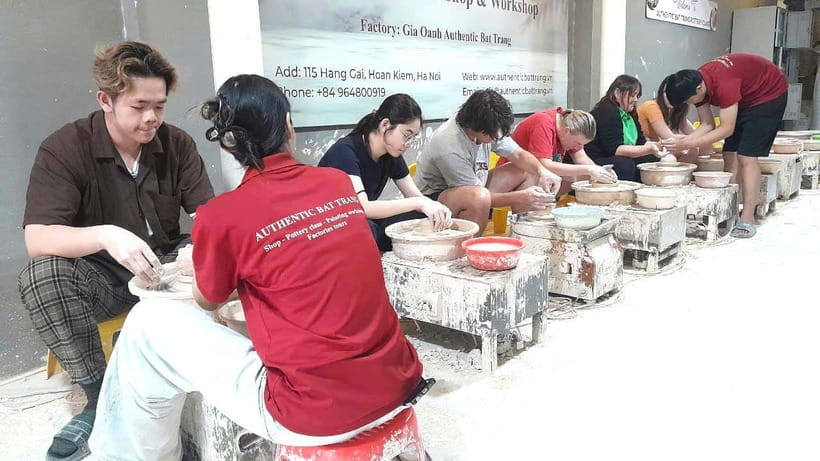
Making pottery in Hanoi is a fine way to slow down. At 115 Hàng Gai, in the middle of the Old Quarter, you work with Bat Trang clay on an electric pottery wheel, guided by instructors who know how to rescue a lopsided bowl before it becomes a clay pancake. You can try as many shapes as time allows, then choose one piece for free glazing and firing.
I like the generous practice time and the chance to create several pieces rather than make one rushed souvenir. I also like the patient, hands-on teaching, with instructors such as Hang, Han, and Tuan Vu helping beginners with hand placement and shape. The main catch is timing: finished pottery normally takes two to three days, and extra pieces cost more to glaze and fire.
Key points to know before booking
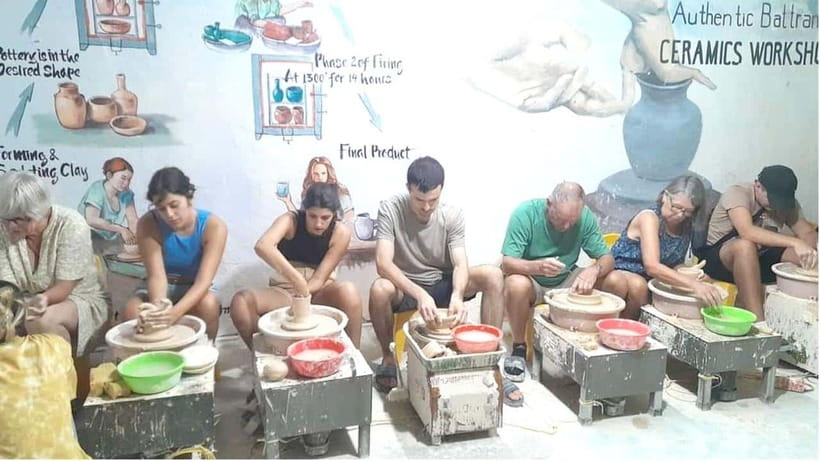
- Three hours on an electric wheel: Morning classes run from 8:30 to 11:30, and afternoon classes from 14:00 to 17:00.
- Make as much as you can: You may try bowls, plates, cups, vases, and other designs during the session.
- One finished piece is included: Choose one item to glaze, fire, and take home at no extra cost.
- Extra pieces cost more: Additional items can be glazed and fired for an added fee, reported as about $5 per piece.
- Plan around firing time: Colored glazing usually takes two to three days. White glaze may be ready in one to two days.
- Old Quarter location: The class is held at 115 Hàng Gai, Hoàn Kiếm, so it fits neatly into a day of exploring central Hanoi.
Why Bat Trang pottery belongs in a Hanoi itinerary
Bat Trang is Vietnam’s best-known pottery village, located near Hanoi, and its ceramics have been made by generations of local artisans. The craft is not simply a tourist activity. Handmade and hand-painted Bat Trang ceramics are part of Vietnamese daily life and cultural identity.
This class brings that village tradition into Hanoi’s Old Quarter. You do not need to spend half a day arranging transport to Bat Trang. Instead, you can walk through the old streets, step into the studio above the pottery shop, and spend a few hours learning the basic movements yourself.
That setting gives the experience a useful balance. You get a taste of Bat Trang craftsmanship without pretending that three hours makes you a master potter. The instructors show you how to center the clay, open it, pull up the sides, and shape the form. You then repeat the process, often with a few failures along the way.
For me, that is part of the appeal. A factory-made souvenir tells you where you went. A slightly uneven bowl that you shaped yourself tells a better story.
Other old-quarter wanders in Hanoi:
- Hanoi: Guided Food Tour with Train Street Visit
★ 4.9 · 6,239 reviews - Hanoi: Street Food Tour with Train Street & Hidden Alleyways
★ 5.0 · 2,831 reviews - Hanoi: Guided Street Food Tour with Train Street Experience
★ 4.9 · 2,479 reviews
Arriving at 115 Hàng Gai in the Old Quarter
The meeting point is 115 Hàng Gai, Hoàn Kiếm, in the heart of Hanoi’s Old Quarter. This is an easy location to pair with other central sights, cafés, markets, and walking streets.
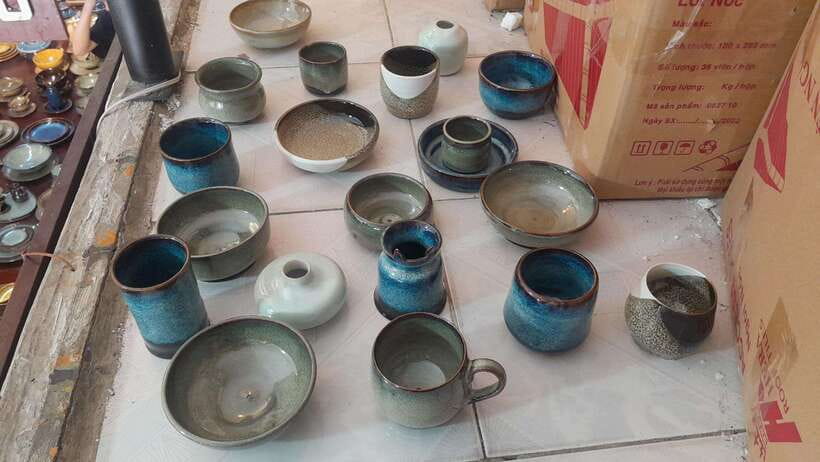
The studio is above a pottery shop, so you may see finished ceramics before or after your class. This is useful because the display gives you ideas for shapes and colors. It also makes the difference between a beginner’s first attempt and a finished Bat Trang piece very clear.
One practical point deserves attention: make sure you are waiting in the right place before the session begins. One person found the reception process unclear because the staff member available at the time did not speak fluent English. The instructors themselves generally teach in English and Vietnamese, but the welcome at the shop may be less smooth than the class itself.
Morning sessions may feel quieter, while afternoon classes can be fuller. A group of about 12 people has been accommodated with an extra instructor, allowing plenty of one-to-one help. If you prefer a calmer room, the morning time may be the better choice when available.
The first lesson: clay, pressure, and patience
The instructor begins with the basic technique. Pottery looks easy when an experienced hand does it. Your first attempt may wobble, collapse, or spin into something that resembles a very tired ashtray.
That is normal. The instructors are used to complete beginners, including children and adults who have never touched a pottery wheel. They guide your hands and explain why each movement matters, especially when you need to keep the walls of the piece strong enough to hold their shape.
Names reported from different sessions include Hang, Han, and Tuan Vu. The spelling of Hang or Han may vary, but the useful point is that the class is built around direct help rather than a long demonstration followed by guesswork.
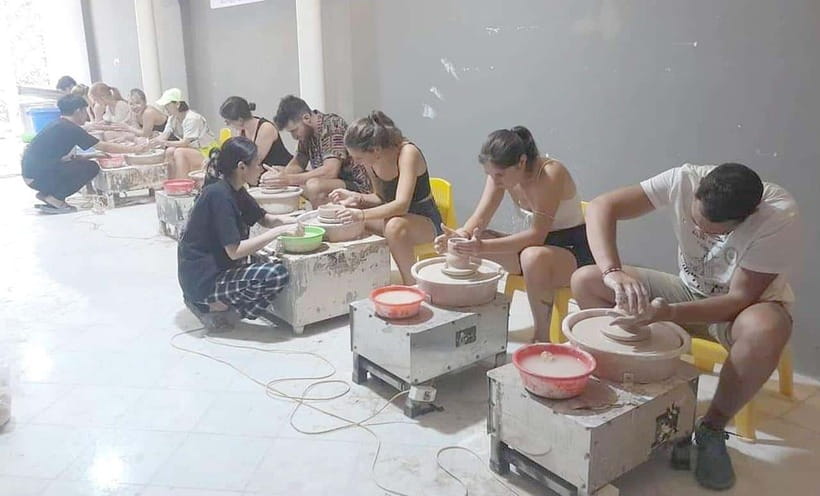
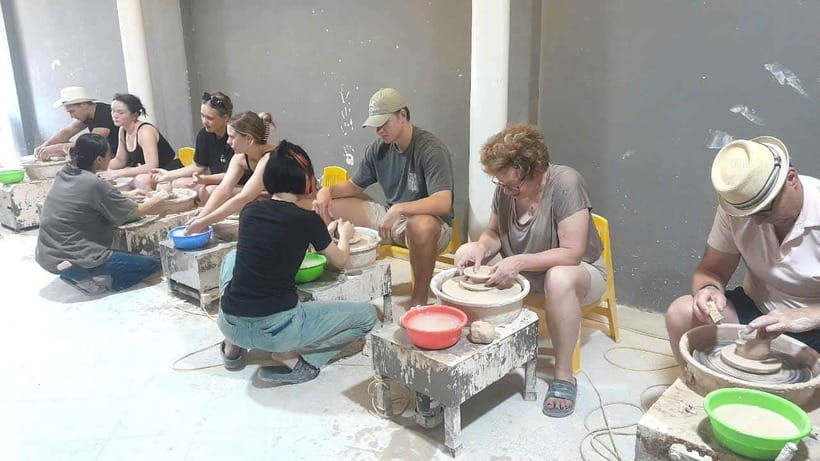
You will work entirely on an electric wheel. That makes the process easier to control than a traditional kick wheel and lets you focus on your hands, the clay, and the shape. It does not make pottery effortless, but it shortens the time needed to get a workable result.
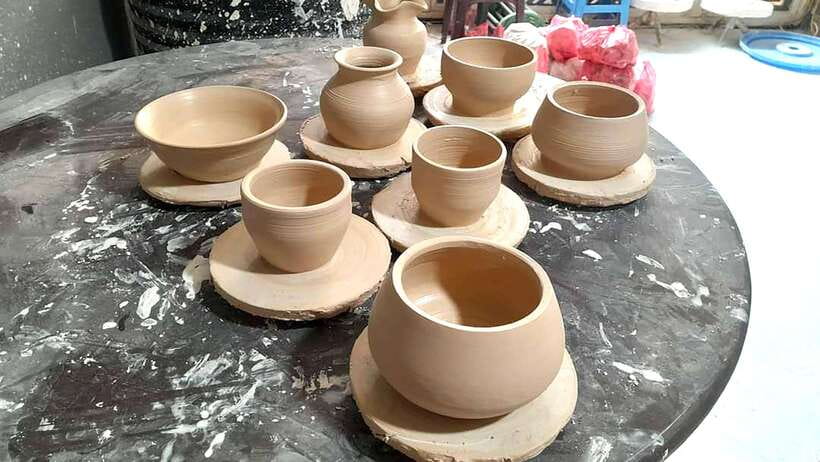
The lesson also gives you room to experiment. You might begin with a small bowl, then try a cup, plate, vase, or a more decorative form. If a piece fails, you can often reshape the clay and start again.
Three hours of making bowls, cups, and vases
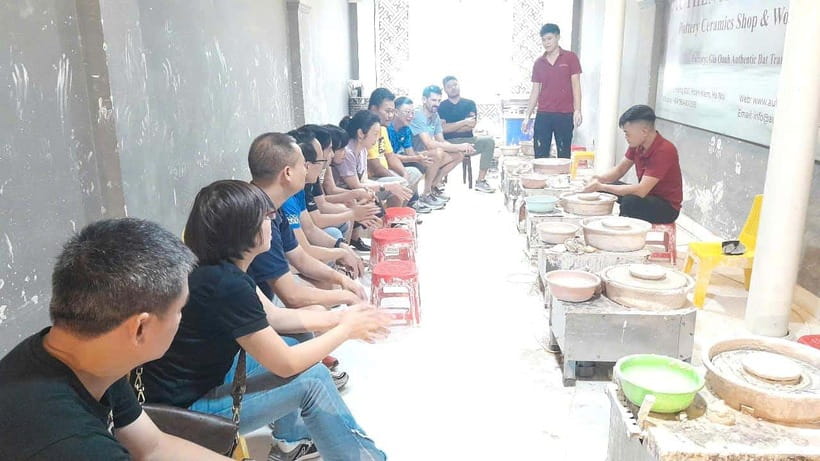
The main part of the experience is open practice. The stated class time is three hours, although some participants describe roughly two and a half hours of active making once instructions and finishing are included.
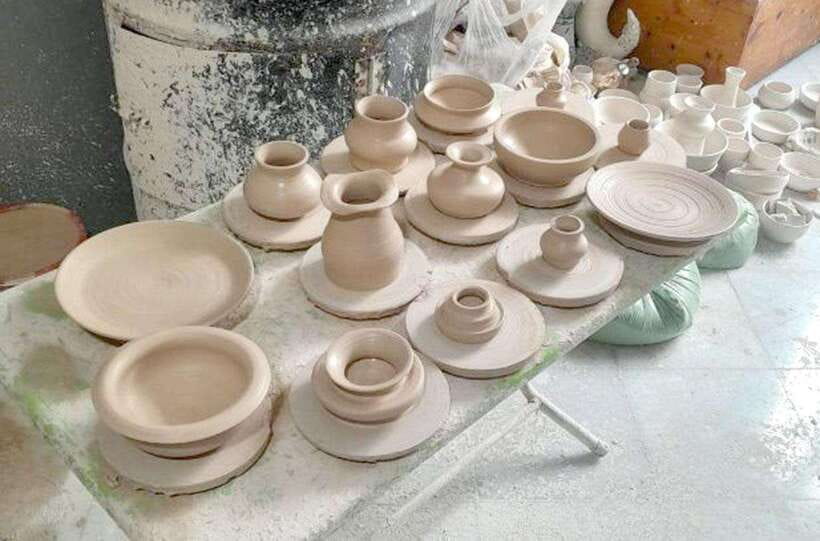
That is still enough time for several attempts. One beginner completed four pieces, while others made five or six. The number depends on your speed, the complexity of your designs, and how much time you spend correcting mistakes.
I like this format more than a fixed one-piece workshop. You are not forced to protect your first attempt at all costs. You can try a plate, learn that the walls are too thin, and then make a sturdier bowl. You can test a vase shape, flatten it, and begin again.
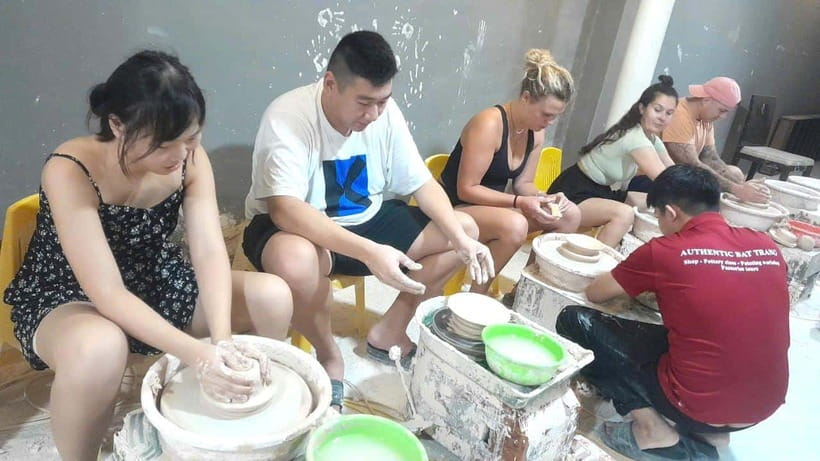
The instructors help when you ask and step in when a piece needs saving. They can show you how to widen a rim, smooth a surface, or remove a failed attempt without wasting the clay. That support matters, especially during the first hour when your hands are still learning how much pressure to use.
The work is hands-on and can get messy. Wear clothes you do not mind marking with clay. The room has a cooling area with a fan, which is helpful during Hanoi’s warmer months, but the class remains a physical activity. You sit at the wheel for long stretches, and one past participant found the small chairs uncomfortable. Taller visitors may want to pay attention to their posture and take short breaks when possible.
More things you make yourself in Hanoi:
- Hanoi Cooking Class: Culture, Local Market & Meaning CSR Impact
★ 5.0 · 5,147 reviews - 5 Traditional Dishes Hanoi Cooking Class with Market Trip
★ 5.0 · 4,890 reviews - Hanoi Coffee Workshop: Taste Salt, Coconut and Egg Coffee
★ 5.0 · 1,286 reviews - Hanoi: Salt Coffee Workshop Awake Your Senses With 6 Brews
★ 5.0 · 792 reviews
Choosing what to keep and how the pieces change
At the end of the making session, you choose one item to glaze and fire for free. You also choose the color from the available options. The remaining pieces can usually be finished for an added charge, listed by one participant as around $5 each.
This is where the $33 price becomes easier to judge. You are paying for three hours of instruction, clay and materials, use of an electric wheel, and one finished ceramic souvenir. Since you can practice repeatedly rather than produce one item only, the value is good for anyone who wants a real activity rather than a short demonstration.
The free piece is not necessarily your best-looking item. You may choose the one with the most personal meaning, the most useful shape, or the funniest story behind it. A heart-shaped dish, a crooked cup, or a small vase can be more memorable than a perfect shop purchase.
Expect the pottery to shrink in the kiln. One participant made what seemed like dinner plates and received smaller side plates after firing. Another noticed about a 20 percent reduction. The final size depends on the piece, but you should not expect the clay to come out exactly as it looked on the wheel.
Glazing also changes the appearance. A dull, pale piece can become a bright finished ceramic after firing. You do not see the final result immediately, which makes the collection visit part of the experience.
Firing, glazing, and getting your pottery home
Colored glazing and firing normally take two to three days. If you want the full finished look, book this class early in your Hanoi stay. Do not place it on the final day before departure unless you have arranged delivery.
White glaze may be completed in one to two days. If you have no time to return, the studio can offer other solutions, including shipping the pottery later. Shipping is not included, and the cost depends on the destination and package.
One participant reported paying about $30 to send a finished piece to the United States. Another group arranged to have pieces sent to its next destination in Vietnam. Ask about the delivery option before you leave the shop, especially if your luggage is already full.
The practical problem is size and weight. Even a small bowl takes up space, and ceramic pieces need careful packing. If you are continuing through Vietnam, shipping to your next stop may be simpler than carrying fragile pottery on buses, trains, or flights.
Set a reminder to collect your piece. It is easy to forget after moving on to another city. The studio has also offered free shop items in cases where a visitor could not wait for the normal firing time, but you should confirm the exact arrangement during your visit.
Who will enjoy this class most
This is a strong choice for first-time potters. You do not need previous skill, and the instructors are prepared to help with basic hand placement, shape, and structural problems.
It also works well for families. One group included four children, and a 10-year-old kept asking to return. Children may need help staying patient while the clay takes shape, but the chance to make several pieces keeps the activity active and creative.
Couples can treat it as an unusual date. You can compare your bowls, laugh at the failed attempts, and choose colors together. Friends and small groups also fit the format well, especially if everyone wants a souvenir with a personal touch.
The class is a good rainy-day or hot-afternoon plan. It gives you a cool indoor break without turning into a passive museum visit. You still learn about a Vietnamese craft, but your hands do most of the work.
You may want to skip it if you have no flexibility in your schedule and must leave Hanoi the same day. You can still take part and arrange shipping, but the free take-home piece is most convenient when you have two or three days available.
What the $33 price really covers
At $33 per person, this is not the cheapest way to buy a ceramic bowl in Hanoi. It is a reasonable price for an activity that includes instruction, materials, wheel time, unlimited attempts during the session, and one fired and glazed piece.
The strongest value comes from the freedom to make several pieces. If you create four or five items, you can choose the one you like best. You can then pay to finish more if the extra cost fits your budget.
The price does not include glazing and firing for every piece, shipping, or extra finished items. Treat the free item as the included souvenir and the rest as optional add-ons. Ask about the current charge for additional pieces before choosing several to keep, since prices can change.
Free cancellation up to 24 hours before the class and the option to reserve now and pay later add useful flexibility. Those policies matter if you are arranging Hanoi activities around weather, illness, or a changing schedule.
Small details that improve the experience
Book at the beginning of your Hanoi visit if you want to collect pottery in person. Morning sessions may be less crowded, but the class has added teaching support for fuller afternoon groups.
Allow time for a messy, focused activity. Do not schedule a rushed transfer immediately afterward if you want to browse the shop or clean up comfortably.
Keep your designs practical. A thick, stable bowl may survive the firing process better than a very thin decorative shape. The instructor can help with structural integrity, so ask before committing to a difficult form.
Think about luggage before you choose extra pieces. One free bowl is manageable for many people. Several large vases are another matter entirely.
Most important, do not judge your work too early. Clay can look plain before firing, and a piece that seems imperfect on the wheel may become a charming souvenir after glazing.
Should you book this pottery class?
Book it if you want a creative Hanoi activity with local craft context, patient instruction, and a souvenir you helped make yourself. The central Old Quarter location is convenient, the three-hour format gives beginners time to improve, and the option to make multiple pieces makes the $33 fee fair.
I would especially recommend it for families, couples, first-time potters, and anyone spending at least three days in Hanoi. Choose an early slot in your trip, confirm the finishing timeline, and decide in advance how you will carry or ship the pottery.
Skip it only if you are looking for a quick stop with an immediate finished product. Pottery takes time, and the kiln cannot be rushed. For everyone else, this is a hands-on way to meet Bat Trang ceramics without leaving central Hanoi.
FAQ
Where is the pottery class held?
The class takes place at 115 Hàng Gai, Hoàn Kiếm, in Hanoi’s Old Quarter.
How long does the class last?
The scheduled duration is three hours. Morning sessions run from 8:30 to 11:30, and afternoon sessions run from 14:00 to 17:00.
What time does the afternoon class begin?
The afternoon class runs from 14:00 to 17:00.
Do I need pottery experience?
No. The class is designed for beginners, and the instructors guide you through the process step by step.
What language is used during the class?
Instruction is available in English and Vietnamese.
How many pieces can I make?
You can make as many pieces as you can during the class time. The number depends on your designs, speed, and how often you need to restart.
Is one finished piece included in the price?
Yes. One product can be glazed, fired, and taken home at no extra cost.
Can I finish more than one piece?
Yes. Additional pieces can be glazed and fired for an extra fee. One participant reported a charge of about $5 per additional piece.
How long does glazing and firing take?
Colored glazing and firing usually take two to three days. White glaze may be available in one to two days.
Can the pottery be shipped?
Shipping can be arranged if you cannot wait for collection or do not have room in your luggage. Shipping is not included in the activity price.
Newly reviewed in Hanoi
- Private Full-Day Tour to Halong Bay from Hanoi★ 5.0 · 44 reviews
- Private Evening Walking Tour – Cyclo & Water Puppet Show in Hanoi Old Quarter★ 5.0 · 19 reviews
- Ba Vi National Park Private Tour: Sightseeings & Jungle Hikking★ 4.5 · 26 reviews
- Full-Day Hanoi City Tour with Hidden Local Life Experience★ 5.0 · 27 reviews
- Hanoi Epic tour 6D5N Hanoi – Halong Bay – Ninh Binh – Sapa★ 5.0 · 51 reviews
- Private transfers Hanoi <=> Puluong 1 Way (Free Hotel Pickup)★ 5.0 · 20 reviews
- Hanoi Airport Pick-up (Private Ride From Hanoi Airport to Hotels)★ 4.5 · 253 reviews
- Noi Bai Airport transfer to Hotel or Vice versa★ 5.0 · 144 reviews
Train Street & Old Quarter Tours, compared.


Street Food Tour with Train Street & Hidden Alleyways
Read our review →
Guided Street Food Tour with Train Street Experience
Read our review →
[HOT] Hanoi Old Quarter Walking Street Food – Small Group Tour
Read our review →
Hanoi City Tour Highlight, Train Street Combine visit Countryside
Read our review →
Private transfer between Hanoi Airport (HAN) and Hanoi Old Quarter
Read our review →
Hanoi Jeep City Highlight, Backstreet, Train Street, Countryside
Read our review →
Hanoi Food Tours in Hanoi Old Quarter (Small Group/Private)
Read our review →Browse the lists this tour appears in