
Reviewed · TRAIN STREET & OLD QUARTER TOURS
Bat trang Pottery Class in Hanoi Old Quarter/Handmade experience
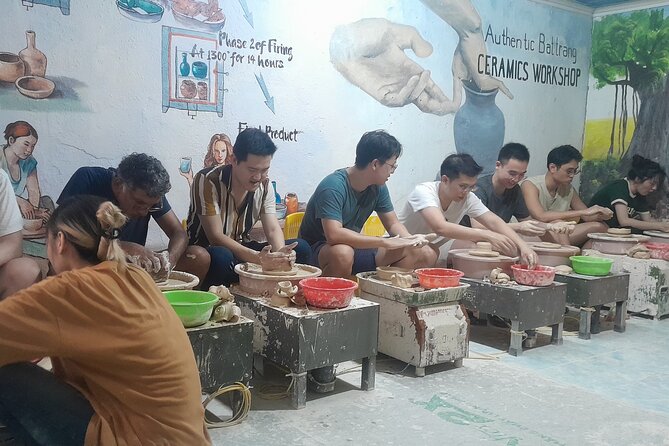
The best thing about this class is that it brings Bat Trang’s pottery tradition into Hanoi’s Old Quarter, saving you the trip to the ceramics village while still giving you real time at an electric wheel. You can try cups, bowls, plates, vases, and other forms, with teachers stepping in when the clay begins to wobble.
I like the generous practice time and the friendly, patient instruction from teachers such as Han, Hang, Vu, and Seany. I also like the practical location at 115 Hang Gai, which makes this an easy creative break from sightseeing. The main catch is timing: glazing and firing take two to three days, and one finished piece is included, not every pot you make.
Key points before you book

- Three hours at the wheel: Make repeated attempts rather than stopping after one demonstration.
- Village-trained instructors: Teachers connected with Bat Trang explain basic techniques and offer hands-on help.
- One fired piece included: You can usually select one creation for glazing and firing, with extra pieces costing about $5 each.
- Old Quarter location: Meet at 115 Hang Gai, close to central Hanoi sights and public transport.
- Plan your pickup: Colored glazing commonly takes two to three days. White glaze may take one to two days.
- Good for families: Children aged five and up can take part, and most people can participate without prior pottery experience.
A Bat Trang pottery class without leaving central Hanoi
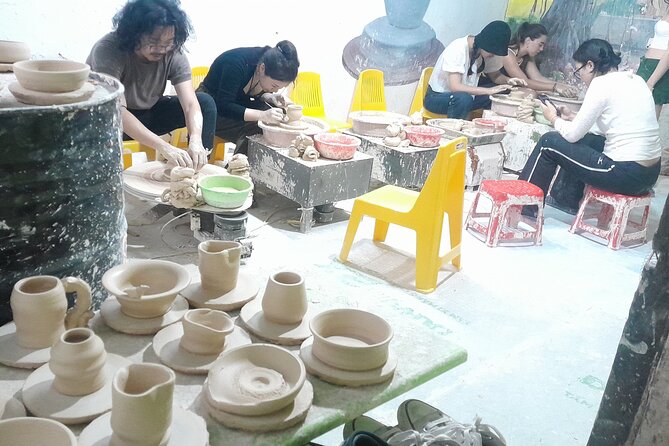
Bat Trang, one of Vietnam’s oldest ceramics villages, sits outside central Hanoi. It is a worthwhile place to visit in its own right, but getting there takes extra planning. This workshop offers the simpler option: you learn the basic pottery process at 115 Hang Gai, right in the Old Quarter.
That matters if your Hanoi schedule is tight. You can fit the class between sightseeing, shopping, and meals instead of spending much of the day on transport. The meeting point is at street level, with the workshop upstairs. The setting is close enough to the Old Quarter’s busy streets, but the clay work gives you a quieter change of pace.
The activity lasts about three hours. Morning sessions run from 8:30 to 11:30, while afternoon sessions run from 14:00 to 17:00. The early class can be a smart choice if you want the rest of the day free, and it may offer more individual attention when fewer people have booked.
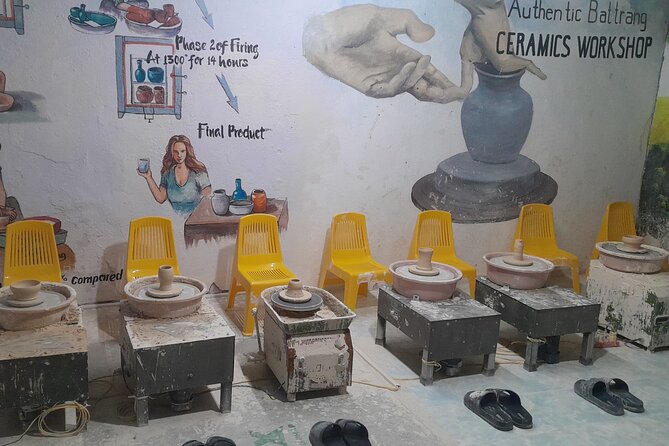
The experience is listed as a private activity for your group, though the number of wheels and the actual class arrangement can vary. Some sessions have been small, while one account described a group sharing four wheels. If personal attention matters greatly to you, confirm the expected group setup before booking.
Other old-quarter wanders in Hanoi:
- Hanoi: Guided Food Tour with Train Street Visit
★ 4.9 · 6,239 reviews - Hanoi: Street Food Tour with Train Street & Hidden Alleyways
★ 5.0 · 2,831 reviews - Hanoi: Guided Street Food Tour with Train Street Experience
★ 4.9 · 2,479 reviews
What happens during the three hours
The class begins with an introduction to Bat Trang pottery and the basic steps involved in shaping clay. You then sit at an electric pottery wheel and work through the process with help from the instructor.
The wheel looks simple until the clay starts moving. You need to center it, keep your hands steady, and apply pressure at the right moment. The first attempt may collapse quickly. That is normal, and the class is designed around trying again. Staff can replace clay that has become too wet, so you are not limited to one serious attempt.
You can make as many practice pieces as time allows. Common examples include cups, bowls, plates, and vases. Handles and simple decoration may also be possible, depending on your pace and the teacher’s guidance. One participant managed four pieces, including a cup with a handle and decoration, while others made around six smaller forms.
The important point is that this is not a demonstration where you watch an artisan do all the work. You spend substantial time using the wheel yourself. Teachers may steady your hands, reshape a rim, or show you how to open the clay, but you remain involved in each piece.
The class can be especially enjoyable for beginners because failure becomes part of the process. You may make something lopsided, laugh, flatten it, and begin again. By the end, you should understand why handmade ceramics require patience and repeated practice.
The teachers make the difference
The strongest part of the experience is the instruction. Teachers are described as patient, friendly, and willing to provide hands-on help. Han is praised for clear guidance and good communication after the class. Hang is noted for being kind and patient with first-time potters. Vu has guided guests through several different shapes, and Seany combines pottery instruction with stories about Bat Trang and his years as a potter.
You should still expect the teacher to guide several people during a session. That means you may have periods when you work independently, especially if the class is full. For many beginners, this is useful because you get time to practice without someone constantly taking over.
English ability may vary by instructor. Most of the positive accounts describe effective teaching and helpful demonstrations, but one poor experience involved limited spoken English and not enough instruction. If you need detailed verbal explanations, pay close attention to the demonstration and ask for help early rather than waiting until the clay has collapsed.
The class suits families particularly well. Children aged five and up are allowed, and the work gives different ages a shared project without demanding advanced skill. Younger children may need more direct assistance, while older children and adults can experiment with form and decoration.
Your pottery is not ready to take home that afternoon
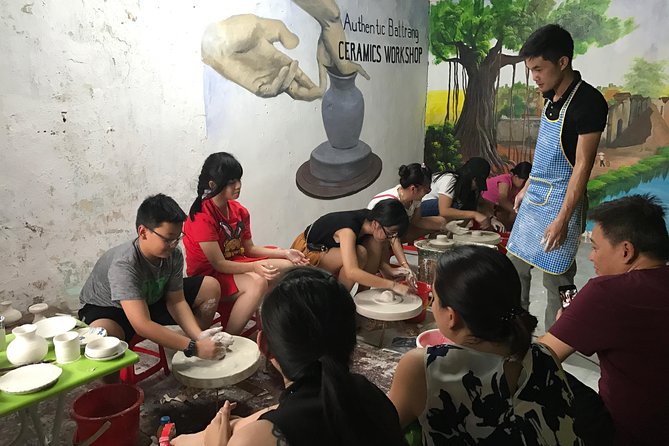
This is the detail most likely to affect your booking decision. You can make several items during class, but only one piece is included for glazing and firing. Additional pieces can be fired for about $5 each, based on the information provided by the operator and class participants.
The normal process takes two to three days. Your piece must dry, be fired, glazed, and fired again. Colored glazing generally needs two to three days. White glaze may be available in one to two days, but you should confirm the exact timing at the workshop.
Plan to take the class near the beginning of your Hanoi stay. If you arrive on the final morning before flying out, you may not have enough time to collect the finished pottery. The workshop may offer a replacement item from the shop, or it may arrange shipping later, but shipping costs are not included.
One person allowed six days and still found the pieces were not ready, so do not build a tight airport connection around the pickup. Firing schedules can shift, and pottery can occasionally crack before completion. If you are especially attached to one item, ask about the firing and pickup plan before leaving the workshop.
The finished work can be a more personal souvenir than a factory-made bowl from a market. You shaped it yourself, even if the teacher helped refine it. That personal connection is the main value of paying for the class rather than simply buying a Bat Trang product.
More things you make yourself in Hanoi:
- Hanoi Cooking Class: Culture, Local Market & Meaning CSR Impact
★ 5.0 · 5,147 reviews - 5 Traditional Dishes Hanoi Cooking Class with Market Trip
★ 5.0 · 4,890 reviews - Hanoi Coffee Workshop: Taste Salt, Coconut and Egg Coffee
★ 5.0 · 1,286 reviews - Hanoi: Salt Coffee Workshop Awake Your Senses With 6 Brews
★ 5.0 · 792 reviews
What makes the price reasonable
The listed price is $38.15 per person. That includes the class and fees, plus one piece taken through the firing and glazing process. It does not include extra fired pieces or later shipping.
I see the price as fair if you value the activity itself. You get roughly three hours of instruction, repeated attempts at the wheel, and a finished item. Compared with a short craft demonstration, this gives you much more practical time. Compared with a full outing to Bat Trang, it saves transport time and keeps the activity in central Hanoi.
The value is weaker if you only want a cheap souvenir. A ready-made bowl from the shop may cost less, and your handmade piece requires time, pickup, and possibly extra charges. The class is worth booking for the making process, not just the object at the end.
Ask how many pieces are included before you begin, then choose your best one for firing. If you create several strong pieces, paying for an additional item may make sense. If you are leaving Hanoi soon, compare the extra firing cost with the shipping price before deciding.
A useful break from Old Quarter sightseeing
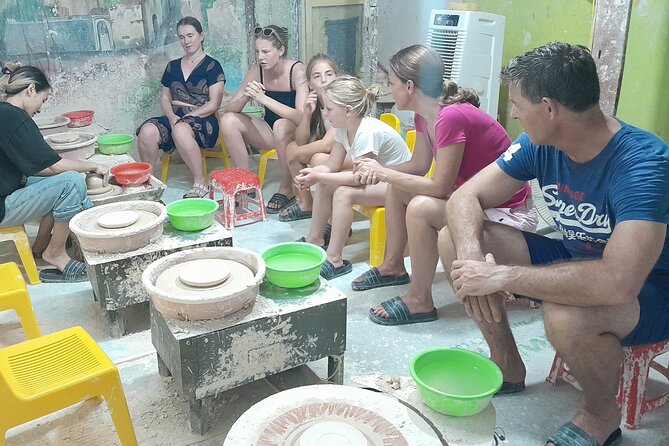
Hanoi’s Old Quarter can be noisy and tiring. A pottery class gives you three hours of sitting down, working with your hands, and concentrating on one small task. Several people found the activity relaxing, especially after time spent walking through the busy center.
That calmer pace is part of the appeal. You do not need to know pottery, and you do not need to produce a perfect bowl. The challenge is physical and immediate: center the clay, shape it, start again. It gives children and adults something to do together without turning the whole afternoon into a lesson.
The room may feel warm, particularly during a busy session. One negative account described a small, hot workshop without air conditioning and said that two people in a larger group were left waiting for wheels. This is not the usual picture in the available feedback, but it is a fair reason to ask about class size and equipment if you are booking for four or more people.
The experience also works well on a rainy day. You remain indoors, and the activity does not depend on clear weather or long walks. Wear clothes you do not mind getting dirty, since working clay can leave your hands and clothing marked.
Pickup, shipping, and choosing your final piece
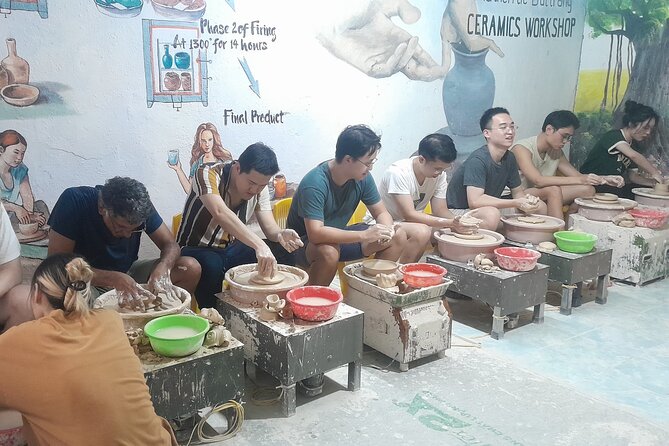
Before you leave, identify which piece you want fired. The operator can explain available glaze colors and the collection date. Keep the pickup plan simple: note the address, the expected day, and whether you are collecting one item or several.
If you cannot remain in Hanoi for two or three days, ask about white glaze, a shop replacement, or shipping. A shop item may be offered as an alternative, but it will not be the same as receiving your own work. Shipping is an option in some cases, though the fee is separate and the available information does not specify destinations or prices.
Pottery can also break during firing. That is part of ceramic production, but it is worth understanding before you pay for extra pieces. If one item fails, the workshop may offer a replacement from its shop, as happened in one account.
Choose a shape that matches your luggage and home use. A small cup or bowl is easier to carry than a large vase, and a simple form may survive the process better than an ambitious design. You can ask the teacher which of your pieces has the best chance of firing successfully.
Who should book this class

I would recommend it to first-time potters, families with children aged five and up, couples, and anyone who wants an activity rather than another market visit. It also suits art and craft fans who want to understand how difficult wheel pottery can be.
The class is a good match for a short Hanoi stay because of its central location. You do not need to arrange a separate trip to Bat Trang, and morning and afternoon times make it easier to fit around your plans.
I would be more cautious if you have only one day in Hanoi, need every hour tightly scheduled, or cannot return for pickup. In that case, ask about shipping before booking. Also consider the class size if your group is large or if you expect constant one-to-one instruction.
The three-hour length is generous for people who want to keep practicing. Some beginners reached their limit after about 90 minutes, especially after making the standard cup, bowl, plate, and vase forms. You can treat the remaining time as optional practice rather than feeling obliged to fill every minute.
Should you book the Bat Trang pottery class?
Book it if you want a hands-on Hanoi activity, patient help, and a personal souvenir that you shaped yourself. The central Old Quarter address, flexible morning and afternoon sessions, and repeated time at the wheel make it an easy addition to a city break.
Book early in your stay, ideally allowing at least three days for colored glazing and collection. Confirm the number of wheels, the expected group size, the cost of extra pieces, and the shipping plan if you will not be in Hanoi for pickup.
Skip it if you only want a finished ceramic item immediately, or if your schedule cannot handle a delayed collection. For most beginners, though, the real reward is the messy, funny process of learning to control clay. At $38.15, it offers a worthwhile creative pause in central Hanoi, provided you understand the firing timetable.
Free cancellation is available up to 24 hours before the start time. Cancellations or changes made within 24 hours are not refundable.
FAQ
Where is the pottery class held?
The class begins and ends at 115 P. Hang Gai, Hang Trong, Hoan Kiem, Hanoi, Vietnam, in the Old Quarter.
How long does the pottery class last?
The class lasts approximately three hours.
What time are the classes held?
Morning sessions run from 8:30 to 11:30. Afternoon sessions run from 14:00 to 17:00.
Do I need previous pottery experience?
No. The class teaches the basics, and beginners can receive hands-on guidance from the instructor.
Can children join the activity?
Yes. The class is available for children aged five and up.
How many pottery pieces can I make?
You can practice making as many pieces as time allows during the three-hour session. Examples include cups, bowls, plates, and vases.
How many pieces are included for firing and glazing?
One piece is included. Additional pieces can be fired for an extra charge of about $5 each.
How long does it take to receive the finished pottery?
Colored glazing and firing usually take two to three days. White glaze may take one to two days. You can also ask about shop replacements or shipping if you cannot wait.
What is the cancellation policy?
You can cancel up to 24 hours before the start time for a full refund. Cancellations or changes made less than 24 hours before the activity are not accepted and are not refundable.
Newly reviewed in Hanoi
- Private Full-Day Tour to Halong Bay from Hanoi★ 5.0 · 44 reviews
- Private Evening Walking Tour – Cyclo & Water Puppet Show in Hanoi Old Quarter★ 5.0 · 19 reviews
- Ba Vi National Park Private Tour: Sightseeings & Jungle Hikking★ 4.5 · 26 reviews
- Full-Day Hanoi City Tour with Hidden Local Life Experience★ 5.0 · 27 reviews
- Hanoi Epic tour 6D5N Hanoi – Halong Bay – Ninh Binh – Sapa★ 5.0 · 51 reviews
- Private transfers Hanoi <=> Puluong 1 Way (Free Hotel Pickup)★ 5.0 · 20 reviews
- Hanoi Airport Pick-up (Private Ride From Hanoi Airport to Hotels)★ 4.5 · 253 reviews
- Noi Bai Airport transfer to Hotel or Vice versa★ 5.0 · 144 reviews
Train Street & Old Quarter Tours, compared.


Street Food Tour with Train Street & Hidden Alleyways
Read our review →
Guided Street Food Tour with Train Street Experience
Read our review →
[HOT] Hanoi Old Quarter Walking Street Food – Small Group Tour
Read our review →
Hanoi City Tour Highlight, Train Street Combine visit Countryside
Read our review →
Private transfer between Hanoi Airport (HAN) and Hanoi Old Quarter
Read our review →
Hanoi Jeep City Highlight, Backstreet, Train Street, Countryside
Read our review →
Hanoi Food Tours in Hanoi Old Quarter (Small Group/Private)
Read our review →Browse the lists this tour appears in