
Reviewed · COOKING CLASSES
Hanoi Maya Kitchen: Traditional Cooking Class & Market Tour
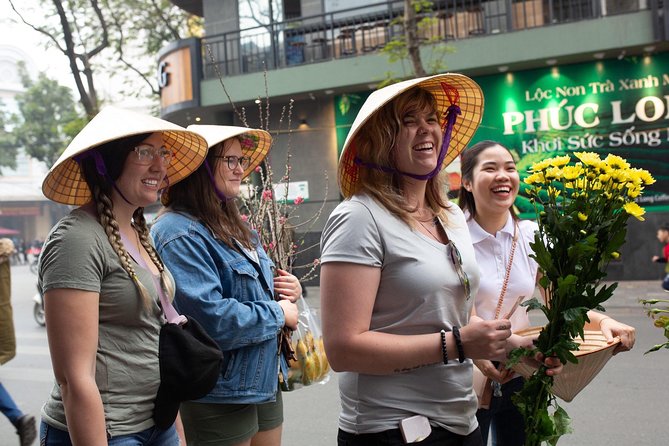
Hanoi Maya Kitchen makes the shopping part of the cooking class matter. You visit a nearby local market, look at the ingredients, and then use them in four Vietnamese dishes and egg coffee. The best parts are the market stop and the step-by-step kitchen work, especially learning to roll spring rolls neatly and seeing how Vietnamese flavors are balanced.
I also like that the class ends with a full meal, not just a few samples, and that the small-group limit of 15 keeps the lesson manageable. Guides named Iris, Aurora, and Ruby have led recent classes, with singing, local food tips, and takeaway containers adding a personal touch in some sessions.
The main caution is the meeting-point information. One part gives 38 P. Bat Su, while another names the Crossing Vietnam Tour office at 47 Hang Bong Street. Confirm the exact starting address before you set out.
Key points to know before booking
- Shop at a real Hanoi market: The food buying stop gives you a closer look at Vietnamese ingredients and possible substitutes.
- Make five Vietnamese specialties: The menu includes fried spring rolls, papaya salad, pho rolls, mixed pho, and egg coffee.
- Plan for a full meal: Seasonal fruit, one drink, local wine tasting, and the dishes you prepare are included.
- Expect a four-hour experience: The market visit and cooking lesson take up most of a half day.
- Small group, limited to 15 people: This is more hands-on than a large demonstration class.
- Check the meeting address: The supplied details list both 38 Bat Su and 47 Hang Bong Street.
Why the market visit is more than a quick shopping stop
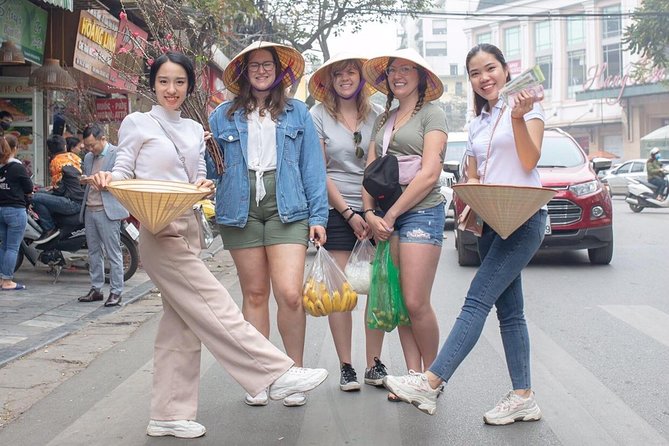
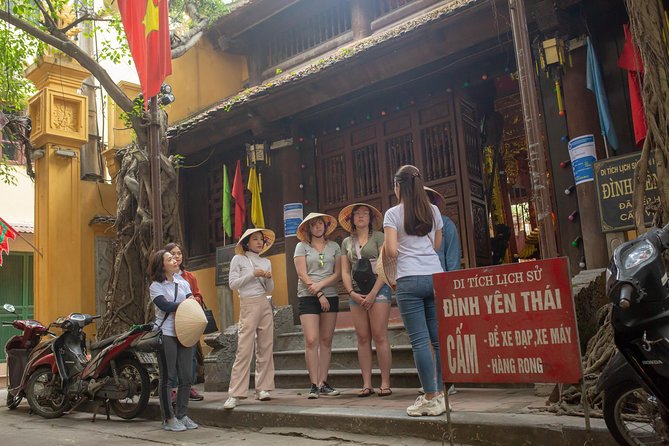
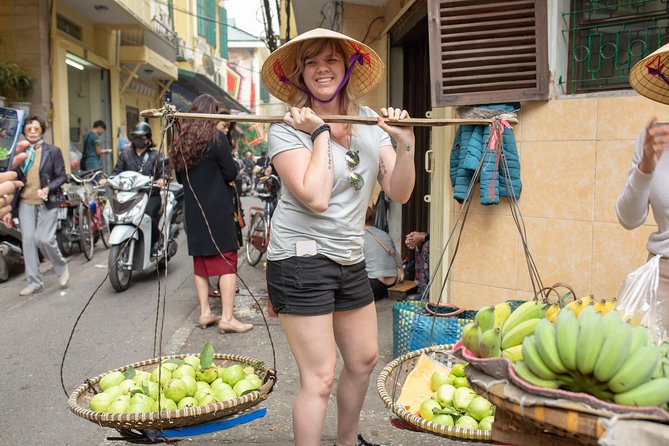
The class begins with a walk to a local market, identified in the schedule as Yen Thai Market and elsewhere as Hang Da Market. The market is close to the Old Quarter meeting point, so you do not spend the morning riding across Hanoi.
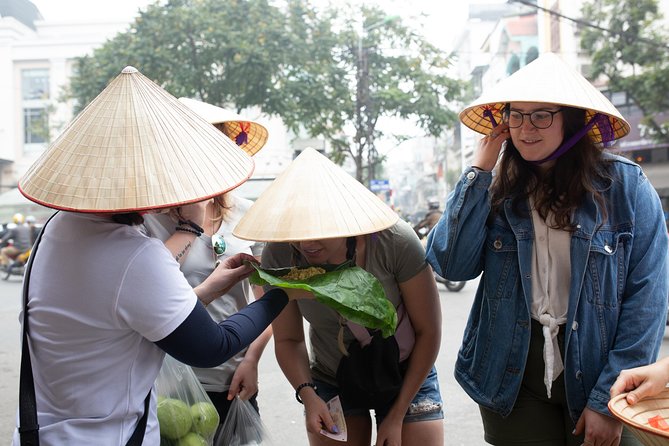
Here, your instructor helps you buy fresh food for the lesson. That sounds simple, but it gives the cooking class useful context. You see ingredients before they are cleaned, sliced, seasoned, or placed on a plate. You also get an explanation of Vietnamese ingredients and possible substitutes, which is handy if you hope to recreate the dishes at home.
I like this part because it connects the food to ordinary Hanoi life. A cooking class that begins with premeasured ingredients can teach technique, but it skips the choices that shape a dish. At the market, you get a better sense of what the cook is looking for and how fresh produce fits into Vietnamese meals.
Do not expect a long sightseeing tour of Hanoi. The market is a working food market, and the purpose is to buy ingredients and understand them. That makes it useful for food-focused visitors, but less suitable if you are looking for a major historical tour or a broad introduction to the city.
Other classes where you cook in Hanoi:
- Hanoi Cooking Class: Culture, Local Market & Meaning CSR Impact
★ 5.0 · 5,147 reviews - 5 Traditional Dishes Hanoi Cooking Class with Market Trip
★ 5.0 · 4,890 reviews - Vietnamese Food Cooking Class in Hanoi with Market Experience
★ 5.0 · 778 reviews
Four dishes that teach different Vietnamese techniques
After the market, you head to the kitchen for the main lesson. The class covers four dishes: Nem Ran, or fried spring rolls; Nom Du Du, or papaya salad; Pho Cuon, or pho rolls; and Pho Tron, or mixed pho.
The menu has a good mix of tasks. You are not making four versions of the same dish. One recipe teaches rolling, another focuses on sweet and sour balance, and the pho dishes show how familiar rice noodles can be used in different ways.
Fried spring rolls
The spring rolls come first. The instructor guides you through the process step by step, with special attention to shaping even, tidy rolls. That small detail is where the hands-on value comes through. Rolling a spring roll sounds easy until the filling shifts, the wrapper tears, or one end becomes much thicker than the other.
The dish is described as a national favorite for holidays and family gatherings. That gives the recipe a place beyond the classroom. You are learning food that belongs on a shared table, not just a quick snack made for tourists.
This is likely to be one of the more useful dishes to take home and repeat. The ingredients can be adapted, and the physical technique improves with practice. The lesson also gives you a chance to work with your hands rather than simply watch an instructor cook.
Papaya salad
Next comes papaya salad, known as Nom Du Du. Its main flavor contrast is sour and sweet, so this part of the class helps you understand the balance that appears in many Vietnamese dishes.
The value here is not just the ingredient list. You learn how a salad can be bright and lively without depending on a heavy dressing. The class is a good place to ask about substitutions, especially if green papaya is difficult to find where you live.
The salad also breaks up the fried and noodle-based dishes. By the time you sit down to eat, the menu has enough variety to feel like a meal rather than a tasting plate.
Other places to shop around Hanoi:
- Hanoi: 5 Local Dishes Cooking Class with Meal & Market Visit
★ 5.0 · 420 reviews - Hanoi Cooking Class and Market Tour in Ancient House
★ 5.0 · 379 reviews - Rose Kitchen Hanoi: Market, Cooking & Culture Tour + Free PickUp
★ 5.0 · 342 reviews - Cooking Class Hoi An:Local Market, Basket Boat, Fishing & Cooking
★ 5.0 · 3,660 reviews
Pho rolls
Pho rolls, or Pho Cuon, use familiar rice noodles in a different form. Instead of arriving in a bowl of broth, the noodles become part of a roll. This is a useful reminder that Vietnamese cooking is not limited to the dishes most visitors already know.
The cooking class format lets you compare the handling of the rolls with the spring rolls. The wrapper and filling behave differently, so you get another lesson in texture and assembly. For a home cook, this sort of comparison is more helpful than memorizing a recipe without understanding how the parts work together.
Mixed pho
Mixed pho, or Pho Tron, rounds out the savory menu. It shows another way to serve pho flavors without the usual soup format. The dish helps you see how noodles, toppings, and dressing can work together in a dry preparation.
The combination of Pho Cuon and Pho Tron makes the class especially useful for anyone who already knows classic pho and wants a wider view of Vietnamese noodle dishes. You leave with more than one idea for using rice noodles.
Egg coffee gives the class a Hanoi finish
The final specialty is Cafe Trung, or Vietnamese egg coffee. This is one of the class’s most distinctive features because it adds a drink lesson to the savory cooking.
Egg coffee is closely associated with Hanoi, and making it yourself gives you a better sense of the care involved. It also changes the rhythm of the class. After working on spring rolls, salad, and noodles, you finish with something sweet and creamy rather than another savory dish.
I would keep room for it even if you are mainly interested in food. The coffee is part of what makes this class feel tied to Hanoi instead of being a general Vietnamese cooking lesson. Seasonal fruit is served for dessert, giving the meal a simple, fresh ending.
The meal at the end is part of the value
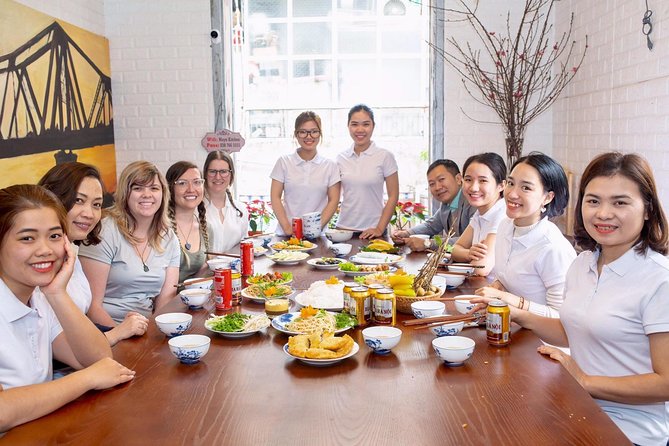
Once the cooking is done, you sit down to eat the dishes you prepared. This matters because the class includes enough food to function as a proper meal. One useful tip is to avoid a large breakfast. The menu includes spring rolls, salad, two pho dishes, egg coffee, seasonal fruit, and a drink.
The experience includes water, tea, or coffee, plus a local wine tasting. The exact drink choice may depend on the session, but these additions mean you are not paying extra for every small item during the class.
The portions can be generous. Some sessions have produced more food than participants could finish, with special containers available for taking leftovers away. That is a practical advantage, particularly if you prefer a substantial lunch and want to sample the food again later.
The meal also gives you time to ask questions and compare the dishes. A good cooking class should leave you with a sense of how the recipes fit together, not just a collection of steps. This one has enough variety to make that final table useful.
A closer look at the instructors and group size
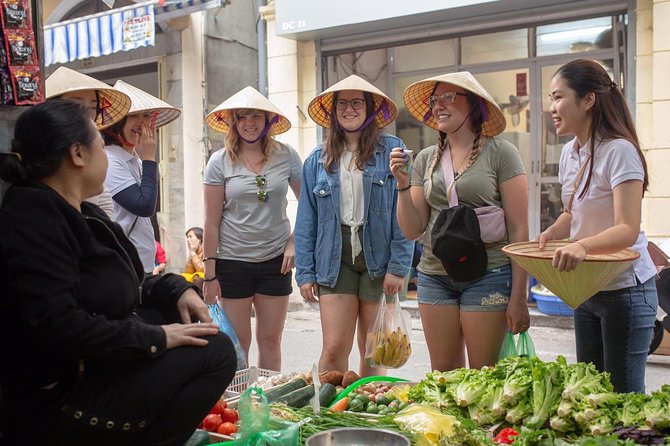
The class is led in English, and recent sessions have featured instructors named Iris, Aurora, and Ruby. Each name is associated with a slightly different touch. Iris has been praised for careful market guidance and step-by-step kitchen teaching. Aurora has added Vietnamese stories and even singing to the class. Ruby has shared local places to eat along with the cooking lesson.
Those details suggest that the tone can vary by instructor. The core menu and structure remain the same, but the personal conversation may be different from one day to the next. That is normal for a class with several guides, and it can be a plus if you enjoy an informal exchange rather than a fixed script.
The maximum group size is 15 people. That is not a private class, but it is still small enough for a practical demonstration and some individual help. If every place is filled, you may have to share work space or wait briefly for a turn. The advantage is a livelier table and a lower price than a private lesson.
For families, the menu offers several kinds of tasks, though younger children may need help with hot cooking and knife work. The activity is also suited to couples, solo visitors who like meeting people, and anyone who wants a food activity with a clear start and finish.
What $30 gets you in Hanoi
At $30 per person, the price is fair for a four-hour experience that combines a market visit, an English-speaking instructor, the ingredients, five menu items, dessert, one drink, local wine tasting, and a recipe to take home.
The real value is in the combination. A market walk on its own might give you atmosphere but no cooking practice. A cooking lesson without the market would be more efficient, but less connected to local food shopping. Here, the two parts support each other.
You should remember that transportation to and from the experience is not included. You make your own way to the meeting point, and the class ends back there. Since the activity takes place in or near the Old Quarter and is close to public transportation, this is less of a concern for most people staying centrally, but you still need to allow time to arrive.
The price also makes sense if you plan to cook Vietnamese food after your trip. The recipe and market discussion may save you from guessing about ingredients later. If you only want to eat and do not enjoy hands-on work, however, a restaurant meal will be easier and less time-consuming.
Timing, address details, and practical planning
The class lasts about four hours. You should treat it as a half-day activity rather than something to squeeze between two tightly scheduled attractions.
The supplied meeting details name 38 P. Bat Su, Hang Bo, Hoan Kiem, Hanoi, as the starting point. They also mention the Crossing Vietnam Tour office at 47 Hang Bong Street. Because these addresses do not match, confirm the location after booking and again before leaving for the class.
The end point is the same as the meeting point. Pickup and drop-off are not provided, so plan your route yourself. The activity is near public transportation, and service animals are allowed.
Confirmation is provided at booking. Free cancellation is available if you cancel at least 24 hours before the local start time. Cancellations or changes inside that window are not refunded or accepted, so keep your schedule firm once the deadline passes.
Who should book this cooking class?
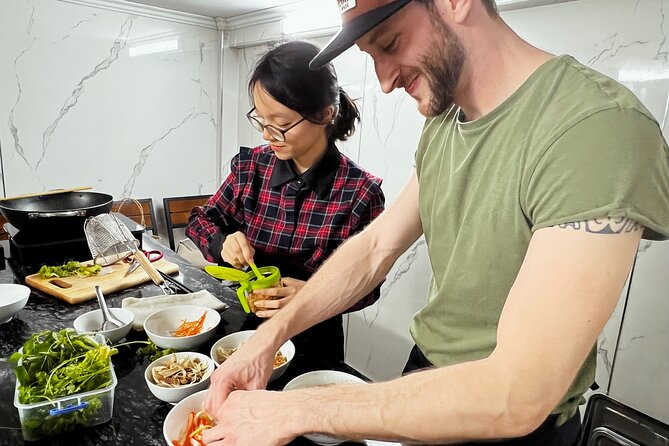
I would choose this class if you want to do more than watch a chef prepare food. The market visit, spring roll practice, egg coffee, and final meal make it a good fit for curious eaters who like to participate.
It is also a strong choice for visitors who want a Hanoi food experience without committing to a full-day tour. Four hours gives you enough time to cook and eat, while leaving the rest of the day open.
Families and small groups should appreciate the generous menu, though the group can reach 15 people. Solo visitors may find the shared kitchen and meal a natural way to meet others. If your main goal is learning dishes you can attempt at home, the spring rolls, papaya salad, and noodle recipes offer plenty to work with.
I would skip it if you want a quiet private lesson, hotel pickup, or a short demonstration. The market walk and hands-on cooking take time, and the address needs a quick confirmation before you go.
Should you book Hanoi Maya Kitchen?
Book it if you want a practical introduction to Vietnamese food, especially if you like the idea of buying ingredients before cooking them. The strongest features are the local market stop, the range of dishes, the generous meal, and the chance to make Hanoi-style egg coffee.
The $30 price is reasonable for what is included, and the four-hour length gives the class enough time to feel substantial. Confirm the starting address, arrive hungry, and leave room for leftovers. For a food-minded visit to Hanoi, this is a useful half-day activity with both kitchen practice and local context.
FAQ
How much does the Hanoi Maya Kitchen class cost?
The experience costs $30 per person.
How long does the cooking class last?
The class lasts approximately four hours.
Where does the experience start?
The supplied details list 38 P. Bat Su, Hang Bo, Hoan Kiem, Hanoi, as the start point. They also name the Crossing Vietnam Tour office at 47 Hang Bong Street, so confirm the exact address before attending.
Is hotel pickup included?
No. Pickup and drop-off are not included. You make your own way to the meeting point, and the activity ends there.
Which Vietnamese dishes will I make?
The menu includes papaya salad, fried spring rolls, pho rolls, mixed pho, and Vietnamese egg coffee. Seasonal fruit is served for dessert.
Is the class taught in English?
Yes. An English-speaking instructor leads the cooking class.
What is included in the price?
The price includes the local market tour and food buying, cooking ingredients, the dishes on the menu, seasonal fruit, one drink, local wine tasting, and a cooking recipe.
How many people can join the class?
The activity has a maximum of 15 travelers.
Can I cancel for a full refund?
Yes, if you cancel at least 24 hours before the experience start time. Cancellations or changes made less than 24 hours in advance are not refunded or accepted.
More hands-on workshops in Hanoi
- Hanoi Coffee Workshop: Taste Salt, Coconut and Egg Coffee
★ 5.0 · 1,286 reviews - Hanoi: Salt Coffee Workshop Awake Your Senses With 6 Brews
★ 5.0 · 792 reviews - Hanoi: Handcrafted Wood Carving Workshop with Local Artisan
★ 5.0 · 733 reviews - Ha Noi Egg Coffee Class
★ 5.0 · 227 reviews
Newly reviewed in Hanoi
- Ha Noi Egg Coffee Class★ 5.0 · 227 reviews
- Vegan Street Food & Stories of Hanoi★ 5.0 · 282 reviews
- Halong Bay 2D1N BEST CRUISES All-Inclusive: Transfer, Meals, Kayak, Cave, Island★ 5.0 · 288 reviews
- Hanoi City Half Day Private Tour: Hidden Corners & Train Street★ 4.5 · 291 reviews
- Private Street Food Tour – Walking Hanoi Old Quarter★ 5.0 · 294 reviews
- From Hanoi: 2-Day Ha Long Bay Boat Tour★ 4.2 · 309 reviews
- Hanoi Highlights: Half-day City Tour★ 5.0 · 298 reviews
- Hanoi: Cat Ba Island & Lan Ha Bay Day Trip Cruise with Lunch★ 4.8 · 308 reviews
Cooking Classes, compared.
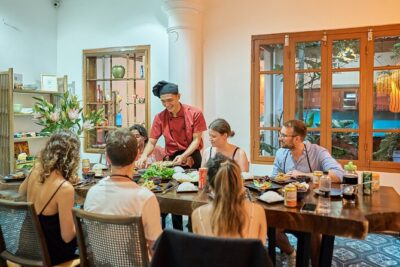
Hanoi Cooking Class: Culture, Local Market & Meaning CSR Impact
Read our review →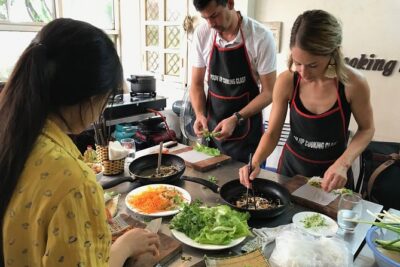
5 Traditional Dishes Hanoi Cooking Class with Market Trip
Read our review →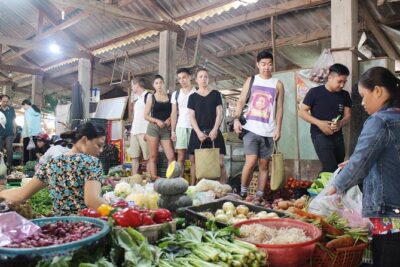
Cooking Class Hoi An:Local Market, Basket Boat, Fishing & Cooking
Read our review →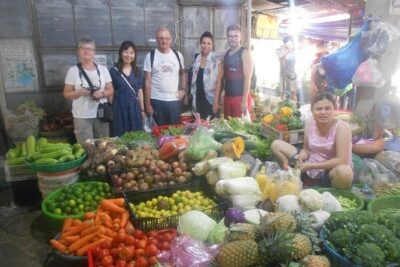
Hoi An Cooking Class(Market,BasketBoat Crabfishing&Cooking Class)
Read our review →
Mekong Delta Boat,Khotcake cooking Coconut Village,SmallGroup
Read our review →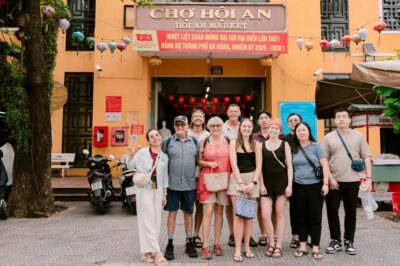
Market Tour, Basket Boat Ride and Cooking Class
Read our review →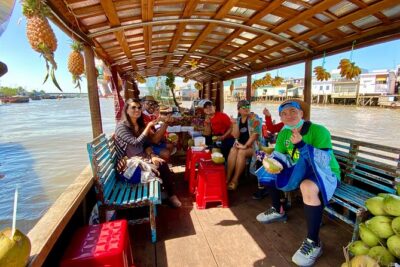
Cai Be Mekong Delta Tour: Cooking Class, Cycling & Craft Villages
Read our review →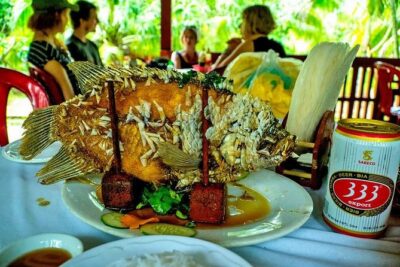
Mekong Delta 4 Islands, TukTuk, Boat, Try Khot Cake Local Cooking
Read our review →Browse the lists this tour appears in