
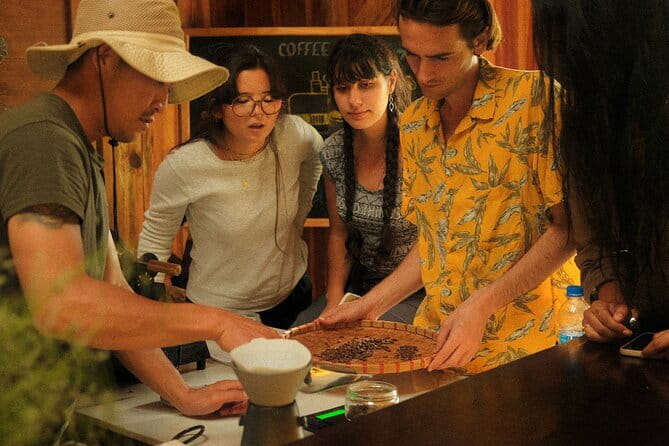
Reviewed · COFFEE & EGG COFFEE TOURS
Coffee Farm Tour with Roasting & Tasting Workshop – Da Lat
At Twin Beans Farm, coffee stops being a drink and becomes a hands-on process. You walk through an Arabica plantation, learn how beans are processed, then roast and brew your own coffee at the farm’s roastery and coffee shop. The farm-to-cup setup makes this more useful than a quick plantation photo stop.
I like the small group limit of 10, which gives the session a personal feel, and I like that you do more than watch. You take part in roasting and tasting, with Jessie explaining how farming, processing, and brewing affect the final flavor. The main drawback is the location, about 20 kilometers from central Da Lat, so you need to allow extra time for transport.
Key points
- Arabica from plant to cup: See the plantation, processing area, roastery, and coffee shop in one visit.
- Roast your own coffee: Take part in roasting and brewing rather than simply observing a demonstration.
- Taste what you make: The tasting session helps connect processing choices with flavor.
- Small groups of 10 or fewer: The format should allow more room for questions and discussion.
- Harvest season from November to January: You may join the farm team to pick coffee during these months.
A 75-minute look at Da Lat coffee
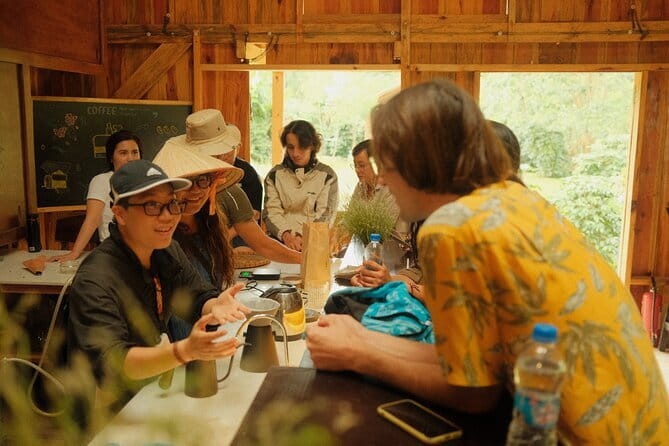
Twin Beans Farm sits in Da Sar commune, in Lac Duong District of Lam Dong province, around 20 kilometers from Da Lat’s center. That distance matters. This is not a café workshop in town with a farm-themed talk attached. You are going to an operating Arabica coffee plantation with its own processing area, roastery, and coffee shop.
The visit lasts about one hour and 15 minutes, with a scheduled start at 1:30 pm. That makes it easy to fit into an afternoon, though you should plan your transport carefully. Pickup is offered, but the supplied details do not explain the pickup area or whether an extra charge applies, so confirm those points when booking.
The experience is built around a simple sequence: see how coffee is grown, learn how the beans are processed, roast and brew coffee yourself, then taste the result. That order works well because each stage gives meaning to the next one. You are not just told that processing affects flavor. You get a chance to connect the farm work with what ends up in your cup.
More coffee stops in Da Lat:
- Dalat: MOTORBIKE TOUR TO PONGOUR FALLS- SILK- COFFEE FARM
★ 4.9 · 52 reviews - Hanoi Coffee Workshop: Taste Salt, Coconut and Egg Coffee
★ 5.0 · 1,286 reviews - Hanoi: Vietnamese Street Food Tour with Egg Coffee
★ 4.9 · 315 reviews
Arriving at Twin Beans Farm near Da Lat
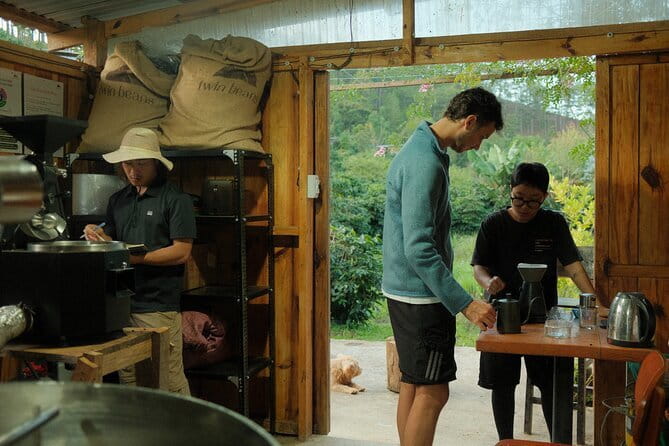
The first useful fact is the setting. Twin Beans is not in central Da Lat, but in Da Sar commune, about 20 kilometers away. If you are staying in town, the journey is part of the outing, and the farm visit makes more sense as a dedicated half-day plan than as a quick stop between city sights.
The farm includes an Arabica plantation, processing facilities, a roastery, and a coffee shop. Having all four stages on one site gives the visit a clear focus. You can see the source of the beans and then move through the steps that prepare them for drinking without switching locations.
The small group size is another practical strength. A maximum of 10 people is stated for the activity. That does not guarantee a private tour, but it does set a useful limit. You should have a better chance to hear the explanations, ask about coffee flavors, and take part in the roasting session than you would in a large coach group.
The start time is 1:30 pm. If your day begins with an early visit to Da Lat’s markets or other sights, the afternoon schedule gives you time to return or have lunch before setting out. Keep an eye on the clock, since the farm is outside the city center and transport time can affect the rest of your plans.
From coffee plant to harvested bean
The plantation visit gives you the farming side of coffee, which is often skipped in city cafés and tasting rooms. At Twin Beans, you learn about Arabica coffee at the place where it is grown. The exact length of the plantation walk is not specified, so think of this as an educational farm visit rather than a long hike.
The coffee harvest is seasonal. From November through January, you can join the team in picking coffee. This is one of the most distinctive parts of the experience, but it depends on the calendar. If your visit falls outside those months, do not expect to harvest beans.
The seasonal detail is useful when choosing your dates. Coffee enthusiasts who want the most active farm experience should aim for November, December, or January. At other times, the tour still covers the plantation and coffee-making process, but the picking activity is not available.
The farming discussion also gives you a better way to understand the drink later in the session. Coffee flavor is not created only by roasting. Growing conditions, picking, processing, roasting, and brewing all play a role. The farm setting lets you see that coffee is an agricultural product before it becomes a specialty beverage.
Learning how processing changes flavor
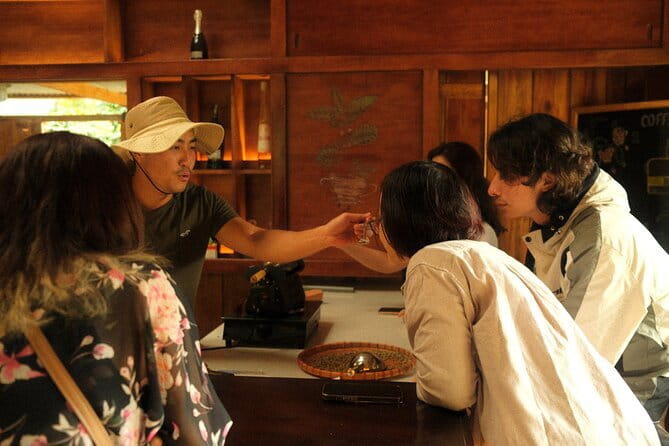
After the plantation, the focus shifts to processing. The experience covers the route from farming to processing, roasting, and brewing. It also includes an explanation of different processing methods and how they can affect flavor.
This is where the tour becomes useful for anyone who normally buys coffee without thinking about its preparation. Processing is not a technical footnote. It can change the character of the finished drink, and the session helps you see why two coffees made from similar beans may taste different.
You should expect explanation rather than a formal classroom lecture. The available information does not list each processing method or provide a detailed tasting menu, so the exact depth may depend on the questions asked and the pace of the group. The small group limit gives you a good chance to ask about the points that interest you most.
I would pay attention here even if roasting is your main reason for booking. The roasting activity is more meaningful when you understand that the green coffee beans have already passed through important stages before they reach the roaster. You are following a chain, not performing an isolated coffee trick.
A few more ways to spend a day in Da Lat
- Experience specialty coffee with sustainable coffee farmers
★ 4.9 · 91 reviews - Dalat’s countryside|Coffee Plantations Tour beyond Elephant falls
★ 5.0 · 59 reviews - Hoi An: Vietnamese Coffee Culture and Coffee Making Class
★ 4.9 · 4,006 reviews - Hanoi Coffee Experience: 6 Brews, 9 Recipes & 3 Liquor Tastings
★ 5.0 · 2,945 reviews
Roasting and brewing your own coffee
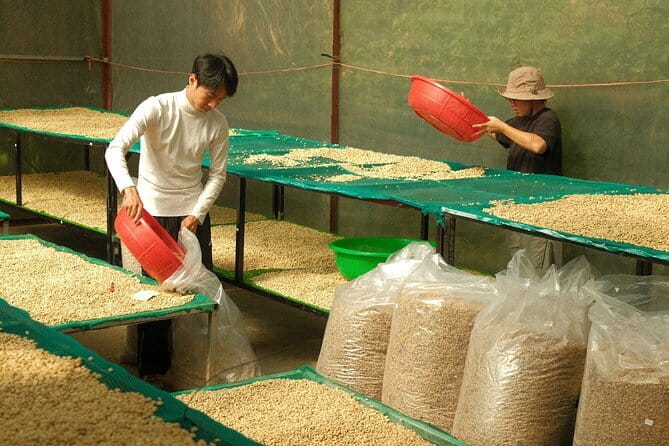
The most hands-on part of the visit is the roasting and tasting workshop. You roast your own beans and brew coffee on the spot at the farm. That practical step is the main reason this experience offers more value than a basic plantation tour.
Roasting gives you a direct sense of how coffee changes before it is brewed. You are not only looking at finished roasted beans in a display case. You take part in the process, then taste the coffee that follows. The connection between action and result is simple, clear, and memorable.
The brewing stage completes the farm-to-cup story. Coffee can be grown well and roasted carefully, yet the final drink still depends on brewing. The workshop gives you a chance to see that the cup is the result of several linked decisions.
Do not expect a full barista training course in 75 minutes. The visit covers farming, processing, roasting, brewing, and tasting, so each subject receives part of the total time. If you want advanced instruction on extraction, equipment, or recipe adjustments, this may feel brief. If you want an approachable introduction with real participation, the length is sensible.
Jessie is named as a guide for the experience, and the session includes detailed explanations of the process. The guide’s role matters here because coffee can become overly technical very quickly. Clear explanations keep the workshop useful for beginners while still giving coffee fans something to think about.
Tasting the result at the farm coffee shop
The tasting is not an extra add-on at the end. It is the point where the earlier stages come together. After seeing the plantation, learning about processing, and roasting and brewing coffee yourself, you can drink the result at the on-site coffee shop.
That setting makes the tasting feel grounded. You are not sampling anonymous coffee in a city café. You are tasting coffee connected to the farm you have just visited and the work you have just discussed.
The information provided does not specify how many coffees you taste, which brewing methods are used, or whether you receive a take-home portion. Do not assume a long flight of samples or a packaged coffee gift. The clear promise is that you roast and brew coffee, then enjoy it on the spot.
For a first introduction to coffee tasting, this format should be enough to sharpen your senses. You can focus on aroma, flavor, and the effect of processing without needing to know formal tasting terms. If you already spend time comparing coffee origins and roast profiles, you may want to ask specific questions during the session so the discussion matches your interests.
Is the $9.89 price good value?
At $9.89 per person, this is a low-cost activity for an experience that combines a farm visit, a processing explanation, a roasting session, brewing, and tasting. The value comes from the number of stages included, not from the length alone.
A standard coffee tasting in town may give you several cups but no plantation visit. A farm walk may show you coffee plants but stop before the beans become a drink. Twin Beans links both sides. You see the agricultural source and take part in preparation.
The price is especially appealing if you enjoy food and drink experiences with a practical element. You are not simply paying for admission to a farm. You are paying for access to an organized process and a guided workshop, with the coffee tasting built into the visit.
Still, compare the cost with your expectations. The tour is only about 75 minutes, and it is not described as a full-day agricultural program or advanced roasting course. You should book it for a focused introduction, not for an extensive technical study.
Group discounts are offered, which may improve the value for families or friends booking together. The maximum group size is 10, so a discount does not necessarily mean a large group format. Check the current group terms before booking.
Who will enjoy this coffee farm visit?
This is a natural fit for coffee enthusiasts who want to understand more than the final cup. It also suits people interested in agriculture, food production, and rural settings. You do not need to be an expert. The hands-on roasting and brewing make the session accessible if your coffee knowledge begins and ends with ordering a morning drink.
The experience can also work well for couples, small groups of friends, and families with an interest in how food is made. The short duration keeps the commitment manageable, while the farm location adds a change of pace from Da Lat’s urban sights.
You may want to choose another activity if you are looking for a long nature walk, a broad tour of the surrounding district, or an advanced professional roasting lesson. The supplied details point to a compact educational visit with a practical coffee workshop.
The seasonal harvest option changes the appeal. From November to January, you can potentially join the team in picking coffee, which adds a physical farm task to the visit. Outside those months, the activity remains focused on the plantation, processing, roasting, brewing, and tasting.
Practical planning for the 1:30 pm start
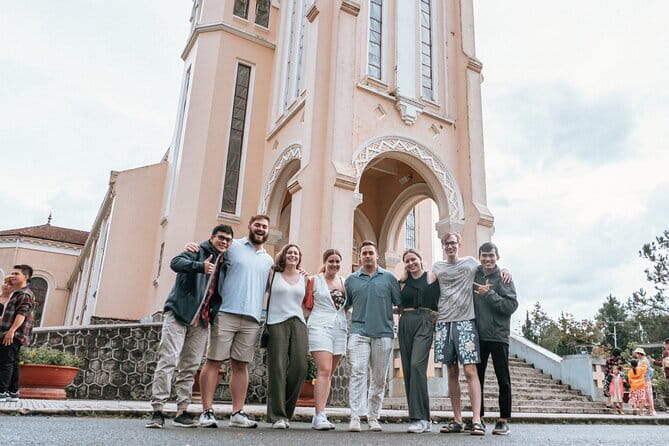
Give yourself enough time to reach the farm from Da Lat. The stated distance is 20 kilometers from the city center, and the tour begins at 1:30 pm. Pickup is offered, but you should confirm the exact arrangements before relying on it.
Mobile tickets are available, and confirmation is provided at booking. The activity has free cancellation up to 24 hours before the start time. If you cancel less than 24 hours ahead, you do not receive a refund, and changes within that period are not accepted. Cut-off times follow local time.
The schedule is short enough to combine with other plans, but avoid stacking it too tightly with a fixed evening booking. Transport from the city and back is not described in detail, so leave a buffer rather than treating the 75-minute visit as the full time commitment.
If you want to harvest coffee, check the date before paying. The picking activity is available during November, December, and January only. The plantation visit itself is not limited to those months, but the harvest work is seasonal.
Should you book Twin Beans Farm?
Book this tour if you want a reasonably priced, hands-on introduction to Arabica coffee near Da Lat. The strongest features are the complete farm-to-cup route, the chance to roast and brew your own coffee, Jessie’s clear instruction, and the small maximum group of 10.
The best timing is from November through January if harvesting appeals to you. At other times, you still get the plantation, processing explanation, roasting, brewing, and tasting, but not the picking session.
Skip it if you want a long countryside excursion or specialist-level roasting instruction. For most coffee fans, food-minded visitors, and curious first-timers, the $9.89 price makes this a practical way to spend an afternoon outside Da Lat.
FAQ
Where is Twin Beans Farm located?
Twin Beans Farm is in Da Sar commune, Lac Duong District, Lam Dong province, about 20 kilometers from Da Lat city center.
What time does the tour start?
The tour starts at 1:30 pm.
How long does the experience last?
The activity lasts approximately one hour and 15 minutes.
Can I roast and brew coffee myself?
Yes. The experience includes a roasting and coffee tasting session, and you roast and brew your own coffee on site.
Can I harvest coffee during the visit?
Coffee harvesting is available from November to January. The provided details do not indicate that harvesting is available at other times.
How many people can join the tour?
The activity has a maximum of 10 travelers.
Can I cancel for a full refund?
Yes. You can cancel at least 24 hours before the local start time for a full refund. Cancellations or changes made less than 24 hours before the start time are not accepted for a refund.
More Farms in Da Lat
- Scented Candle Workshop in Twin Beans Farm Da Lat
★ 5.0 · 70 reviews - Trekking Tour to Hidden Waterfall & Sturgeon Farm for dog-lovers
★ 5.0 · 67 reviews - From Ho Chi Minh: Can Gio Trek – Monkey Island & Crocodile Farm
★ 5.0 · 353 reviews - DaNang Farm-to-Table Cooking Class with Market and Coffee Tasting
★ 5.0 · 131 reviews
More eating and drinking in Da Lat
- Dalat Street Food Tour
★ 5.0 · 257 reviews - Hanoi Jeep Tour: Food, Culture and Fun by Vietnam Army Jeep
★ 5.0 · 15,222 reviews - Ho Chi Minh City Street Food Tour & Sightseeing By Motorbike
★ 5.0 · 9,413 reviews - Hanoi Motorbike Tour: Food, Culture and Fun by Vintage Motorbike
★ 5.0 · 6,699 reviews
Newly reviewed in Da Lat
- Langbiang Green Trekking Tours – Signature Trekking Da Lat★ 5.0 · 182 reviews
- Dalat Street Food Tour★ 5.0 · 257 reviews
- Tour To Langbiang Land – Datanla Falls – Crazy House in Dalat★ 5.0 · 62 reviews
- The Central Highlands Explorer Loop★ 5.0 · 257 reviews
- DaLat Canyoning & Experience 1500m Zipline★ 5.0 · 59 reviews
- Vietnamese Culture: Phin-Making Tour Beyond Elephant Falls, Dalat★ 5.0 · 19 reviews
- DALAT: Trekking Pinhatt & Sup/Kayaking Tuyen Lam Lake Tour★ 5.0 · 119 reviews
- Cloud Chasing packaged hike – Sunrise, Nature and Wellness★ 5.0 · 21 reviews
Coffee & Egg Coffee Tours, compared.
Hanoi Coffee Workshop: Taste Salt, Coconut and Egg Coffee
Read our review →
Decadent Vietnamese “Egg Coffee” Workshop in Hồ Chí Minh City
Read our review →



Browse the lists this tour appears in