
Reviewed · HIKING & TREKKING
From Sapa: Waterfalls, Trekking and Tribal Villages Tour
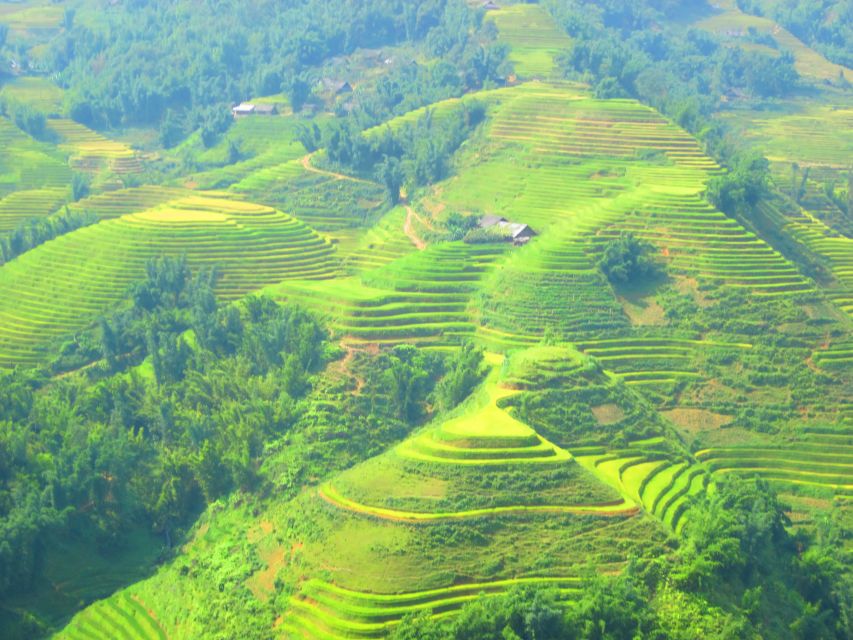
The best part of this Sapa outing is the change of pace: you begin with two powerful waterfalls and a mountain pass, then leave the road for a long walk through rice fields, bamboo, and remote Hmong and Red Dzao villages. It gives you both scenery and a look at everyday rural life.
I like the private car transfer and the chance to stop at Silver Waterfall, Love Waterfall, and Tram Ton Pass before walking. I also like the picnic lunch in a village, where the day feels more personal than a simple viewpoint tour. The main concern is the distance. The trek is described as 15 kilometers, while one account puts the full walking distance closer to 17 kilometers, so this is not a gentle stroll for everyone.
Key points to know before booking
- Two waterfalls come first: Silver Waterfall and Love Waterfall give you striking scenery before the rural trek begins.
- The walking route is long: Expect roughly four hours of trekking, with uphill and downhill sections.
- Remote villages feel different from market stops: The route passes through Hmong and Red Dzao communities rather than focusing only on souvenir stalls.
- Guides shape the day: Guides including Lisa, Cu, Lan, A, and Sue have been praised for clear English, local stories, and flexible pacing.
- Lunch is part of the cultural visit: A picnic meal is served with local people, and vegan food has been accommodated.
- Weather can change the experience: Fog may hide the rice terraces, while recent rain can make the waterfalls much more forceful.
From Sapa to Silver Waterfall and Love Waterfall
Your guide and driver pick you up at your hotel lobby in Sapa Town. The first transfer takes about 30 minutes, giving you a quick escape from town and into the higher country around Hoang Lien National Park.
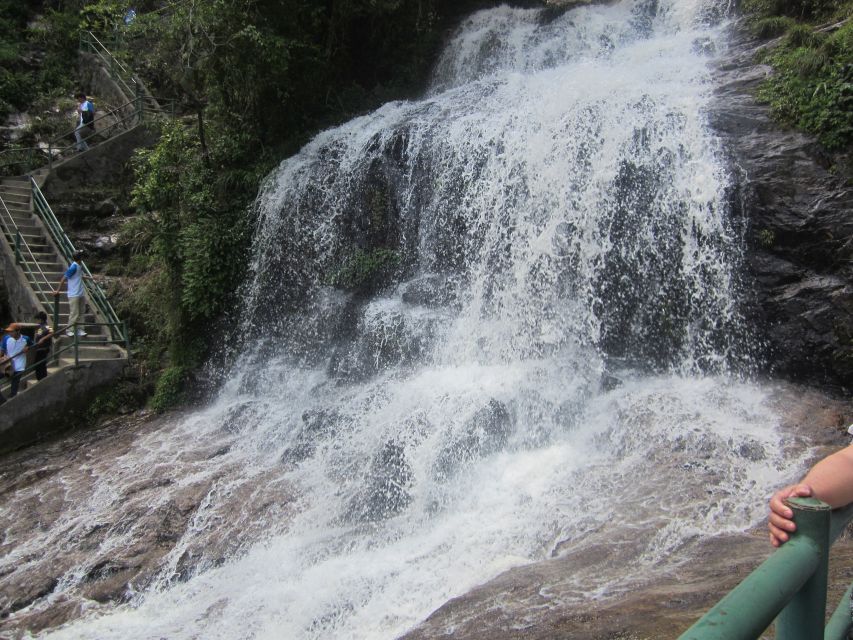
Silver Waterfall is the first major stop. Reaching the waterfall involves walking, including a longer approach that adds some effort before you see the full rush of water. It is not simply a roadside photo stop. You get time to explore the area and take in the scale of the falls.
Love Waterfall provides a second setting, with its own walk and views. The amount of water can vary sharply with the weather. After heavy rain, the waterfalls may be loud and full. On a foggy day, the mountain views can be muted, though the mist can give the area a cool, moody feel.
Tram Ton Pass adds a third scenic point before the trek. It is a useful contrast to the waterfalls, since you can look across the high mountain country before heading toward village paths. The early stops also make this tour a good choice if you want more than a rice-terrace walk but do not want to spend the whole day in a car.
One practical note: the waterfall section involves walking back and forth and can add several kilometers. The total walking you do before and during the village trek may be greater than the headline distance suggests. Ask your guide to clarify the planned route at the start if your knees or stamina are a concern.
Other walking country around Sapa:
- Sa Pa: Muong Hoa Valley Trek and Local Ethnic Villages
★ 4.6 · 864 reviews - Sapa: Eco Adventure Terrace Fields and Local Villages Trek
★ 4.9 · 636 reviews - Number one top rated ethical cultural trekking and homestay by ETHOS
★ 5.0 · 456 reviews
Starting the trail at Ban Khoan
After the waterfall and pass visits, the driver takes you to Ban Khoan. This is where the main walking begins, and the mood changes quickly. You leave the popular viewpoints behind and follow mountain paths through farming areas and villages.
The stated trek covers about four hours and 15 kilometers. Some route accounts describe closer to 17 kilometers of walking, including climbs and descents. The exact figure may depend on the path used, photo stops, and how the day is paced, but you should plan for a serious half-day hike rather than a short village walk.
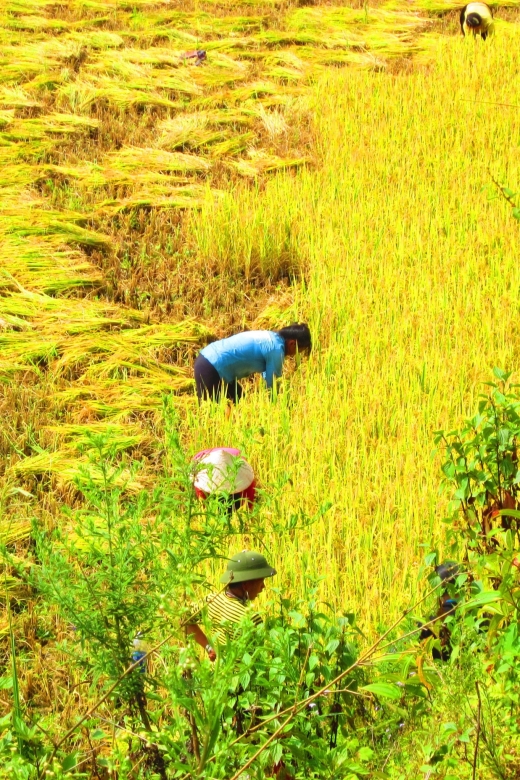
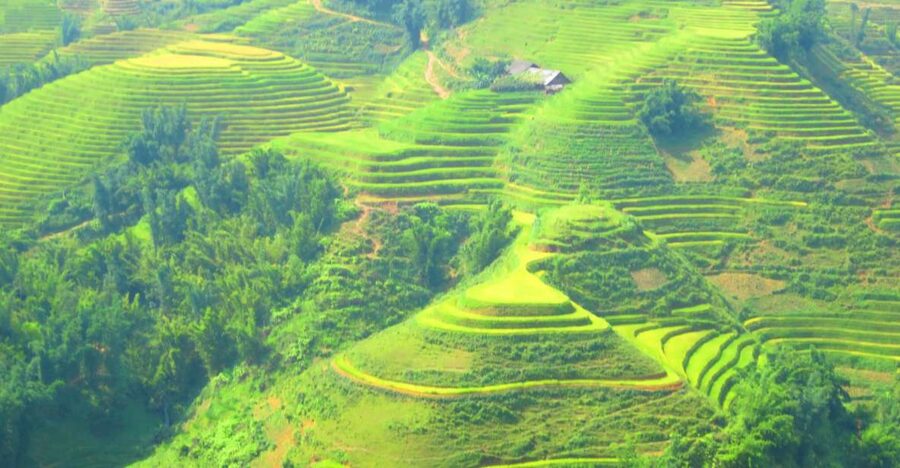
The route passes rice paddies, cornfields, and a bamboo forest. The walk between the villages is one of the most appealing parts because it is not built around a single attraction. You spend time moving through working countryside, with views opening and closing as the trail rises and falls.
The terrain is described as moderately difficult. You may find muddy or slippery sections after rain, and the route includes climbing. Good hiking shoes matter. Comfortable clothes, insect repellent, sunscreen, a raincoat, sun hat, and a small daypack are all sensible choices.
The pace can be adjusted to some extent. Guides such as A have offered route choices, and other guides have allowed time for different types of scenery. Still, flexibility does not remove the distance. If you are not used to long mountain walks, ask about a shorter option before setting out.
Meeting Hmong and Red Dzao communities
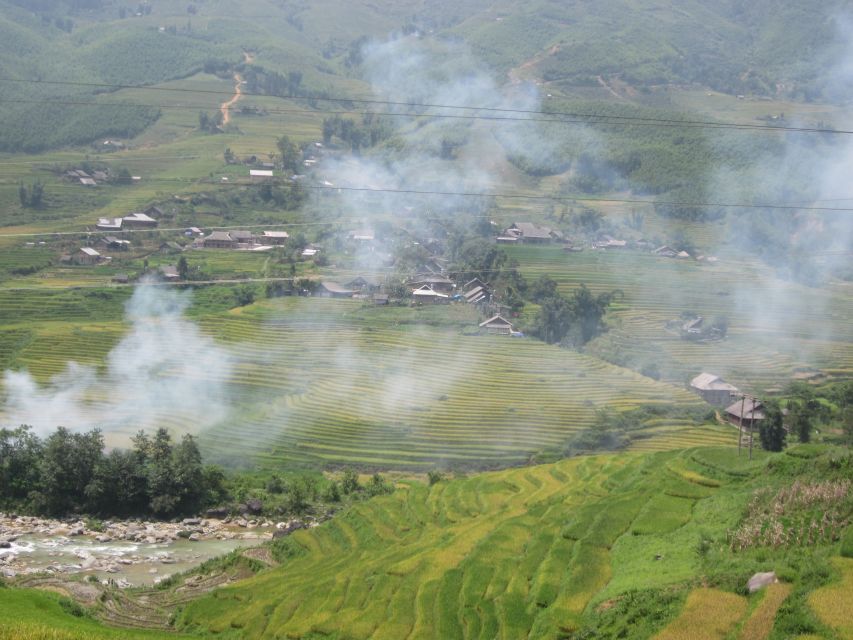
The cultural side of the tour is strongest when your guide explains what you are seeing rather than simply leading you from one village to the next. The route gives you time around Hmong and Red Dzao communities, with stories about local traditions and daily life.
Textile work is one detail you may learn about, especially among Hmong communities. You can also hear stories passed down through generations and gain a clearer sense of how village life connects to farming, clothing, and family customs.
This is not presented as a staged performance. The route is described as passing through remote communities with less connection to the outside world than the better-known stops near Sapa. That makes the experience feel more grounded, but it also means you should behave with care. Ask before photographing people or homes, follow your guide’s lead, and remember that the villages are lived-in places, not an open-air museum.
The Red Dzao connection becomes especially clear at Ta Phin Village, where the trek finishes. You have time to meet people from the community and eat lunch in the village setting. The activity does not promise a formal craft lesson or a set performance, so you should book it for conversation, scenery, and cultural explanation rather than a packed schedule of demonstrations.
Picnic lunch in the village
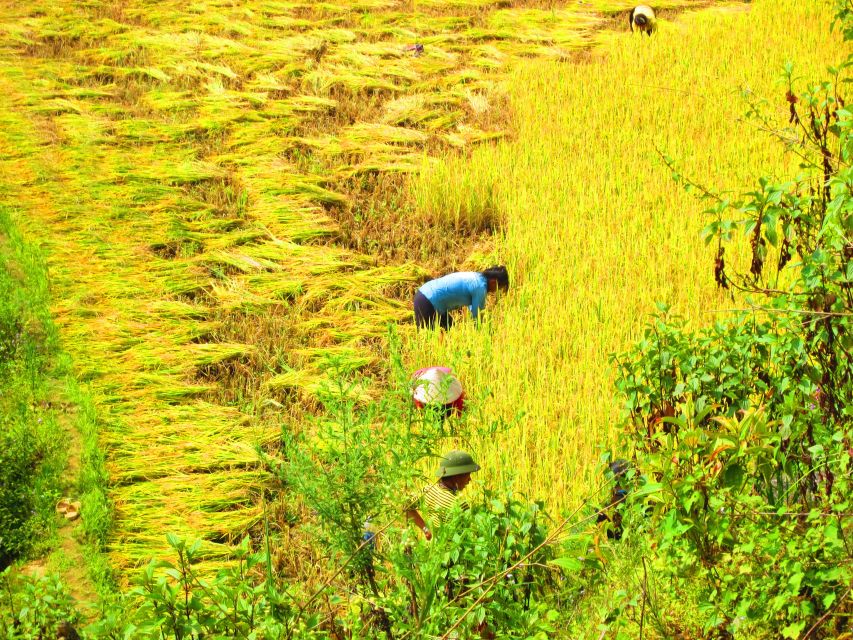
Lunch is included and is prepared for the group during the trek. It gives you a proper pause after several hours on the trail and adds a useful social element to the day.
The food has been described as a generous local spread, while another group had sandwiches. That suggests the exact meal can vary. If you have dietary needs, tell the provider when booking. Vegan food has been provided, but it is still wise to confirm your request in advance.
Lunch is also a good time to ask questions. A guide such as Lisa has shared stories about Hmong customs, while guides such as Cu and Lan have helped explain the area and its people in clear English. The quality of the day depends heavily on this personal connection, so do not be shy about asking your guide to explain unfamiliar practices.
The meal is not a luxury restaurant stop. Think of it as a simple break linked to the village visit. That is part of its value. You are not losing time to a city restaurant, and you get a more direct connection to the setting around you.
Same base, a completely different day:
- Sapa: Fansipan Cable, Cat Cat Village & Moana Instagram Tour
★ 5.0 · 777 reviews - Cat Cat Village, Moana, Fansipan Cable Car, Alpine Coaster – Sapa
★ 5.0 · 420 reviews - From Sapa: 1-Day Guided Trek to Lao Chai & Ta Van with Lunch
★ 4.9 · 416 reviews - Sa Pa Full Day Trekking Tour
★ 5.0 · 414 reviews
How demanding is the 15-kilometer trek?
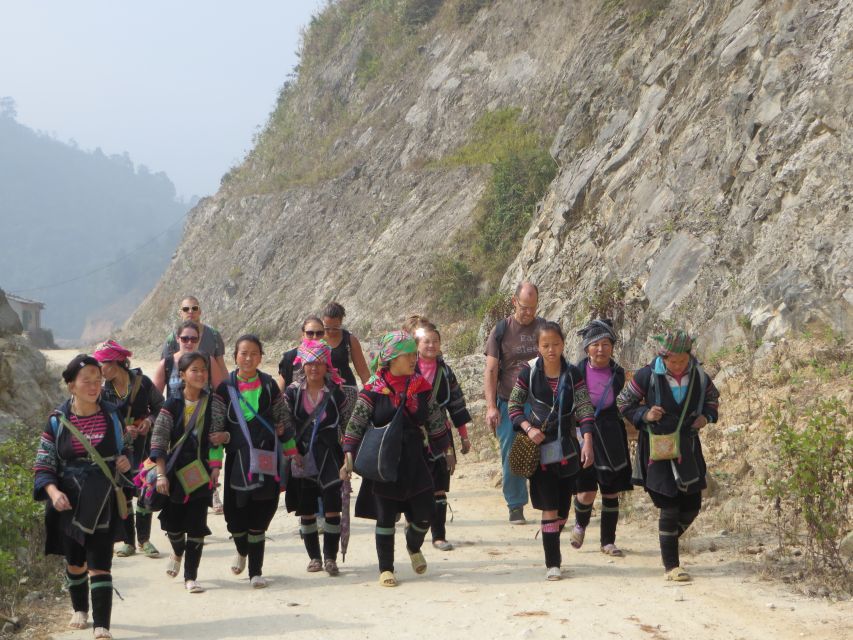
I would rate this as a moderate to demanding walk, depending on weather and your fitness. One person described it as moderately difficult, while another warned that the full route was too much for a casual weekend walker. Both points are useful.
The route includes mountain trails, rice paddies, forest, villages, and repeated climbs and descents. The waterfall walks add to the day, even though they are separate from the main village trek. You may complete the walking in around four to five hours, but the total tour also includes driving, stops, lunch, and time with the communities.
The advertised total duration is five hours. That is tight if you count every stop and the full 15-kilometer trek. Some outings have taken longer or used a shorter version of the route. Treat five hours as an approximate schedule, not a promise that every minute will fit neatly into that block.
Bring only a small daypack. You receive two bottles of mineral water, but extra water may be useful on a hot day. Insect repellent and sun protection are important, while a raincoat is wise in Sapa’s changeable mountain weather. From November through March, wear warm clothes because the waterfalls and high pass can feel cold, especially in fog.
Guides make the difference
The guide is central to this experience. The tour is offered with an English-speaking guide, and names associated with this route include Lisa, Cu, Lan, A, and Sue. Your guide may be someone else, but these examples show the type of help you should expect: local stories, route choices, photo assistance, and explanations of village traditions.
Several guides have been praised for warmth and clear communication. Cu, for example, helped make the walk informative and relaxed, while Lan was noted for setting a comfortable pace and allowing some choice in the experience. Sue kept the day interesting when fog reduced the views.
That matters because the scenery is not guaranteed. If clouds cover the rice terraces, a good guide can shift attention to village life, plants, farming, or local customs. If the weather clears, the guide can help you find better places for photographs.
The group is limited to 15 people, though some bookings may be private. A small group is useful on narrow paths and makes lunch less awkward. If you want a fully private experience, confirm that arrangement before booking rather than assuming the small-group limit means private service.
Is $72 a fair price?
At $72 per person, the price is reasonable if you value transport, a guide, entrance fees, and a long route in one package. You are paying for a private car transfer from Sapa, visits to three scenic points, an English-speaking guide, the village trek, lunch, and two bottles of water.
The value is strongest when you use every part of the day. If you only want to see the waterfalls, a shorter outing may suit you better. If you want a serious walk with cultural context and do not have your own transport, this package saves you the trouble of arranging separate transfers and park visits.
The price does not include accommodation, travel insurance, or bus and train tickets. Those costs matter if you are building a complete Sapa itinerary. Entrance fees are included, which helps keep the final cost clear.
One practical weakness is organization. A booking should be confirmed carefully before the day, since there has been at least one case where the agency did not appear to have the reservation properly noted despite advance confirmation. Contact the provider the day before and confirm the pickup time, guide, route length, and whether your booking is private or shared.
Free cancellation is available up to 24 hours before departure, and you can reserve now and pay later. Those terms are useful in Sapa, where weather can change quickly, but they do not remove the need to check the booking details.
Who should book this Sapa tour?
I would choose this trip if you want a full mix of waterfalls, high mountain views, village paths, and local culture. It suits an active couple, a small group of friends, or a family with older children who are comfortable walking for several hours.
It is also a good fit if you prefer a quieter route. The walk includes villages that are not focused only on selling goods, and the time on the trail gives you more contact with rural scenery than a quick minivan circuit.
I would think twice if you want a relaxed half-day with minimal walking. The distance can be substantial, and weather may make the trail harder. Anyone with limited mobility should ask for exact trail conditions before booking, since the route includes mountain paths and climbing.
For the best chance of clear views, choose a day with good weather if your schedule allows. But do not dismiss a foggy day entirely. The waterfalls may look dramatic in wet conditions, and the guide can still make the village and cultural parts worthwhile.
Final verdict: a strong choice for active Sapa visitors
I would book this tour if I wanted one efficient day combining Hoang Lien National Park scenery with a real village trek. The waterfalls, Tram Ton Pass, rice paddies, bamboo forest, and Red Dzao lunch give the outing more range than a standard viewpoint trip.
The main question is stamina. The five-hour label understates how much walking may be involved, and the full route can feel demanding. Confirm the distance, wear proper shoes, and speak up early if you need a slower pace or a shorter route.
For an active visitor who wants local explanation rather than a quick photo stop, $72 is good value. For anyone seeking an easy outing, choose a shorter waterfall visit instead.
FAQ
How long does the tour last?
The stated duration is five hours, with starting times depending on availability. The main trek takes about four hours and covers roughly 15 kilometers, though the actual route and total walking may vary.
Where does pickup take place?
Pickup is included from your hotel lobby in Sapa Town.
Which waterfalls are visited?
The tour visits Silver Waterfall and Love Waterfall in Hoang Lien National Park.
Does the tour include Tram Ton Pass?
Yes. Tram Ton Pass is visited before the group travels to Ban Khoan for the village trek.
Which communities will I visit?
The route includes Hmong and Red Dzao communities, with the trek finishing at Ta Phin Village, associated with the Red Dzao people.
Is lunch included?
Yes. A picnic lunch is included and is served during the trek or in the village setting. Vegan food has been accommodated, but you should request dietary needs in advance.
What should I bring?
Bring comfortable clothing, hiking shoes, insect repellent, sunscreen, a raincoat, a sun hat, and a small daypack. Warm clothing is recommended from November through March.
Can I cancel the booking?
You can cancel up to 24 hours in advance for a full refund. The activity also offers a reserve-now-and-pay-later option.
Newly reviewed in Sapa
- Sapa: Y Linh Ho – Lao Chai, and Ta Van Trekking Day Tour★ 5.0 · 25 reviews
- Sapa: Ta Phin Village Trek & Red Dao Herbal Bath★ 5.0 · 22 reviews
- Sapa3D2N TrekkingAdventures,Valleys,Bambooforest,Waterfall★ 4.8 · 24 reviews
- From Sapa: Guided Full-Day Trekking with Lunch and Drop-Off★ 4.2 · 86 reviews
- Sapa Trekking Bargains With Local Guide★ 4.9 · 91 reviews
- Sapa: 3-Day Ha Giang Loop Motorbike Tour★ 4.9 · 34 reviews
- Sapa: Muong Hoa Mountain Views and Villages Trek with Lunch★ 4.3 · 28 reviews
- Sapa: Private Highlights Day Tour with Lunch★ 4.8 · 61 reviews
Hiking & Trekking, compared.

Halong Bay Full Day with Kayaking, Hiking viewpoint, Cave – Deluxe To Luxury
Read our review →
Muong Hoa Valley Trek and Local Ethnic Villages
Read our review →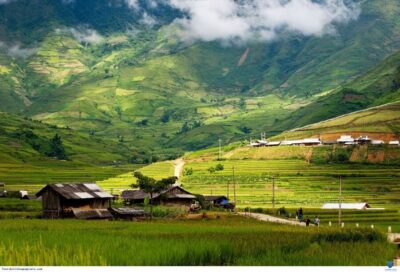

Sapa 3 Days 2 Nights Trekking Tour (1 Night In Ta Van Village, 1 Night In Hotel)
Read our review →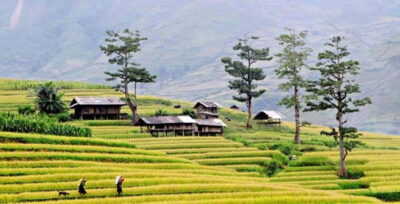
Eco Adventure Terrace Fields and Local Villages Trek
Read our review →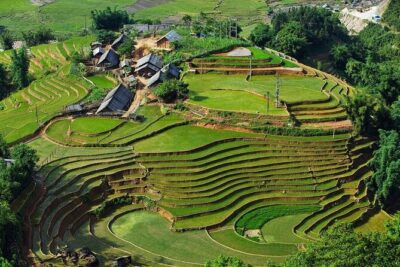
3-Day Trekking Adventure of Sapa from Hanoi – Stay Ta Van Village
Read our review →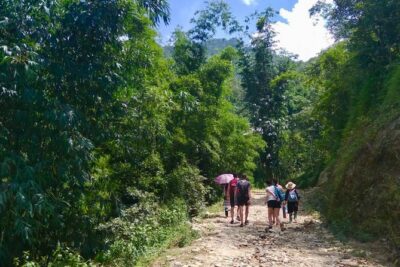
Number one top rated ethical cultural trekking and homestay by ETHOS
Read our review →
2-Day Sa Pa Ethnic Homestay Tour & Trek with Limousine Bus
Read our review →Browse the lists this tour appears in